
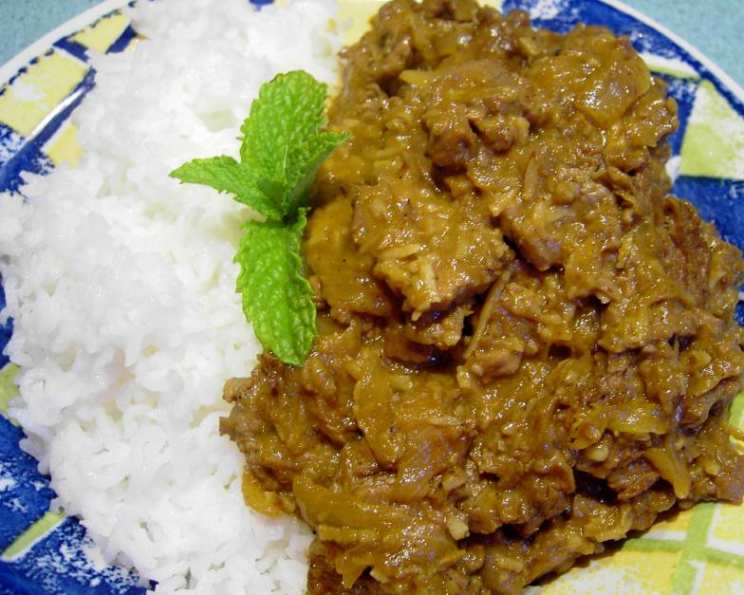
Beef Rendang: A Culinary Journey to Southeast Asia
The aroma alone transports me back to a bustling hawker stall in Singapore, the air thick with the scent of spices and grilling meats. My first taste of beef rendang was a revelation – the tender beef, infused with a complex blend of coconut milk, chilies, and ginger, ignited a symphony of flavors on my palate. It was more than just a meal; it was an immersion into a culture, a story told through the art of cooking. I’ve been chasing that perfect rendang ever since, and this recipe comes pretty darn close!
Recipe Overview
- Prep Time: 15 minutes
- Cook Time: 1 hour 35 minutes
- Total Time: 1 hour 50 minutes
- Servings: 4
- Dietary Type: Dairy-Free (check soy sauce ingredients for gluten if needed)
Ingredients
- 2 tablespoons vegetable oil
- 2 lbs steak, cut into 3 cm pieces (skirt steak or chuck steak are excellent choices)
- 1 onion, finely chopped
- 1 (2 ounce) packet rendang curry paste (store-bought or homemade)
- 1 (400 ml) can coconut milk (full-fat for best results)
- ½ cup desiccated coconut
- 2 tablespoons soy sauce (ketcap manis suggested, for its sweetness and depth of flavour)
Equipment Needed
- Deep non-stick pan or Dutch oven
- Large plate
Instructions
-
Begin by heating 2 teaspoons of the vegetable oil in a deep non-stick pan or Dutch oven over high heat. The pan should be large enough to accommodate all the meat without overcrowding.
-
Add a quarter of the steak pieces to the hot oil. Be careful not to overcrowd the pan, as this will lower the temperature and prevent proper browning. Cook the steak for about 3 minutes, or until nicely browned on all sides. Browning the meat is crucial for developing deep, rich flavors.
-
Remove the browned steak to a plate and repeat the process three more times with the remaining steak and vegetable oil, ensuring each batch gets a good sear. It’s better to work in batches than to crowd the pan.
-
Once all the steak has been browned and set aside, add the finely chopped onion to the same pan. The browned bits left in the pan will add extra flavour. Cook the onion for approximately 2 minutes, or until it begins to soften and become translucent. Avoid browning the onion too much at this stage.
-
Now, add the rendang curry paste to the pan with the softened onions. Cook for 1 minute, stirring constantly, until the paste becomes fragrant. This step is important for releasing the aromatic compounds in the spices. If the paste starts to stick, add a splash of vegetable oil.
-
Slowly stir in the coconut milk, ensuring it is well combined with the curry paste and onions. Gradually adding the coconut milk prevents it from curdling.
-
Return the browned steak pieces to the pan, nestling them into the coconut milk mixture. Make sure the meat is submerged in the liquid.
-
Bring the mixture to a boil, then immediately reduce the heat to medium-low. The goal is to maintain a gentle simmer. Cook the rendang uncovered for 1 hour and 15 minutes, or until the steak is very tender and easily falls apart. Stir occasionally to prevent sticking. The sauce will thicken as it cooks.
-
After 1 hour and 15 minutes, add the desiccated coconut and ketcap manis (or regular soy sauce) to the pan.
-
Cook, stirring frequently, for a further 15 minutes, or until the liquid has evaporated and the sauce has thickened to a rich, dark brown paste, clinging to the meat. The rendang is ready when the sauce is almost dry and the meat is coated in the spices. Be patient during this final stage, as the reduction of the sauce is key to the authentic flavour and texture of rendang.
-
Serve the beef rendang hot with steamed rice.
Expert Tips & Tricks
- For deeper flavour: Toast the desiccated coconut in a dry pan until lightly golden before adding it to the rendang. This will intensify its nutty aroma.
- Spice level adjustment: If you prefer a milder rendang, start with half the amount of curry paste and add more to taste. For a spicier version, add a chopped red chili or two along with the paste.
- Meat tenderness: The key to perfect rendang is slow cooking. If the meat is not tender enough after 1 hour and 15 minutes, continue cooking for longer, checking it every 15 minutes.
- Make-ahead marvel: Rendang tastes even better the next day, as the flavors have time to meld and deepen. Prepare it a day ahead of serving and reheat gently.
- Dealing with sticking: If the rendang starts to stick to the bottom of the pan during the final stages of cooking, reduce the heat further and stir more frequently. A splash of coconut milk can also help to loosen the sauce.
Serving & Storage Suggestions
Serve the beef rendang hot, ideally with a generous portion of freshly steamed rice to soak up all that delicious sauce. Garnish with fresh cilantro or a sprinkle of toasted coconut for added visual appeal.
Leftover rendang can be stored in an airtight container in the refrigerator for up to 3 days. It can also be frozen for up to 2 months. To reheat, thaw overnight in the refrigerator and then gently warm in a pan over low heat, adding a splash of water or coconut milk if needed to prevent it from drying out. Avoid reheating in the microwave, as this can make the meat tough.
Nutritional Information
| Nutrient | Amount per Serving | % Daily Value |
|---|---|---|
| Calories | 774.6 kcal | N/A |
| Calories from Fat | 419 g | 54% |
| Total Fat | 46.6 g | 71% |
| Saturated Fat | 28.2 g | 141% |
| Cholesterol | 179.2 mg | 59% |
| Sodium | 693 mg | 28% |
| Total Carbohydrate | 19.7 g | 6% |
| Dietary Fiber | 6.3 g | 25% |
| Sugars | 5.6 g | N/A |
| Protein | 72.2 g | 144% |
Note: Nutritional information is an estimate and may vary depending on specific ingredients and cooking methods.
Variations & Substitutions
- Lamb Rendang: Substitute the beef with lamb shoulder, cut into similar-sized pieces. Lamb rendang is a classic variation with a slightly richer flavor.
- Chicken Rendang: For a lighter option, use boneless, skinless chicken thighs instead of beef. Reduce the cooking time accordingly, as chicken cooks faster than beef.
- Vegetarian Rendang: Use firm tofu or jackfruit in place of the meat. Press the tofu to remove excess water before cooking. Jackfruit provides a meaty texture that works well in rendang.
- Spice it up: Add a few dried chilies or a tablespoon of chili paste to the curry paste for an extra kick.
- Creamier Rendang: For a richer, creamier sauce, add a second can of coconut milk during the last 30 minutes of cooking.
FAQs (Frequently Asked Questions)
Q: Can I use pre-made rendang spice paste?
A: Yes, using pre-made rendang spice paste is a convenient option. Look for a reputable brand and adjust the amount to your taste.
Q: How do I know when the rendang is done?
A: The rendang is done when the meat is very tender and the sauce has reduced to a thick, dark brown paste, clinging to the meat. There should be very little liquid remaining in the pan.
Q: Can I make rendang in a slow cooker?
A: Yes, rendang can be made in a slow cooker. Brown the meat and sauté the onions and spice paste as directed in the recipe, then transfer everything to the slow cooker. Cook on low for 6-8 hours, or until the meat is very tender.
Q: What is ketcap manis?
A: Ketcap manis is an Indonesian sweet soy sauce. It has a thicker consistency and a sweeter flavor than regular soy sauce. If you can’t find ketcap manis, you can use regular soy sauce with a tablespoon of brown sugar added.
Q: Can I freeze rendang?
A: Yes, rendang freezes well. Allow it to cool completely before transferring it to an airtight container. Freeze for up to 2 months. Thaw overnight in the refrigerator before reheating.
Final Thoughts
Beef Rendang is more than just a recipe; it’s an invitation to explore the vibrant culinary landscape of Southeast Asia. Don’t be intimidated by the ingredient list – the reward is a dish bursting with complex flavors that will transport you to another world. Gather your spices, embrace the slow cooking process, and get ready to experience the magic of rendang. I encourage you to try this recipe and share your experiences! Pair it with a crisp, dry white wine like a Riesling to cut through the richness of the dish. Selamat makan! (Bon appétit!)