
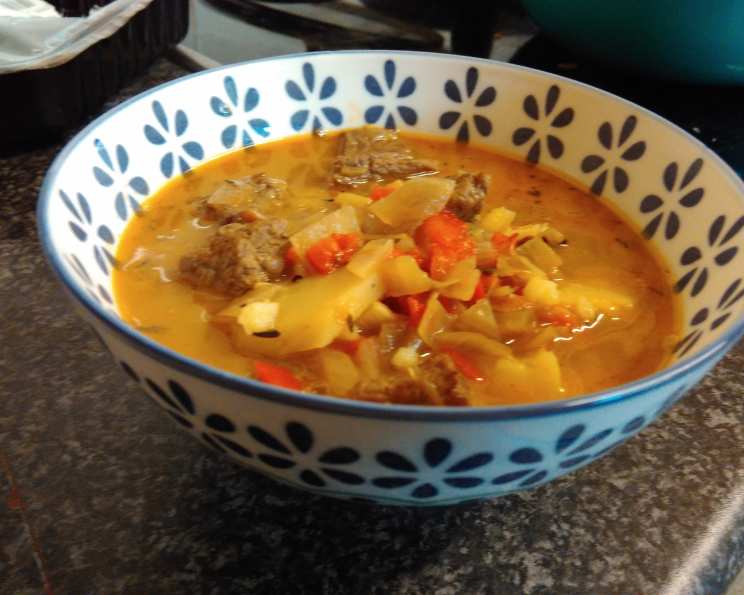
Hearty Beef Stew With Red Bell Pepper: A Taste of Home
I remember vividly the first time I made beef stew. It was a blustery autumn evening, the kind where the wind howls and the rain lashes against the windows. My grandmother, a woman whose cooking was legendary in our family, was under the weather. Determined to make something comforting, I rummaged through her pantry, finding some stewing beef, a lonely red bell pepper, and a bottle of sherry she’d been saving. The aroma that filled the kitchen as the stew simmered, a symphony of beef, wine, and herbs, was intoxicating, and the warmth it spread through the house was exactly what we needed. It wasn’t her recipe, but it became our memory.
Recipe Overview
- Prep Time: 20 minutes
- Cook Time: 1 hour 5 minutes
- Total Time: 1 hour 25 minutes
- Servings: 2
- Yield: 2 servings
- Dietary Type: Omnivore
Ingredients
- 350 g of diced stewing beef
- 1 medium onion
- 1 garlic clove
- ½ red bell pepper
- 2 medium potatoes
- 1 cup white wine or 1 cup sherry wine
- 3 cloves
- 1 pinch salt
- 1 pinch black pepper
- 1 teaspoon thyme
- 1 teaspoon rosemary
- 1 bay leaf
- Olive oil
Equipment Needed
- Large saucepan or Dutch oven
- Cutting board
- Sharp knife
- Blender (optional)
Instructions
-
First, brown the diced beef in olive oil in the saucepan over medium-high heat. Sear the meat on all sides until it develops a rich, golden-brown crust. This step is crucial for developing deep, complex flavors in the stew. Once browned, remove the beef from the saucepan and set aside.
-
Next, prepare the vegetables. Chop the onion, garlic clove, and red bell pepper very thinly. The finer the chop, the more quickly they’ll soften and release their flavors into the stew. If you prefer a chunkier stew, you can chop the pepper into slightly larger pieces, but remember that thinly chopped peppers will release their flavor more efficiently.
-
Add a little more olive oil to the saucepan (if needed) and sauté the finely chopped onion, garlic, and red bell pepper over medium heat. Stir frequently to prevent burning. Cook until the onion is golden and translucent, about 5-7 minutes. The aroma should be fragrant and slightly sweet.
-
Once the onion is ready, add the white wine (or sherry), salt, and black pepper to the saucepan. Bring the mixture to a simmer, scraping up any browned bits from the bottom of the pan. These browned bits are packed with flavor and will add depth to the stew.
-
Now, add some water to the saucepan. Initially, add enough water to barely cover the vegetables. This will allow them to cook down and create a flavorful base for the stew.
-
At this point, you have an optional step: emulsify the sauce with a blender. If you prefer a smoother, thicker sauce, carefully transfer the vegetable mixture to a blender and blend until smooth. Return the blended sauce to the saucepan. If you prefer a more rustic stew with visible chunks of vegetables, skip this step.
-
Next, add the aromatic herbs: thyme, rosemary, and bay leaf. These herbs will infuse the stew with their characteristic flavors, creating a warm and comforting aroma. Also, add the cloves for a subtle hint of spice.
-
Now, add the browned beef back to the saucepan. Also, add the potato, peeled and chopped into chunky pieces. The size of the potato pieces will determine how quickly they cook and how much they thicken the stew.
-
Cover the beef and potatoes with more warm water. Ensure that the meat and vegetables are submerged in liquid, as this will allow them to cook evenly and prevent them from drying out.
-
Place a lid on top of the saucepan and leave the stew to cook on medium heat until the beef is tender and the potatoes are cooked through. It’s important to maintain a gentle simmer, rather than a vigorous boil, to ensure that the meat stays tender and the flavors meld together. In a pressure cooker, this process will take approximately 15 minutes, but cooking times vary depending on the model. With a regular saucepan, it will typically take around 45-50 minutes.
-
Throughout the cooking process, remember to monitor the water level in the saucepan. If the liquid reduces too much, add more warm water to prevent the stew from drying out.
-
Taste the sauce and adjust the seasoning as needed. Add more salt and pepper if necessary, or a pinch of sugar to balance the acidity of the wine.
Expert Tips & Tricks
- Browning the Beef: Don’t overcrowd the pan when browning the beef. Work in batches to ensure each piece gets a good sear. Overcrowding will steam the meat, preventing it from browning properly.
- Deglazing the Pan: The wine or sherry is used to deglaze the pan after browning the beef. This is where a lot of the flavor comes from. Make sure to scrape up all those browned bits from the bottom of the pan.
- Simmer, Don’t Boil: Simmering the stew gently allows the flavors to meld and the meat to become tender. Boiling it too vigorously can toughen the meat.
- Thickening the Stew: If you want a thicker stew, you can add a slurry of cornstarch or flour mixed with water towards the end of the cooking time. Or, you can mash some of the potatoes against the side of the pot to release their starch.
Serving & Storage Suggestions
Serve the beef stew hot, garnished with a sprig of fresh rosemary or thyme. It’s delicious on its own, or served with crusty bread for dipping into the flavorful sauce. Leftovers can be stored in an airtight container in the refrigerator for up to 3-4 days. To reheat, gently warm the stew in a saucepan over medium heat, or microwave it in short intervals, stirring occasionally. The stew can also be frozen for longer storage (up to 2-3 months). Thaw it in the refrigerator overnight before reheating.
Nutritional Information
| Nutrient | Amount per Serving | % Daily Value |
|---|---|---|
| Calories | 522 kcal | N/A |
| Calories from Fat | 74 g | 14% |
| Total Fat | 8.3 g | 12% |
| Saturated Fat | 3.5 g | 17% |
| Cholesterol | 112 mg | 37% |
| Sodium | 240.2 mg | 10% |
| Total Carbohydrate | 49 g | 16% |
| Dietary Fiber | 6.7 g | 26% |
| Sugars | 6.4 g | 25% |
| Protein | 43.6 g | 87% |
Note: Nutritional information is an estimate and may vary based on specific ingredients and cooking methods.
Variations & Substitutions
- Vegetarian Option: Replace the beef with mushrooms or lentils for a vegetarian version.
- Spice it Up: Add a pinch of cayenne pepper or a chopped chili for a spicy kick.
- Root Vegetables: Incorporate other root vegetables like carrots, parsnips, or turnips for added flavor and nutrition.
- Beer Stew: Substitute some of the wine with a dark beer for a richer, maltier flavor.
- Creamy Stew: Stir in a dollop of sour cream or crème fraîche at the end for a creamier texture.
FAQs (Frequently Asked Questions)
Q: Can I make this stew in a slow cooker?
A: Yes, you can adapt this recipe for a slow cooker. Brown the beef and sauté the vegetables as instructed, then transfer everything to the slow cooker and cook on low for 6-8 hours or on high for 3-4 hours.
Q: Can I use frozen vegetables?
A: While fresh vegetables are preferred for the best flavor and texture, you can use frozen vegetables in a pinch. Add them towards the end of the cooking time to prevent them from becoming mushy.
Q: What kind of wine is best for beef stew?
A: A dry red wine like Cabernet Sauvignon, Merlot, or Pinot Noir works well. You can also use a dry sherry or even a dark beer for a different flavor profile.
Q: How do I prevent the potatoes from becoming mushy?
A: Cut the potatoes into larger chunks and add them during the last 30-40 minutes of cooking. Avoid overcooking the stew, as this will cause the potatoes to break down.
Q: Can I freeze the beef stew?
A: Yes, beef stew freezes very well. Allow it to cool completely before transferring it to an airtight container or freezer bag. Thaw it in the refrigerator overnight before reheating.
Final Thoughts
This beef stew with red bell pepper is more than just a recipe; it’s a hug in a bowl. The combination of tender beef, flavorful vegetables, and aromatic herbs creates a dish that is both comforting and satisfying. I encourage you to try this recipe and make it your own. Feel free to experiment with different vegetables, herbs, and spices to create a stew that perfectly suits your taste. And don’t forget to share your creations and feedback with me – I’d love to hear how it turns out! Pair this delightful stew with a glass of full-bodied red wine and some crusty bread for a truly memorable meal. Enjoy!