
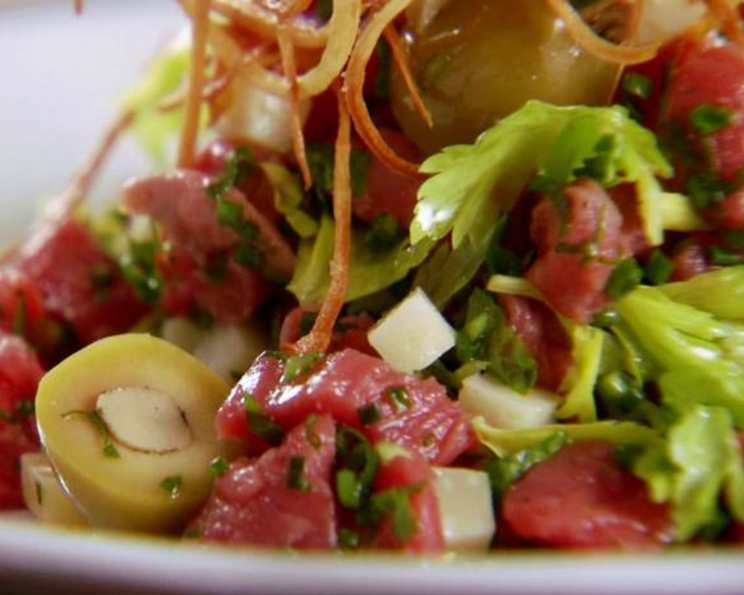
Beef Tartare: A Culinary Masterpiece
The first time I encountered beef tartare, it was a revelation. I was a young cook, intimidated by the sheer audacity of serving raw beef. But one bite – the silken texture, the bright, clean flavors, the delicate balance of richness and spice – and I was hooked. It transformed my understanding of what food could be, and it’s remained a dish I cherish and love to prepare. This particular recipe, featuring crispy parsnips, elevates the classic, providing a delightful textural contrast.
Recipe Overview
- Prep Time: 20 minutes
- Cook Time: 10 minutes
- Total Time: 30 minutes
- Servings: 4
- Dietary Type: Paleo
Ingredients
- Beef Tartare:
- 2 pounds/ 1kg beef tenderloin
- 1 cup/ 250ml cubed parmigiano-reggiano cheese
- 1⁄4 cup/ 60ml garlic-stuffed olives, halved
- 3 tablespoons/ 45ml olive oil
- 1 tablespoon/ 15ml Dijon mustard
- 2 shallots, diced
- 1 handful celery leaves
- 1 handful fresh chives, finely chopped
- 1 handful fresh parsley, chopped
- Green chili sauce, such as Tabasco
- Salt & freshly ground black pepper
- Crispy Parsnips:
- Canola oil, for frying
- 6 parsnips, peeled and julienned
- Smoked salt
- Fresh ground black pepper
Equipment Needed
- Large bowl
- Smaller bowl
- Deep fryer or large, heavy-bottomed pot
- Baking sheet
- Paper towels
Instructions
- Begin by preparing the beef. Fill a large bowl with ice and place a smaller bowl over the ice. This ice bath will keep the beef chilled and prevent it from warming up during preparation, which is crucial for food safety and maintaining texture.
- Finely dice the beef tenderloin. Aim for small, uniform cubes, about 1/4 inch in size. This ensures a consistent texture throughout the tartare. Place the diced beef in the bowl nested over the ice.
- In another large bowl, combine the remaining tartare ingredients: the cubed parmigiano-reggiano cheese, halved garlic-stuffed olives, olive oil, Dijon mustard, diced shallots, celery leaves, chopped chives, and chopped parsley.
- Gently add the diced beef to the bowl containing the other ingredients. Using a light hand, stir gently to combine. Be careful not to overmix, as this can make the beef mushy.
- Season the mixture to taste with green chili sauce (such as Tabasco), salt, and freshly ground black pepper. Start with a small amount of hot sauce and adjust to your preferred level of heat. Remember, you can always add more, but you can’t take it away!
- Now, prepare the crispy parsnips. Heat the canola oil in a deep fryer to 350 degrees F (180 degrees C). If you don’t have a deep fryer, you can use a large, heavy-bottomed pot filled with enough oil for deep-frying. Use a thermometer to ensure the oil reaches the correct temperature.
- Carefully fry the julienned parsnips in batches until they are golden brown and crisp. This should take only a few minutes per batch. Avoid overcrowding the fryer, as this will lower the oil temperature and result in soggy parsnips.
- Transfer the fried parsnips to a baking sheet lined with paper towels to drain off any excess oil. Immediately season them with smoked salt and fresh ground black pepper. The smoked salt adds a wonderful depth of flavor that complements the sweetness of the parsnips.
- To serve, divide the beef tartare among individual plates. Garnish each serving generously with the crispy parsnips.
Expert Tips & Tricks
- Meat Selection is Key: The quality of your beef is paramount. Use the freshest, highest-quality beef tenderloin you can find. Ask your butcher for advice.
- Knife Skills Matter: Consistent, small dicing is crucial for texture. A sharp knife is your best friend. Consider chilling the beef slightly before dicing for easier handling.
- Chill Everything: Keeping all ingredients cold, especially the beef, is vital for both safety and texture. The ice bath is non-negotiable.
- Taste as You Go: Don’t be afraid to adjust the seasoning to your liking. The balance of flavors should be bright, bold, and well-integrated.
- Crispy Parsnip Perfection: For extra crispy parsnips, soak them in ice water for about 30 minutes before frying. This removes excess starch. Make sure they are completely dry before adding them to the hot oil to prevent splattering.
- The parmigiano-reggiano cheese adds a great nutty and umami flavour but can be substituted with a sheep’s milk cheese like Pecorino.
Serving & Storage Suggestions
Beef tartare is best served immediately after preparation. The flavors are at their peak, and the texture is optimal. It is typically served as an appetizer or a light lunch. You can serve it with toast points, crostini, or even endive leaves for scooping.
Due to the raw nature of the beef, leftovers should be handled with extreme caution. Ideally, beef tartare should not be stored for more than a few hours, even in the refrigerator. If you must store it, keep it tightly covered in the coldest part of your refrigerator and consume it within 24 hours. However, for optimal safety and flavor, it’s best to prepare only what you plan to consume immediately.
Do not freeze beef tartare.
The crispy parsnips can be stored separately in an airtight container at room temperature for up to a day. However, they will lose some of their crispness over time.
Nutritional Information
| Nutrient | Amount per Serving | % Daily Value |
|---|---|---|
| Calories | 450 kcal | 23% |
| Total Fat | 30g | 46% |
| Saturated Fat | 15g | 75% |
| Cholesterol | 100mg | 33% |
| Sodium | 150mg | 7% |
| Total Carbohydrate | 5g | 2% |
| Dietary Fiber | 1g | 4% |
| Sugars | 2g | – |
| Protein | 35g | 70% |
Note: Nutritional information is an estimate and may vary based on specific ingredients and preparation methods.
Variations & Substitutions
- Spicy Tartare: Increase the amount of green chili sauce or add a pinch of cayenne pepper for a spicier kick. You could also incorporate finely diced jalapeño or serrano peppers.
- Mustard Variations: Experiment with different types of mustard, such as whole-grain mustard or horseradish mustard, to add different flavor dimensions.
- Herb Variations: Try different combinations of herbs, such as tarragon, basil, or oregano.
- Vegetarian “Tartare”: While not beef tartare, finely diced beets or mushrooms can be prepared in a similar fashion with the same seasonings for a vegetarian alternative.
- Gluten-Free: Ensure the Dijon mustard is gluten-free, and serve with gluten-free crackers or endive leaves.
- Parsnip Alternative: Sweet potato fries could be a substitute for parsnip fries.
FAQs (Frequently Asked Questions)
Q: Is it safe to eat raw beef?
A: When prepared properly with high-quality, fresh beef from a reputable source, and kept adequately chilled, the risk of foodborne illness is minimized, but never eliminated. Always use caution and consider your own risk tolerance.
Q: Can I make beef tartare ahead of time?
A: It’s best to prepare and serve beef tartare immediately. However, you can prep the individual components (dicing the beef, chopping the herbs, etc.) in advance and combine them just before serving.
Q: What is the best cut of beef to use for tartare?
A: Beef tenderloin is the most common and recommended cut due to its tenderness and mild flavor.
Q: Can I use a food processor to dice the beef?
A: It’s not recommended. A food processor can over-process the beef and result in a mushy texture. Hand-dicing is the best method.
Q: What can I serve with beef tartare?
A: Beef tartare is delicious served with toast points, crostini, or even endive leaves for scooping. A simple green salad or some cornichons also make excellent accompaniments.
Final Thoughts
Beef tartare might seem intimidating, but it’s an incredibly rewarding dish to make and share. It’s a celebration of fresh, high-quality ingredients and bold flavors. Don’t be afraid to experiment with the seasonings and garnishes to create your own unique version. Gather your ingredients, sharpen your knives, and prepare to impress your guests (and yourself!) with this classic culinary masterpiece. I would love to hear what you think, please leave a comment below!