
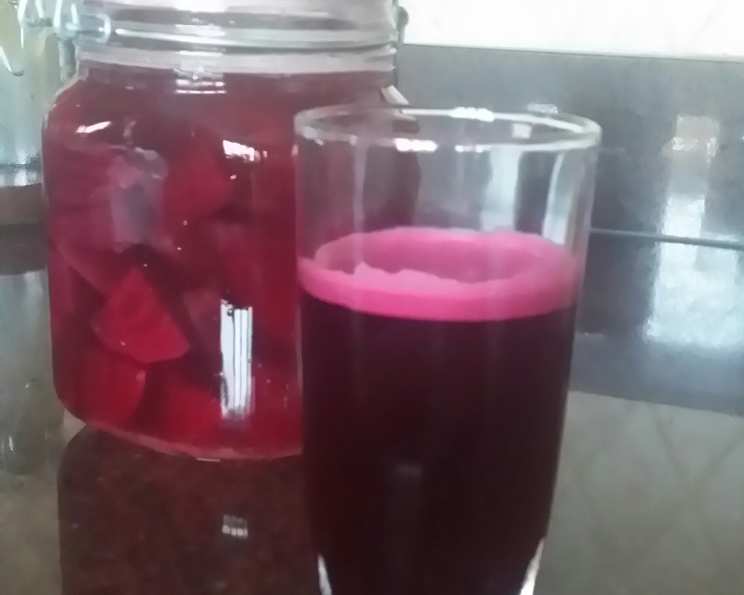
Beet and Ginger Kvass: Treat Your Liver Good!
I remember the first time I tasted beet kvass. I was traveling through Eastern Europe, and a kind babushka insisted I try her homemade brew. The earthy, slightly sour, and subtly sweet flavor was unlike anything I’d ever experienced. It was… alive! The slight fizz tickled my nose, and I felt an immediate sense of well-being wash over me. Since then, I’ve been experimenting with my own kvass recipes, always striving to capture that same feeling of vitality in every sip.
Recipe Overview
- Prep Time: 15 minutes
- Fermentation Time: 4-7 days
- Total Time: 4-7 days, 15 minutes
- Yields: Approximately 1 quart
- Serves: 8
- Dietary Type: Vegan
Ingredients
- 1 ½ large organic beets, peeled and chopped coarsely
- 1 tablespoon chopped fresh ginger
- ¼ cup whey (a by-product of yogurt cheese or kefir milk)
- ½ teaspoon Himalayan salt
- Filtered water
- Mineral water (Don’t use tap water if it is chlorinated because chlorine will inhibit the fermentation process)
Equipment Needed
- 1 quart glass container
- Knife
- Cutting board
- Measuring spoons and cups
Instructions
-
In a clean, 1 quart glass container, place the chopped beets, fresh ginger, whey, and Himalayan salt.
-
Add filtered water to fill the container, leaving about an inch of headspace at the top.
-
Stir the mixture well to ensure the salt is dissolved and everything is combined.
-
Cover the container securely. A fermentation lid with an airlock is ideal, but a tightly sealed lid will also work. If using a standard lid, burp the jar daily to release excess pressure.
-
Keep the kvass at room temperature (ideally between 68-78°F / 20-25°C) for 4-7 days. The fermentation time depends on the temperature of your environment; warmer temperatures will result in faster fermentation. You’ll notice bubbles forming, which indicates that fermentation is occurring. Taste the kvass daily after day 4. It should have a slightly sour, earthy flavor.
-
Once the kvass reaches your desired level of sourness, transfer it to the refrigerator. Refrigeration slows down the fermentation process.
-
The kvass can be consumed immediately. It’s often recommended to start with a small amount, such as 4 ounces in the morning and 4 ounces in the evening.
-
When most of the liquid has been drunk, (optional: you can cut the beets in half, though they may be slimy), fill up the container with filtered or spring water and keep at room temperature for another one or two days. The resulting brew will be slightly less strong than the first.
-
After the second brew, discard the beets into your mulch pile and start again with fresh ingredients.
-
You can reserve some of the liquid from a previous batch and use this as your inoculate instead of the whey. This will help to kickstart the fermentation process in subsequent batches.
-
For those who find the taste a bit strong, the addition of honey, water, or sparkling water may help make it more palatable.
Expert Tips & Tricks
-
Use organic beets: Since you’re consuming the beets directly, using organic is ideal to avoid pesticides.
-
Control the salt: Adjust the amount of salt to your liking. Salt not only enhances the flavor but also helps to inhibit undesirable bacteria growth during fermentation.
-
Monitor the fermentation: Taste the kvass daily after a few days to ensure it doesn’t become overly sour. If you prefer a sweeter kvass, refrigerate it sooner.
-
Burping the jar: If you’re using a tightly sealed lid, remember to burp the jar daily to release excess carbon dioxide. This prevents pressure from building up and potentially shattering the jar.
-
Experiment with flavors: While this recipe focuses on beet and ginger, you can add other ingredients like lemon peel, carrots, or herbs to create unique flavor combinations.
-
Second Fermentation: After the initial fermentation, you can do a second fermentation with added fruit like berries or citrus. This will add flavour and fizz. Seal the jar for a few days at room temperature. Remember to burp the jar daily!
-
Avoid Metal Utensils: When working with fermented foods, it’s often recommended to avoid using metal utensils, as they can sometimes react with the acids produced during fermentation. Use wooden or plastic utensils instead.
Serving & Storage Suggestions
Beet kvass is best served chilled. It can be enjoyed straight, diluted with water or sparkling water, or used as an ingredient in other recipes. It adds a unique flavor to salad dressings and sauces.
Store beet kvass in the refrigerator for up to 2-3 months. The flavor may continue to develop over time. While it’s unlikely to spoil if properly fermented and stored, it’s always best to use your senses to determine if it’s still good. Look for any signs of mold or off-putting odors.
Beet kvass is not suitable for freezing as it will change the texture and destroy the beneficial bacteria.
Nutritional Information
| Nutrient | Amount per Serving (estimated) | % Daily Value (estimated) |
|---|---|---|
| Calories | 15 kcal | 1% |
| Total Fat | 0g | 0% |
| Saturated Fat | 0g | 0% |
| Cholesterol | 0mg | 0% |
| Sodium | 80mg | 3% |
| Total Carbohydrate | 3g | 1% |
| Dietary Fiber | 1g | 4% |
| Sugars | 2g | – |
| Protein | 0g | 0% |
Note: Nutritional information is an estimate and may vary based on ingredient variations and serving sizes.
Variations & Substitutions
-
Ginger Variations: Adjust the amount of ginger to your preference. You can also use other warming spices like turmeric or cinnamon.
-
Sweetness: If you prefer a sweeter kvass, add a small amount of honey or maple syrup to the initial mixture.
-
Salt: You can experiment with different types of salt, such as sea salt or kosher salt, to see how they affect the flavor.
-
Whey Substitute: If you don’t have whey, you can use a tablespoon of apple cider vinegar or the juice of half a lemon to provide the acidity needed for fermentation. You can also use the liquid from a previous batch of Kvass.
-
Herbal Infusions: Add herbs like dill, thyme, or rosemary to create a more complex flavor profile.
FAQs (Frequently Asked Questions)
Q: What exactly is whey, and why is it used in this recipe?
A: Whey is the watery liquid leftover from making yogurt cheese or kefir. It’s rich in beneficial bacteria that help kickstart the fermentation process in beet kvass.
Q: How can I tell if my kvass is fermenting properly?
A: Look for bubbles forming in the jar, a slightly sour smell, and a change in color of the beets. These are all signs that fermentation is occurring.
Q: My kvass is too sour. What can I do?
A: Dilute it with water or sparkling water, or add a touch of honey or maple syrup to balance the flavors. You can also use it in salad dressings or sauces, where the sourness will be less pronounced.
Q: Can I use store-bought beet juice instead of fresh beets?
A: While it’s possible, using fresh beets is highly recommended for the best flavor and nutritional value. Store-bought juice may contain additives that inhibit fermentation.
Q: Is beet kvass safe to drink?
A: Generally, yes. The fermentation process creates an acidic environment that inhibits the growth of harmful bacteria. However, if you notice any signs of mold or off-putting odors, discard the kvass. If you have any underlying health conditions, consult with your doctor before consuming beet kvass.
Final Thoughts
Beet and ginger kvass is more than just a drink; it’s a celebration of vibrant flavors and ancient traditions. The earthy beets, the spicy ginger, and the gentle fizz create a symphony of sensations that will awaken your palate and invigorate your body. I encourage you to try this recipe, experiment with your own variations, and discover the magic of fermentation. Share your creations with friends and family, and let’s raise a glass to good health and flavorful living! I’m excited to see what you create; please do let me know how your kvass turns out. Cheers!