
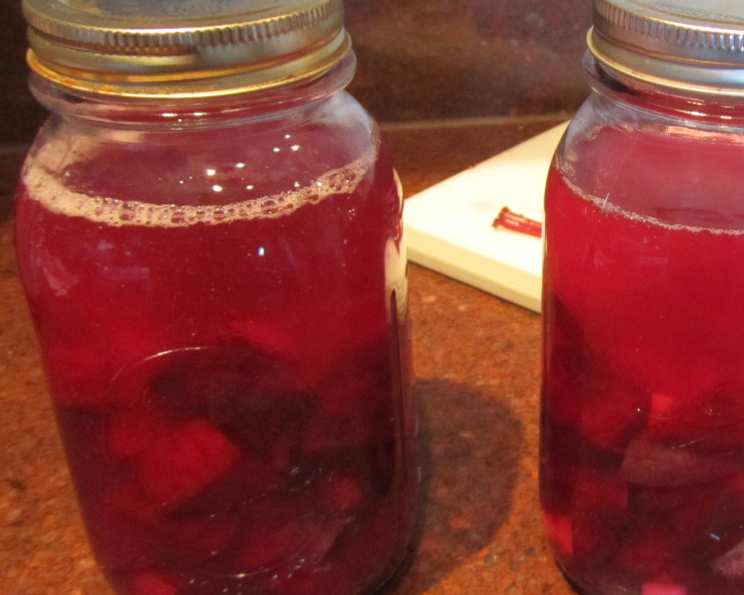
The Earthy Elixir: Crafting Your Own Beet Kvass
My grandmother, Baba Elena, always had a curious concoction bubbling away in a large glass jar on her kitchen counter. As a child, I eyed it with suspicion. It was a vibrant, earthy red, and the pungent aroma was…intriguing, to say the least. I remember her calling it “magic beet juice” and insisting it was the secret to her boundless energy and rosy cheeks. Only later did I discover this “magic beet juice” was, in fact, beet kvass, a traditional fermented beverage with a wealth of health benefits and a flavor that, once acquired, is utterly addictive. It’s more than just a drink; it’s a taste of history, a link to my heritage, and a testament to the power of simple, fermented foods.
Recipe Overview
- Prep Time: 15 minutes
- Cook Time: 72 hours (fermentation)
- Total Time: 72 hours 15 minutes
- Yields: 12 cups
- Serves: 24
- Dietary Type: Vegan, Gluten-Free, Dairy-Free
Ingredients
- 3 large organic beets
- ¼ cup whey
- 2 teaspoons sea salt
- 3 quarts filtered water
Equipment Needed
- 1-gallon glass jar
- Knife
- Cutting board
- Spoon
Instructions
- Begin by thoroughly scrubbing the beets. It’s important to remove any dirt, as you’ll be using the entire beet, peel and all. Organic beets are preferable to avoid any pesticide residue.
- On a cutting board, chop the scrubbed beets into approximately 1-inch chunks. The size isn’t critical, but smaller chunks will ferment slightly faster.
- Now, in your clean, 1-gallon glass jar, combine the chopped beets, whey, sea salt, and filtered water.
- Take your spoon and stir the mixture well to ensure the salt is dissolved.
- Place the lid on the jar, but don’t tighten it completely. You need to allow some gas to escape during the fermentation process. A loose lid or even a cloth secured with a rubber band is ideal.
- Set the jar aside in a shaded room for 3 days. An average temperature of 78 degrees Fahrenheit is very favorable for fermentation. Avoid direct sunlight.
- Over the next 72 hours, you may notice some lacto-fermentation occurring at the top of the jar. This is normal and indicates that the beneficial bacteria are at work. You can either skim any excess foam or sediment from the top with a spoon or simply stir it back into the mixture, whichever you prefer.
- After 3 days, transfer the jar to the refrigerator. The cold temperature will significantly slow down the fermentation process.
- Your beet kvass is now ready to enjoy! Serve chilled. This recipe makes approximately 12 cups, or 24 servings of 4oz each.
Expert Tips & Tricks
- Quality is Key: Use organic beets whenever possible. Their natural sweetness and purity will result in a better-tasting kvass.
- Whey Alternatives: If you don’t have whey, you can substitute 1 tablespoon of salt for the whey. The whey helps kickstart the fermentation process and adds a unique flavor. Alternatively, you can use the liquid from a previous batch of kvass as a starter culture.
- Salt Savvy: Don’t skimp on the salt! It’s essential for inhibiting the growth of harmful bacteria and promoting the growth of beneficial lactobacilli. Use a good quality sea salt or Himalayan pink salt for the best flavor and mineral content.
- Temperature Matters: Maintaining a consistent temperature during fermentation is crucial. Too cold, and the fermentation will be sluggish. Too hot, and you risk unwanted bacteria growth.
- Second Batch Magic: After you’ve strained your first batch, you can use the same beets to make a second batch. Simply add a little less water (about 2 quarts) and an additional teaspoon of salt. You can also add 1 cup of your first batch of beet kvass as a carryover to help kickstart the fermentation.
- Flavor Boost: Experiment with adding other ingredients to your kvass, such as ginger, garlic, or herbs. These additions can add depth and complexity to the flavor profile.
- Cleanliness is Paramount: Ensure your jar is thoroughly cleaned before starting the fermentation process. However, avoid using dish soap, as it can leave residues that inhibit fermentation. A simple solution of vinegar and water works perfectly. Rinse well with filtered water.
Serving & Storage Suggestions
Beet kvass is best served chilled. Pour it into a glass and enjoy its refreshing, slightly tart, and earthy flavor. You can drink it straight or use it as a base for other beverages, such as smoothies or cocktails.
Leftover beet kvass should be stored in the refrigerator in a sealed container. It will keep for several weeks. The flavor may become more pronounced over time.
Beet kvass is not suitable for freezing.
For an extra touch, reserve a cup of kvass and a few chunks of beet to continue fermenting at room temperature for 7 days. This can be used to make a flavorful beet vinaigrette for salads.
Nutritional Information
| Nutrient | Amount per Serving | % Daily Value |
|---|---|---|
| Calories | 3 kcal | 0% |
| Total Fat | 0g | 0% |
| Saturated Fat | 0g | 0% |
| Cholesterol | 0mg | 0% |
| Sodium | 202.2mg | 8% |
| Total Carbohydrate | 0.6g | 0% |
| Dietary Fiber | 0.1g | 0% |
| Sugars | 0.5g | 2% |
| Protein | 0.1g | 0% |
Variations & Substitutions
- Ginger Zing: Add a 1-inch piece of fresh ginger, sliced, to the jar along with the beets for a spicy kick.
- Garlic Power: Include 2-3 cloves of garlic, crushed, for added immune-boosting benefits.
- Herbal Infusion: Experiment with adding fresh herbs like dill, parsley, or thyme to the jar for a unique flavor profile.
- Spicy Heat: Add a pinch of red pepper flakes for a touch of heat.
- Sweet & Sour: A squeeze of lemon or lime juice can brighten the flavor and add a tangy twist.
FAQs (Frequently Asked Questions)
Q: What exactly is beet kvass?
A: Beet kvass is a traditional fermented beverage made from beets, water, salt, and a starter culture like whey. It’s naturally probiotic and rich in nutrients.
Q: Why is it important to use filtered water?
A: Filtered water is free of chlorine and other chemicals that can inhibit the fermentation process and kill the beneficial bacteria.
Q: How will I know if my beet kvass has gone bad?
A: If your beet kvass develops a strange odor, mold, or an unusual color, it’s best to discard it. Properly fermented kvass should have a pleasant, slightly tart aroma.
Q: Can I use different types of beets?
A: Yes, you can use golden or Chioggia beets, but the color and flavor of the kvass will vary. Red beets are the most traditional and yield the most vibrant color.
Q: How much beet kvass should I drink per day?
A: Start with a small amount (4-8 ounces) per day and gradually increase as tolerated. Listen to your body and adjust accordingly.
Final Thoughts
Making beet kvass is an act of patience, a connection to ancient traditions, and a rewarding way to nourish your body with a naturally probiotic and nutrient-rich elixir. Don’t be intimidated by the fermentation process; it’s surprisingly simple and the results are well worth the effort. Embrace the earthy flavors, experiment with different variations, and discover the magic of beet kvass for yourself. I encourage you to try this recipe and share your experience. What are you waiting for? Time to harness the beet!