
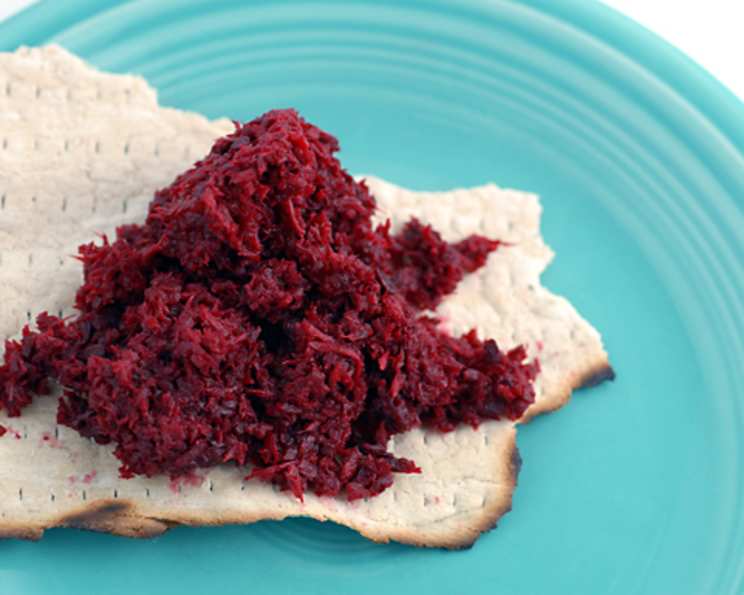
Beet Maror: A Fiery Passover Tradition
My first encounter with maror wasn’t exactly pleasant. I was a wide-eyed child, eager to participate in my family’s Passover Seder. When the time came for the symbolic bitter herb, I bravely took a large spoonful, expecting something akin to a slightly spicy salad. Instead, a volcanic eruption of horseradish assaulted my senses! My eyes watered, my nose burned, and I gasped for air. Despite the initial shock, I remember the adults chuckling kindly and explaining the importance of the maror: a reminder of the bitterness of slavery endured by our ancestors. Ever since, I approach maror with a healthy respect, and I’ve learned that the best homemade versions offer a potent but balanced flavor. This beet maror recipe strikes that perfect balance.
Recipe Overview
- Prep Time: 10 minutes
- Total Time: 10 minutes
- Yields: 1 batch
- Serves: 4
- Dietary Type: Vegan, Gluten-Free, Paleo
Ingredients
- 4 inches of horseradish root, peeled and chopped
- 1-2 tablespoons apple cider vinegar
- 1 raw beet, peeled and diced into 1/2 inch cubes
Equipment Needed
- Food Processor
- Glass Container for Storage
Instructions
- Combine the horseradish root, apple cider vinegar, and raw beet in a food processor.
- Pulse until the horseradish and beets are well ground. Avoid over-processing, as this can release too much moisture. You’re looking for a coarse, almost relish-like texture.
- Carefully remove the lid of the food processor, being extremely cautious not to inhale or smell the mixture directly, as the fumes can burn your eyes and nasal passages. It’s best to open it away from your face and in a well-ventilated area.
- Transfer the beet maror to a clean glass container.
- Serve immediately as part of your Passover Seder, or store for later use.
Expert Tips & Tricks
- Horseradish Power: The potency of horseradish can vary significantly. Start with a smaller amount of the root and add more to taste. Remember, you can always add more, but you can’t take it away!
- Beet Sweetness: The beet provides a touch of sweetness that balances the horseradish’s heat. Choose a fresh, firm beet for the best flavor and texture.
- Vinegar Adjustment: The apple cider vinegar not only adds a pleasant tang but also helps to mellow the horseradish’s intensity. Adjust the amount of vinegar to your liking, depending on how sharp you want the maror to be.
- Food Processor Safety: When working with horseradish in a food processor, be extra cautious of the fumes. Some chefs recommend wearing safety glasses or a mask to protect their eyes and respiratory system.
- Make Ahead: This beet maror can be made a day or two in advance. The flavors will meld together, and the horseradish will mellow slightly.
Serving & Storage Suggestions
Serve the beet maror as part of your Passover Seder plate, alongside other symbolic foods. A small spoonful is all that’s needed to fulfill the tradition.
Store leftover beet maror in a tightly sealed glass container in the refrigerator. It will keep for about a week, though the horseradish flavor will gradually diminish over time. Freezing is not recommended, as it can alter the texture and flavor of the horseradish.
Nutritional Information
| Nutrient | Amount per Serving | % Daily Value |
|---|---|---|
| Calories | 10 kcal | 0% |
| Total Fat | 0g | 0% |
| Saturated Fat | 0g | 0% |
| Cholesterol | 0mg | 0% |
| Sodium | 4mg | 0% |
| Total Carbohydrate | 2g | 1% |
| Dietary Fiber | 0g | 0% |
| Sugars | 1g | 0% |
| Protein | 0g | 0% |
Note: Nutritional information is an estimate and may vary based on specific ingredients used.
Variations & Substitutions
- Spicier Maror: For those who enjoy a more intense horseradish flavor, add a pinch of cayenne pepper or a small amount of freshly grated ginger to the mixture.
- Milder Maror: If you prefer a milder flavor, use a larger beet or add a tablespoon of honey to balance the horseradish’s heat.
- Other Root Vegetables: While this recipe calls for beets, you can experiment with other root vegetables such as carrots or parsnips. Keep in mind that the flavor profile will change, so adjust the other ingredients accordingly.
- Alternative Vinegar: If you don’t have apple cider vinegar, you can use white vinegar or lemon juice as a substitute.
FAQs (Frequently Asked Questions)
Q: Why is maror eaten during Passover?
A: Maror, the bitter herb, is a symbolic reminder of the bitterness of slavery endured by the Israelites in ancient Egypt. It serves as a counterpoint to the matzah, which represents freedom.
Q: Can I use prepared horseradish instead of fresh horseradish root?
A: While prepared horseradish can be used in a pinch, the flavor will not be as fresh or intense as using freshly grated horseradish root. Fresh horseradish root is highly recommended for the best flavor.
Q: How can I reduce the fumes when processing the horseradish?
A: Working in a well-ventilated area and opening the food processor lid away from your face can help to minimize exposure to the potent horseradish fumes. Some cooks even wear safety glasses or a mask for added protection.
Q: How long will homemade beet maror last?
A: Stored in a tightly sealed glass container in the refrigerator, homemade beet maror will last for about a week. However, the horseradish flavor will gradually diminish over time.
Q: Is this recipe suitable for people with allergies?
A: This recipe is naturally vegan and gluten-free. However, it is always important to check the labels of all ingredients to ensure they are safe for individuals with specific allergies.
Final Thoughts
Beet maror, with its fiery kick and grounding sweetness, is more than just a condiment; it’s a potent symbol of resilience and remembrance. I encourage you to try this recipe and experience the unique flavor for yourself. Don’t be afraid to adjust the ingredients to suit your personal taste. And above all, be careful when you open that food processor lid! Feel free to share your experiences and any creative variations you come up with. Chag Sameach!