
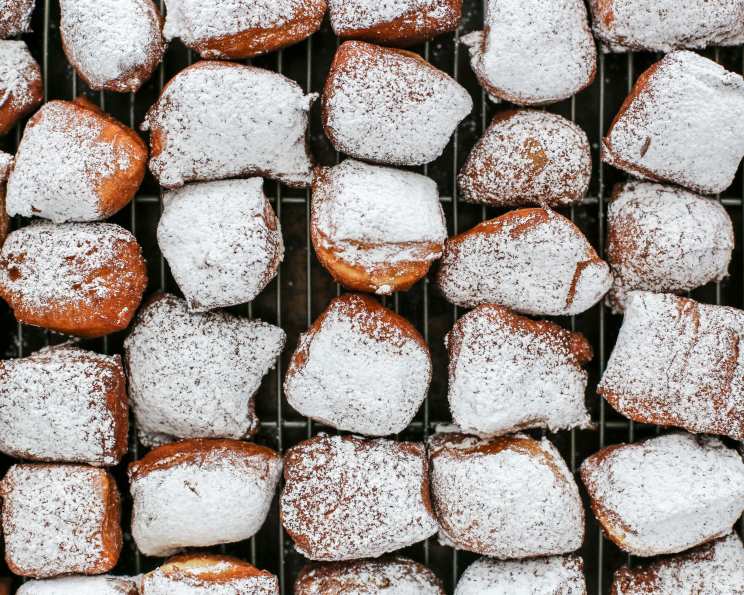
Mastering the Art of Beignets: A Culinary Journey to New Orleans
The scent of warm dough, the gentle hum of a fryer, and the anticipation of that first bite – for me, beignets are pure nostalgia. I remember visiting New Orleans as a wide-eyed culinary student, utterly captivated by the French Quarter. Finding myself at the iconic Cafe Du Monde, surrounded by a flurry of powdered sugar and the lively chatter of locals, was transformative. That first beignet, hot and impossibly light, cemented my love for pastry and ignited a lifelong pursuit of the perfect fried dough. I am excited to share my take on this classic recipe!
Recipe Overview
- Prep Time: 30 minutes (plus overnight refrigeration)
- Cook Time: 6-8 minutes
- Total Time: 30 minutes (plus overnight refrigeration)
- Servings: 8
- Yield: 24 beignets
- Dietary Type: Not specified
Ingredients
- 1 package active dry yeast
- 1 1/2 cups warm water (100-115 degrees F)
- 1/2 cup sugar
- 1 teaspoon salt
- 2 large eggs
- 1 cup evaporated milk
- 7 cups flour
- 1/4 cup vegetable shortening
- Oil (for deep frying) – Canola or peanut oil work well.
- Confectioners’ sugar, for dusting (or burying, depending on taste)
Equipment Needed
- Large bowl
- Wooden spoon
- Plastic wrap
- Greased bowl
- Floured board or marble pastry surface
- Sharp knife
- Deep fryer or large, heavy-bottomed pot
- Tongs
- Paper towels
- Platter
- Oven (optional, for keeping beignets warm)
Instructions
- In a large bowl, combine the warm water and yeast. Sprinkle in a couple of teaspoons of the sugar and stir until the yeast and sugar are thoroughly dissolved.
- Let this mixture proof for 10 minutes. This allows the yeast to activate and become foamy, ensuring a light and airy beignet.
- Add the remaining sugar, salt, eggs, and evaporated milk to the yeast mixture.
- Gradually stir in 4 cups of the flour and beat with a wooden spoon until the batter is smooth and thoroughly blended.
- Beat in the vegetable shortening. This adds richness and tenderness to the dough.
- Add the remaining flour, about 1/3 cup at a time, beating it in with a spoon until the dough becomes too stiff to stir. Then, working in the rest of the flour with your hands.
- Cover the bowl with plastic wrap and refrigerate overnight in a greased bowl. This slow, cold fermentation develops complex flavors and a more relaxed dough.
- The next day, roll the dough out onto a floured board or marble pastry surface to a thickness of 1/8 inch. Use a sharp knife to cut the dough into rectangles 2-1/2 inches by 3-1/2 inches.
- Heat the oil in a deep fryer to 360 degrees F (182 degrees C). If you don’t have a deep fryer, use a large, heavy-bottomed pot filled with at least 3 inches of oil. Use a thermometer to carefully monitor the temperature.
- Gently fry the beignets about 3 or 4 at a time until they are puffed out and golden brown on both sides, about 2-3 minutes per batch.
- Use tongs to turn them over in the oil once or twice to get them evenly brown, since they rise to the surface of the oil as soon as they begin to puff out.
- Drain each batch on paper towels to remove excess oil.
- Place the drained beignets on a platter lined with several layers of paper towels. If desired, keep them warm in a 200 degree F (93 degrees C) oven until they’re all done.
- Serve 3 beignets per person, sprinkling heavily with powdered sugar, and serve hot with cafe au lait.
Expert Tips & Tricks
- Temperature is key: Ensure your water is between 100-115°F to properly activate the yeast. Too hot, and you’ll kill the yeast. Too cold, and it won’t activate.
- Don’t overwork the dough: Overworking develops gluten, leading to tough beignets. Mix just until the ingredients are combined.
- Refrigeration is your friend: The overnight refrigeration is crucial for flavor development and a lighter texture. Don’t skip it!
- Oil temperature matters: Maintaining a consistent oil temperature of 360°F is essential for even cooking and preventing greasy beignets. Use a thermometer to monitor it closely.
- Don’t overcrowd the fryer: Frying too many beignets at once will lower the oil temperature and result in soggy beignets.
- Dust generously with powdered sugar: This is not the time to be shy! The powdered sugar is part of the beignet experience.
Serving & Storage Suggestions
Serve beignets immediately while they’re hot and at their best. A generous dusting of powdered sugar is non-negotiable. Traditionally, they are served with cafe au lait, a strong coffee mixed with hot milk.
Leftover beignets are best enjoyed within a few hours. Store them at room temperature in an airtight container. They will lose some of their crispness, but they’ll still be delicious. You can reheat them briefly in a warm oven (around 300°F) to restore some of their warmth.
Freezing is not recommended, as the texture will significantly change. However, if you must freeze them, wrap them individually in plastic wrap and then place them in a freezer-safe bag. Reheat in a warm oven.
Nutritional Information
Please note that these values are estimates and can vary based on specific ingredients and preparation methods.
| Nutrient | Amount per Serving | % Daily Value |
|---|---|---|
| Calories | 320 kcal | 16% |
| Total Fat | 15g | 23% |
| Saturated Fat | 3g | 15% |
| Cholesterol | 50mg | 17% |
| Sodium | 200mg | 9% |
| Total Carbohydrate | 40g | 13% |
| Dietary Fiber | 1g | 4% |
| Sugars | 10g | |
| Protein | 6g | 12% |
Variations & Substitutions
- Gluten-Free Beignets: Substitute a gluten-free all-purpose flour blend for the regular flour. Be sure to use a blend that contains xanthan gum for binding.
- Vegan Beignets: Replace the evaporated milk with unsweetened almond or soy milk. Use an egg replacer or flax egg (1 tablespoon ground flaxseed mixed with 3 tablespoons water, let sit for 5 minutes to thicken) in place of the eggs. Ensure your shortening is plant-based.
- Spiced Beignets: Add 1 teaspoon of cinnamon, nutmeg, or cardamom to the flour mixture for a warm and aromatic twist.
- Lemon Beignets: Add the zest of one lemon to the dough for a bright and citrusy flavor.
- Chocolate Beignets: Dust the beignets with cocoa powder in addition to or instead of the confectioners’ sugar.
FAQs (Frequently Asked Questions)
Q: Why is it important to proof the yeast?
A: Proofing the yeast ensures that it’s active and will leaven the dough properly, resulting in light and airy beignets. If the yeast doesn’t foam, it’s likely dead and you’ll need to start with fresh yeast.
Q: Can I use bread flour instead of all-purpose flour?
A: It is recommended to use all-purpose flour. Bread flour contains more gluten, which can result in tougher beignets.
Q: How do I know when the oil is at the right temperature?
A: The most accurate way is to use a deep-fry thermometer. Alternatively, you can test the oil by dropping a small piece of dough into it. If it browns quickly and rises to the surface, the oil is ready.
Q: Why are my beignets greasy?
A: Greasy beignets are usually caused by frying at too low a temperature. The oil isn’t hot enough to properly cook the dough, so it absorbs more oil. Make sure to maintain a consistent oil temperature of 360°F.
Q: Can I make the dough ahead of time and freeze it?
A: While freezing the cooked beignets is not recommended, you can prepare the dough ahead of time and refrigerate it for up to 24 hours. Let it come to room temperature slightly before rolling and frying.
Final Thoughts
There’s something truly magical about the combination of simple ingredients transformed into a warm, pillowy cloud of fried dough. These beignets are more than just a treat; they’re a little piece of New Orleans, a celebration of flavor, and a reminder that the best things in life are often the simplest. Don’t be intimidated by the process; embrace the joy of baking and share these delightful beignets with your loved ones. And please, let me know how they turn out! I’d love to hear your stories. What drink will you pair with these beignets?