
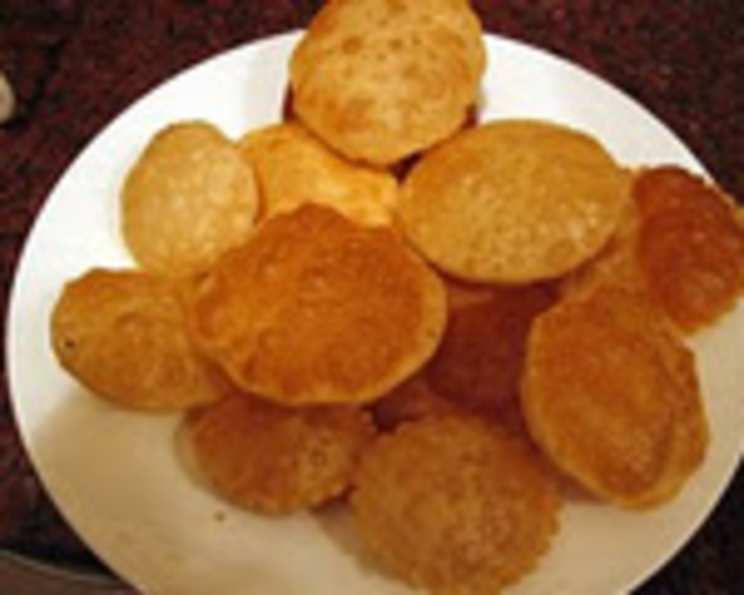
The Simple Joy of Luchi: A Bengali Staple
The scent of hot oil and the sight of perfectly puffed, golden-brown bread – that’s my earliest memory of Luchi. I remember standing on a stool next to my grandmother, her hands moving with practiced ease as she transformed simple dough into these ethereal delights. The sound of the luchi hissing in the oil, rising like tiny balloons, was pure magic. More than just a bread, Luchi is a taste of home, a symbol of comfort, and a reminder of shared meals and cherished family moments.
Recipe Overview
- Prep Time: 20 minutes
- Cook Time: 30 minutes
- Total Time: 50 minutes
- Yields: 20 luchis
- Serves: 3-4
- Dietary Type: Vegetarian
Ingredients
- 1 cup all-purpose flour
- 1/4 teaspoon ghee
- 1/4 teaspoon salt
- 2 teaspoons water
- Sunflower oil (for deep frying)
Equipment Needed
- Large mixing bowl
- Rolling pin
- 3-4″ round cookie cutter (optional)
- 8″ wok or round-bottom pan
- Metal slotted spoon
- Kitchen towels or colander
Instructions
-
Combine Dry Ingredients: In a large mixing bowl, place the all-purpose flour. Create a small well in the center of the flour. Add the ghee and the salt to the well.
-
Incorporate the Ghee: Using your hands, gently mix the flour and ghee together. Continue mixing for about a minute until the ghee is fully incorporated into the flour, resembling coarse crumbs. This step is crucial for achieving a flaky texture.
-
Add Water and Knead: Gradually add the water, a little at a time, to the flour mixture. Knead the dough continuously until it forms a firm, smooth, and pliable consistency. The dough should not be sticky. Aim for a texture that is elastic but not overly stiff.
-
Rest the Dough: Cover the dough with a damp cloth or plastic wrap and let it rest for at least 30 minutes at room temperature. This resting period allows the gluten to relax, resulting in a more tender luchi.
-
Roll the Dough: Lightly grease a clean countertop or a large cutting board. Use a rolling pin to roll the dough into an even sheet, approximately 1/4 inch thick, or even thinner if you can manage it without tearing. Thinner dough will generally puff better. A pasta roller can be used to achieve a very thin, even sheet if you have one.
-
Cut Out Discs: Using a 3-4 inch round cookie cutter, cut out as many discs of dough as possible. If you don’t have a cookie cutter, you can use a glass or simply cut squares or diamonds with a knife – fancy shapes puff just as well!
-
Re-roll Scraps: Gather the remaining dough scraps and gently knead them together. Repeat the rolling and cutting process until all the dough is used. Avoid over-kneading the scraps, as this can make the luchi tougher.
-
Heat the Oil: In an 8-inch wok or a round-bottom pan, pour at least 3-4 inches of sunflower oil. You can also use canola oil or a mixture of oil and ghee for a richer flavor, though pure ghee may be too heavy.
-
Test the Oil Temperature: Heat the oil over medium-high heat until it is just below smoking hot. To test the temperature, drop a tiny piece of dough into the oil. It should sizzle and rise to the surface quickly. If it browns too quickly, the oil is too hot; if it sinks and doesn’t sizzle, the oil is not hot enough.
-
Fry the Luchi: Carefully place one dough disc at a time into the hot oil. Immediately use a metal slotted spoon to gently push down on the luchi and submerge it in the oil. This helps it puff up properly.
-
Puffing Action: The luchi should start puffing up almost immediately. The key to perfect puffing is to ensure that the luchi remains substantially immersed in the hot oil while it’s puffing.
-
Turning and Browning: Once the luchi is fully puffed, turn it over and lightly brown the other side for a few seconds. Be careful not to over-brown, as this can make it bitter.
-
Drain the Oil: Remove the luchi from the oil using the slotted spoon and place it on a plate lined with kitchen towels or in a large colander to drain the excess oil.
-
Repeat: Repeat the frying process with the remaining dough discs, making sure to maintain the correct oil temperature.
Expert Tips & Tricks
- Dough Consistency: The consistency of the dough is crucial. If the dough is too soft, the luchi will absorb too much oil and not puff properly. If it’s too stiff, it will be difficult to roll out and may become tough.
- Oil Temperature: Maintaining the correct oil temperature is essential for achieving puffed and golden-brown luchi. If the oil is not hot enough, the luchi will absorb too much oil. If it’s too hot, they will brown too quickly on the outside while remaining uncooked inside.
- Pushing Down: Gently pressing the luchi down in the oil encourages it to puff up. Be careful not to press too hard, as this can deflate it.
- Resting is Key: Do not skip the resting period for the dough. This allows the gluten to relax, resulting in a more tender luchi.
- Rolling Technique: Roll the dough evenly to ensure that the luchi puffs uniformly. Thinner luchi generally puff better than thicker ones.
Serving & Storage Suggestions
- Serve luchi hot and fresh, immediately after frying. They are best enjoyed as part of a traditional Bengali meal, accompanied by dishes like Aloo Dum (potato curry), Cholar Dal (chana dal), or Kosha Mangsho (dry mutton curry).
- Store leftover luchi in an airtight container at room temperature for up to 2 days. They can also be stored in the refrigerator for up to 4 days.
- To reheat, warm them in a dry skillet or oven at a low temperature. You can also briefly microwave them, but be careful not to overcook them, as they can become tough.
Nutritional Information
| Nutrient | Amount per Serving | % Daily Value |
|---|---|---|
| Calories | 154.8 kcal | N/A |
| Calories from Fat | 6 g | 4% |
| Total Fat | 0.8 g | 1% |
| Saturated Fat | 0.3 g | 1% |
| Cholesterol | 0.9 mg | 0% |
| Sodium | 194.7 mg | 8% |
| Total Carbohydrate | 31.8 g | 10% |
| Dietary Fiber | 1.1 g | 4% |
| Sugars | 0.1 g | 0% |
| Protein | 4.3 g | 8% |
Note: Nutritional information is an estimate and may vary based on specific ingredients and cooking methods.
Variations & Substitutions
- Whole Wheat Luchi: Substitute half of the all-purpose flour with whole wheat flour for a healthier version. This will result in a slightly denser texture.
- Spiced Luchi: Add a pinch of turmeric powder, red chili powder, or ajwain seeds to the dough for a flavorful twist.
- Potato Luchi (Aloo Luchi): Incorporate mashed potatoes into the dough for a softer and more flavorful luchi.
- Gluten-Free Luchi: Experiment with gluten-free flour blends to create a gluten-free version. The texture may be slightly different, so you may need to adjust the amount of water.
FAQs (Frequently Asked Questions)
Q: Why are my luchi not puffing up?
A: The most common reasons are that the oil isn’t hot enough, the dough is too thick, or the dough hasn’t rested long enough. Ensure the oil is properly heated, roll the dough thinly, and allow the dough to rest for at least 30 minutes.
Q: How can I prevent the luchi from becoming oily?
A: Maintaining the correct oil temperature is key. If the oil is not hot enough, the luchi will absorb excess oil. Also, make sure to drain the luchi on kitchen towels after frying.
Q: Can I make the dough ahead of time?
A: Yes, you can make the dough ahead of time and store it in the refrigerator for up to 24 hours. Bring it to room temperature before rolling and frying.
Q: Can I freeze the luchi dough?
A: Yes, you can freeze the dough after cutting out the discs. Place them in a single layer on a baking sheet and freeze until solid. Then, transfer them to a freezer-safe bag or container. Fry directly from frozen, adding a few extra seconds to the cooking time.
**Q: What is the best *oil* to use for frying luchi?**
A: Sunflower oil or canola oil are good choices for frying luchi due to their high smoke points and neutral flavor. You can also use a mixture of oil and ghee for a richer flavor.
Final Thoughts
Making luchi may seem daunting at first, but with a little practice, you’ll be creating these golden, puffed delights in no time. Don’t be discouraged if your first batch isn’t perfect – every attempt brings you closer to mastering this simple yet satisfying bread. Embrace the process, enjoy the aromas, and share the warmth of freshly made luchi with your loved ones. Pair it with your favorite curry or enjoy it on its own; either way, it’s a taste of pure comfort and joy. So, roll up your sleeves, gather your ingredients, and let the magic of luchi fill your kitchen. And don’t forget to share your creations and feedback – I’d love to hear about your luchi adventures!