
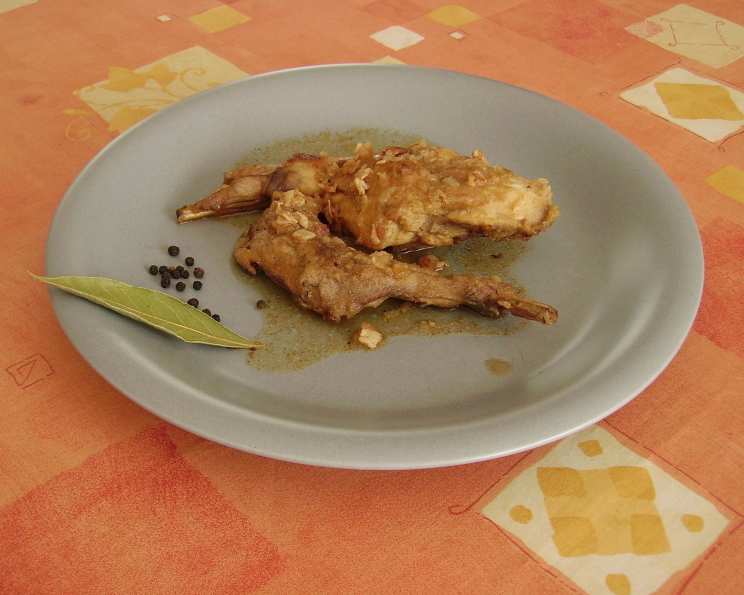
The Ultimate Braised Rabbit: A Taste of German Hunter’s Tradition
The aroma of braised rabbit always takes me back to crisp autumn days in Bavaria. My grandfather, a passionate hunter, would return from the woods with a brace of rabbits, and the entire house would fill with the savory scent of bacon, vinegar, and simmering game. The rich, tender meat, falling off the bone after hours of slow cooking, was a true testament to rustic German cuisine, a hearty and comforting dish perfect for sharing with loved ones around a crackling fire.
Recipe Overview
- Prep Time: 20 minutes
- Cook Time: 2 hours 10 minutes
- Total Time: 2 hours 30 minutes
- Servings: 6
- Yield: 6 servings
- Dietary Type: Varies (see notes)
Ingredients
- 6-8 slices bacon, finely chopped
- 2 rabbits, wild if possible, otherwise domestic
- 1/2 teaspoon salt
- 1/2 teaspoon black pepper, freshly ground
- 1/2 cup flour
- 1/2 cup onion, finely chopped
- 3/4 cup red wine vinegar
- 1 cup chicken stock, preferably homemade
- 1 bay leaf
Equipment Needed
- 5-quart roaster or flameproof casserole with tight-fitting lid (Dutch oven recommended)
- Paper towels
- Brown paper bag
- Serving plate
Instructions
- Heat your roaster or casserole dish over moderate heat. Add the finely chopped bacon and cook, stirring and turning it frequently, until crisp. This should take about 10 minutes.
- Drain the crisp bacon on paper towels. Set the pan with the rendered bacon fat aside for a few moments; you’ll need it later.
- Cut the rabbits into serving pieces. A good rule of thumb is to separate the legs, the loin, and the ribs. Cut away and discard the belly meat, as it tends to be tough.
- In a brown paper bag, combine the salt, pepper, and flour.
- Add a few rabbit pieces to the bag and shake well to coat them with the flour mixture. Repeat with the remaining rabbit pieces. This ensures an even coating that will help with browning and thickening the sauce.
- Preheat your oven to 325°F (160°C).
- Heat the reserved bacon fat in the pan over high heat until it sputters. This indicates that the fat is hot enough to properly brown the meat.
- Brown the rabbit pieces on all sides, working in batches to avoid overcrowding the pan. Overcrowding lowers the pan temperature and results in steaming rather than browning. This process should take about 10 minutes. Transfer the browned rabbit pieces to a serving plate.
- Pour off all but 2 tablespoons of fat from the pan. Add the finely chopped onions and cook in the remaining fat until they are soft and translucent. This usually takes about 5-7 minutes. Be careful not to burn the onions.
- Pour in the red wine vinegar and chicken stock, and add the bay leaf. Bring the mixture to a boil over high heat, scraping up any browned bits clinging to the bottom and sides of the pan with a wooden spoon. These browned bits, known as fond, are packed with flavor and will add depth to your braising liquid.
- Return the rabbit with any accumulated juices from the plate to the roaster or casserole. Add the drained bacon.
- Cover the roaster or casserole tightly with its lid. Place it in the preheated oven and simmer for 1 1/2 hours (90 minutes), or until the rabbits are tender but not falling apart. Check the rabbit after an hour to ensure the liquid hasn’t evaporated completely; if it has, add a little more chicken stock.
- Once cooked, serve the braised rabbit directly from the roaster or casserole, or arrange the pieces attractively on a heated platter.
Expert Tips & Tricks
- Browning is key: Don’t skip the browning step! It develops deep, complex flavors that are essential to the final dish. Ensure the pan is hot and don’t overcrowd it.
- Adjust acidity: The amount of red wine vinegar can be adjusted to your liking. If you prefer a less tangy flavor, reduce the amount slightly.
- Thickening the sauce: If the sauce is too thin after braising, remove the rabbit pieces and simmer the sauce over medium heat on the stovetop until it reaches your desired consistency. You can also whisk in a cornstarch slurry (1 tablespoon cornstarch mixed with 2 tablespoons cold water) for a quick fix.
- Deboning: For easier eating, you can debone the rabbit meat after braising and before serving. The meat should be incredibly tender and easy to pull from the bones.
- Wild vs. Domestic: Wild rabbit has a gamier flavor than domestic rabbit. If using wild rabbit, you may want to marinate it overnight in the red wine vinegar and some herbs to tenderize it further.
Serving & Storage Suggestions
Serve the braised rabbit hot, accompanied by creamy mashed potatoes, potato pancakes (as suggested by Bernard Clayton), spaetzle, or crusty rye bread for soaking up the delicious sauce. A side of braised red cabbage or green beans also complements the dish beautifully.
Leftovers can be stored in an airtight container in the refrigerator for up to 3 days. For longer storage, freeze the rabbit in a freezer-safe container for up to 2 months. To reheat, thaw overnight in the refrigerator and then gently warm in a saucepan over low heat, adding a little chicken stock if necessary to prevent drying.
Nutritional Information
| Nutrient | Amount per Serving | % Daily Value |
|---|---|---|
| Calories | 490.5 kcal | N/A |
| Calories from Fat | 218 g | 44% |
| Total Fat | 24.2 g | 37% |
| Saturated Fat | 7.5 g | 37% |
| Cholesterol | 153.3 mg | 51% |
| Sodium | 518.8 mg | 21% |
| Total Carbohydrate | 11 g | 3% |
| Dietary Fiber | 0.5 g | 2% |
| Sugars | 1.2 g | 4% |
| Protein | 53.3 g | 106% |
Note: Nutritional information is an estimate and may vary based on specific ingredients and preparation methods.
Variations & Substitutions
- Wine Pairing: Consider adding 1/2 cup of dry red wine along with the red wine vinegar and chicken stock for a deeper flavor profile. A Pinot Noir or Cabernet Sauvignon would work well.
- Vegetable Additions: Add carrots, celery, or parsnips to the pan along with the onions for extra flavor and nutrients.
- Herb Variations: Experiment with different herbs such as thyme, rosemary, or sage in addition to the bay leaf.
- Spicy Kick: For a touch of heat, add a pinch of red pepper flakes to the braising liquid.
- Dietary Adjustments: While traditionally made with bacon, you can omit it for a lower-fat version or substitute it with smoked turkey bacon. Use gluten-free flour for a gluten-free dish.
FAQs (Frequently Asked Questions)
Q: Can I use a slow cooker for this recipe?
A: Yes, you can adapt this recipe for a slow cooker. Brown the rabbit and sauté the onions as directed, then transfer everything to the slow cooker and cook on low for 6-8 hours, or on high for 3-4 hours, until the rabbit is tender.
Q: What’s the best way to tell if the rabbit is cooked through?
A: The rabbit is done when the meat is very tender and easily pulls away from the bone. You can also use a fork to pierce the thickest part of the rabbit; the juices should run clear.
Q: Can I use a different type of stock?
A: While chicken stock is recommended, you can also use vegetable stock or rabbit stock if you have it on hand. Avoid beef stock, as its flavor profile may not complement the rabbit as well.
Q: Is it necessary to use wild rabbit?
A: No, domestic rabbit works perfectly well in this recipe. Wild rabbit has a gamier flavor, but domestic rabbit is more readily available and has a milder taste.
Q: Can I make this dish ahead of time?
A: Absolutely! Braised rabbit actually tastes even better the next day, as the flavors have had time to meld together. Simply reheat gently before serving.
Final Thoughts
Braised rabbit is more than just a recipe; it’s an experience, a taste of tradition, and a celebration of simple, honest ingredients. I encourage you to try this recipe and create your own memories around this comforting and flavorful dish. Don’t be afraid to experiment with variations and substitutions to make it your own. Serve it with a hearty German beer and enjoy the satisfying flavors of this rustic classic. Guten Appetit!