
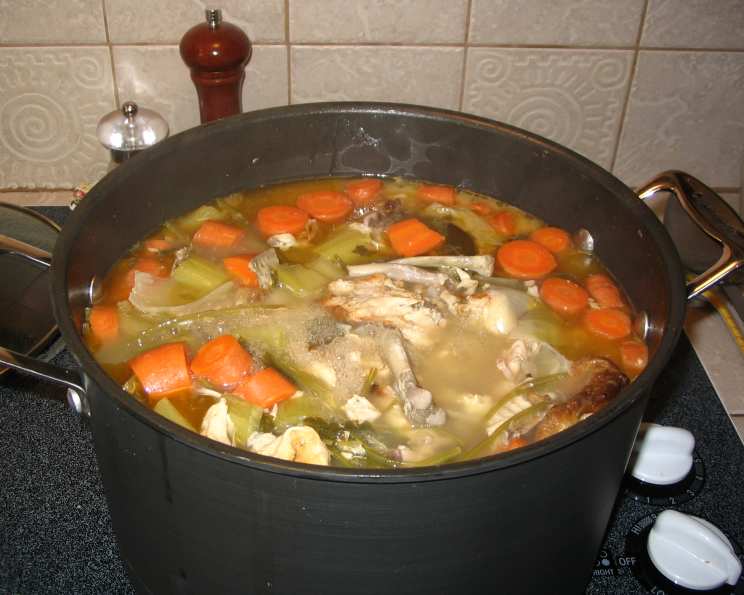
The Soul-Soothing Secret: Homemade Chicken Stock
I remember being a child, sick with a cold, and my grandmother would always make me chicken soup. The magic wasn’t just in the noodles or the shredded chicken; it was in the broth. It was a deeply nourishing, golden elixir that warmed me from the inside out. She always said the secret was in making the stock from scratch, simmering it for hours until every ounce of goodness was extracted from the bones. That memory, that taste, is what inspired me to perfect my own version of homemade chicken stock.
Recipe Overview
- Prep Time: 20 minutes
- Cook Time: 3-4 hours
- Total Time: 3 hours 20 minutes – 4 hours 20 minutes
- Yields: Approximately 10 quarts
- Dietary Type: Gluten-Free, Dairy-Free
Ingredients
- 2 one-gallon bags of chicken bones (saved up and stored in the freezer, or use chicken scraps)
- 2 celery stalks, chopped
- 2 carrots, chopped
- 1-2 bunch parsley stems
- 2 onions, quartered
- 3-5 bay leaves
- 12 quarts water
- Salt and pepper to taste
Equipment Needed
- Large stock pot (at least 12 quarts)
- Large fine-mesh sieve or cheesecloth
- Bowls or containers for straining
- Optional: Fat separator/degreasing pitcher
Instructions
-
Gather your saved chicken bones or scraps. The best stock comes from a variety of bones – backs, necks, wings, and even leftover roasted chicken carcasses work wonders.
-
Place all the chicken bones into a large stock pot (at least 12 quarts in size).
-
Prepare the vegetables. Chop the 2 celery stalks, 2 carrots, and 2 onions into roughly uniform pieces. No need to be precise; the goal is to release their flavors into the broth.
-
Add the chopped celery, carrots, and onions to the stock pot with the chicken bones.
-
Add 1-2 bunch parsley stems (save the leaves for another use!) and 3-5 bay leaves to the pot. These aromatics will add depth and complexity to the stock.
-
Pour in 12 quarts of water, ensuring the bones and vegetables are fully submerged. Add more water if necessary.
-
Season generously with salt and pepper to taste. Remember, you can always adjust the seasoning later, but it’s important to start with a solid base.
-
Bring the mixture slowly to a boil over medium-high heat. Keep a close eye on it, as you’ll need to skim off the impurities.
-
As the stock heats up, a grey scum will rise to the surface. This is coagulated protein and impurities from the bones. Use a spoon or ladle to carefully skim off this scum and discard it. Skimming is essential for a clear and flavorful stock. Continue skimming for the first 30-60 minutes of simmering.
-
Once you’ve skimmed off the scum, reduce the heat to the lowest setting and simmer the stock uncovered for 3-4 hours. The longer it simmers, the richer and more flavorful it will become. A gentle simmer is key; a rolling boil will make the stock cloudy.
-
After 3-4 hours of simmering, carefully remove the stock pot from the heat and let it cool slightly.
-
Strain the stock. Place a large fine-mesh sieve or line a colander with cheesecloth over a large bowl or pot. Gently pour the stock through the sieve or cheesecloth, catching all the solids. Discard the bones, vegetables, and herbs.
-
Degrease the stock. There are two methods for this:
- Using a fat separator: Pour the strained stock into a fat separator (a pitcher designed to separate fat from liquid). Let it sit for a few minutes, then pour off the defatted stock.
- Refrigeration: Let the strained stock cool completely. Then, refrigerate it for several hours or overnight. The fat will solidify on the surface, making it easy to skim off with a spoon.
-
The resulting chicken stock is now ready to use in soups, sauces, stews, braises, and countless other dishes.
-
For longer storage, pour the cooled, degreased stock into airtight containers or freezer bags, leaving some headspace for expansion.
Expert Tips & Tricks
- Roast the bones for extra flavor: Before making the stock, roast the chicken bones in a 400°F (200°C) oven for 30-45 minutes until golden brown. This will add a deeper, more roasted flavor to the stock.
- Don’t add salt too early: Adding too much salt at the beginning can concentrate the saltiness as the stock reduces. It’s best to season lightly at the start and adjust the seasoning at the end.
- Use vegetable scraps: Save vegetable scraps like onion skins, carrot peels, and celery ends in the freezer to add to your stock for extra flavor. Just be sure to avoid strong-flavored vegetables like broccoli or cabbage, which can overpower the stock.
- Simmer, don’t boil: Boiling the stock will emulsify the fats and result in a cloudy, less flavorful broth. A gentle simmer is the key to a clear and delicious stock.
- Freeze in ice cube trays: For small recipes that only require a small amount of stock, freeze the stock in ice cube trays. Once frozen, transfer the cubes to a freezer bag for easy access.
Serving & Storage Suggestions
Homemade chicken stock is incredibly versatile. Use it as a base for soups, stews, sauces, and gravies. It can also be used to braise meats, cook grains like rice and quinoa, or simply sip on its own as a nourishing broth.
Store leftover chicken stock in an airtight container in the refrigerator for up to 3-4 days. For longer storage, freeze it for up to 3-6 months. Thaw frozen stock in the refrigerator overnight before using. Do not leave at room temperature for more than 2 hours.
Nutritional Information
| Nutrient | Amount per Serving (1 cup) | % Daily Value |
|---|---|---|
| Calories | 15 kcal | 1% |
| Total Fat | 0.1 g | 0% |
| Saturated Fat | 0 g | 0% |
| Cholesterol | 0 mg | 0% |
| Sodium | 38 mg | 2% |
| Total Carbohydrate | 3.6 g | 1% |
| Dietary Fiber | 0.8 g | 3% |
| Sugars | 1.6 g | 3% |
| Protein | 0.4 g | 1% |
Note: Nutritional information is an estimate and may vary depending on the specific ingredients used.
Variations & Substitutions
- Herb Variations: Experiment with different herbs like thyme, rosemary, or sage to customize the flavor of your stock.
- Spiced Stock: Add spices like star anise, cloves, or ginger for an Asian-inspired stock.
- Vegetable Stock: Omit the chicken bones entirely and use a variety of vegetables to make a flavorful vegetable stock.
- Salt-Free Stock: Omit the salt entirely for a low-sodium option. You can always add salt later when you use the stock in a recipe.
FAQs (Frequently Asked Questions)
Q: Can I use leftover rotisserie chicken bones for stock?
A: Absolutely! Rotisserie chicken bones are a great way to add flavor to your stock. Just remove any excess meat before using the bones.
Q: How long can I keep chicken bones in the freezer before making stock?
A: Chicken bones can be stored in the freezer for up to 3-6 months without significant loss of flavor.
Q: Why is my chicken stock cloudy?
A: Cloudy stock is often caused by boiling the stock instead of simmering it, or by not skimming off the scum properly.
Q: Can I make chicken stock in a slow cooker?
A: Yes, you can! Combine all the ingredients in a slow cooker and cook on low for 8-10 hours.
Q: Do I need to add any acids like vinegar or lemon juice to the stock?
A: Adding a splash of acid can help extract more collagen from the bones, resulting in a richer, more gelatinous stock. However, it’s not essential.
Final Thoughts
Making your own chicken stock is one of the most rewarding things you can do in the kitchen. It’s a simple process that yields a flavorful and nutritious ingredient that will elevate all your cooking. Don’t be intimidated – gather your chicken bones, chop some vegetables, and let the magic happen. Once you taste the difference between homemade and store-bought, you’ll never go back! I encourage you to try this recipe and share your feedback. Perhaps you could use your stock to make a heartwarming chicken noodle soup, or a delicate risotto. The possibilities are endless!