
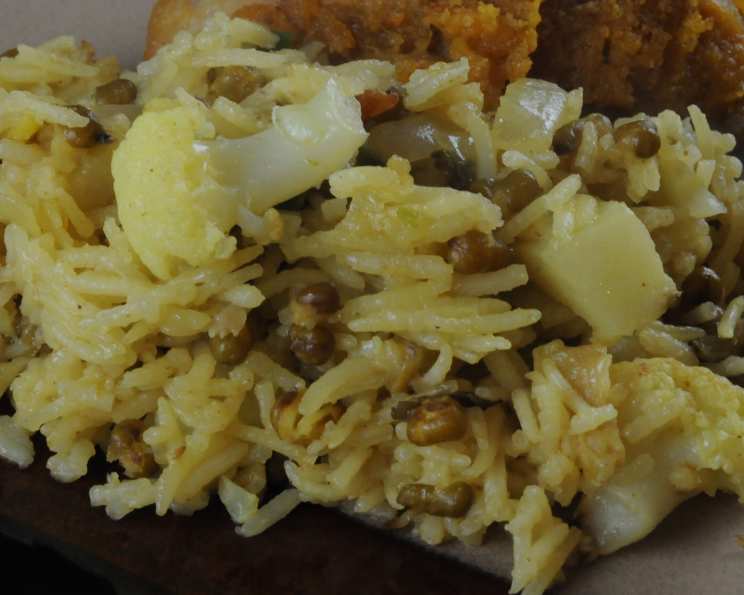
Bhuna Khichuri: A Taste of Bangladesh
The scent of warming spices always transports me back to a small, bustling kitchen in Dhaka. My aunt, a whirlwind of energy and warmth, would preside over a massive pot, coaxing flavors from seemingly simple ingredients. Her Bhuna Khichuri wasn’t just a meal; it was an invitation to gather, to share stories, and to savor the richness of family and tradition. The earthy aroma of cumin, the vibrant yellow hue of turmeric, and the comforting blend of rice and lentils – it was, and still is, the taste of home.
Recipe Overview
- Prep Time: 15 minutes
- Cook Time: 20 minutes
- Total Time: 35 minutes
- Servings: 4-6
- Yield: Varies based on desired consistency
- Dietary Type: Vegetarian (can be made Vegan)
Ingredients
- ½ cup cauliflower florets
- 1 medium potato, peeled and cut into small cubes
- ¼ cup mung beans
- 1 cup basmati rice
- ½ small onion, finely chopped
- 1 jalapeño pepper, seeded and chopped (adjust to taste)
- ¼ teaspoon ginger, ground
- ⅛ teaspoon cumin, ground
- ⅛ teaspoon coriander, ground
- ¼ teaspoon turmeric, ground
- ⅛ teaspoon garlic powder
- 2 tablespoons cooking oil (vegetable or canola)
Equipment Needed
- Medium-sized pot with a lid
- Skillet or frying pan
Instructions
-
Begin by preparing the mung beans. For the best texture, soak them overnight in water. If time is short, you can use a pressure cooker. Combine the mung beans with ½ cup of water in a pressure cooker and cook on medium heat for 8 minutes. This will soften them considerably.
-
Next, lightly fry the cauliflower florets and cubed potato in a tablespoon of cooking oil in a skillet over medium heat. Fry until they are lightly golden brown and slightly tender, about 5-7 minutes. Remove the fried vegetables from the skillet and set aside.
-
In the same skillet, add the remaining tablespoon of cooking oil. Add the finely chopped onion and sauté until translucent and softened, about 3-5 minutes. Then, incorporate the seeded and chopped jalapeño pepper, ginger, cumin, coriander, turmeric, and garlic powder. Sauté the spices for about a minute, until fragrant, being careful not to burn them.
-
Add the basmati rice and cooked (or soaked) mung beans to the skillet with the spices and onions. Stir everything together well, ensuring the rice and beans are thoroughly coated with the aromatic spice mixture.
-
Add the fried cauliflower and potato to the rice and lentil mixture. Stir to combine evenly.
-
Pour in 2 cups of water. Bring the mixture to a boil over medium-high heat. Once boiling, reduce the heat to low, cover the pot tightly with a lid, and simmer for 20 minutes, or until the water is completely absorbed and the rice and lentils are cooked through. Check occasionally to ensure the bottom isn’t sticking or burning.
-
Once the water is absorbed, turn off the heat and let the Bhuna Khichuri rest, covered, for about 5-10 minutes. This allows the flavors to meld and the rice to steam evenly.
Expert Tips & Tricks
- Spice Level Adjustment: The jalapeño pepper provides heat. Adjust the amount or omit it entirely to control the spice level according to your preference. You can also use other chili peppers for a different flavor profile.
- Vegetable Variations: Feel free to add other vegetables like peas, carrots, or green beans. Add them along with the cauliflower and potatoes.
- Rice Quality: Using high-quality basmati rice will significantly improve the texture and aroma of the Khichuri.
- Achieving the Right Consistency: If the Khichuri seems too dry after the initial cooking time, add a little more water (¼ cup at a time) and continue simmering until the rice is tender. Conversely, if it’s too wet, remove the lid and simmer for a few minutes to allow excess moisture to evaporate.
- Vegan Option: Ensure that the cooking oil you are using is plant-based.
Serving & Storage Suggestions
Bhuna Khichuri is best served hot and fresh. Garnish with fresh cilantro for a pop of color and freshness. It can be served as a side dish or a light meal. It pairs well with roasted vegetables, yogurt raita (omit for vegan), or a simple green salad.
Leftovers can be stored in an airtight container in the refrigerator for up to 3 days. To reheat, add a splash of water to prevent it from drying out and microwave or heat on the stovetop over low heat until warmed through. Freezing is not generally recommended as it can affect the texture of the rice and vegetables.
Nutritional Information
| Nutrient | Amount per Serving | % Daily Value |
|---|---|---|
| Calories | 325.6 kcal | N/A |
| Calories from Fat | N/A | 23% |
| Total Fat | 8.5 g | 13% |
| Saturated Fat | 1.2 g | 6% |
| Cholesterol | 0 mg | 0% |
| Sodium | 16.1 mg | 0% |
| Total Carbohydrate | 54.6 g | 18% |
| Dietary Fiber | 5.7 g | 22% |
| Sugars | 1.6 g | 6% |
| Protein | 8.4 g | 16% |
Note: Nutritional information is an estimate and may vary based on specific ingredients and portion sizes.
Variations & Substitutions
- Meat Khichuri: For a non-vegetarian version, add small cubes of chicken, beef, or lamb along with the vegetables. Brown the meat before adding the onions and spices.
- Spice Blend: Experiment with different spice blends like garam masala or panch phoron (Bengali five-spice mix) for unique flavor profiles.
- Lentil Variety: You can substitute the mung beans with red lentils (masoor dal) or yellow lentils (toor dal) for a slightly different texture and flavor. Adjust cooking time accordingly.
- Coconut Milk: Replace some of the water with coconut milk for a richer, creamier Khichuri.
- Seasonal Vegetables: Adapt the recipe to use seasonal vegetables such as butternut squash in the fall or asparagus in the spring.
FAQs (Frequently Asked Questions)
Q: Can I make this Khichuri in a rice cooker?
A: Yes, you can adapt this recipe for a rice cooker. Sauté the onions and spices separately, then add all the ingredients to the rice cooker and cook according to the rice cooker’s instructions for rice.
Q: How do I prevent the Khichuri from sticking to the bottom of the pot?
A: Use a heavy-bottomed pot and stir occasionally during the simmering process. Also, ensure the heat is on low to prevent burning.
Q: Can I use brown rice instead of basmati rice?
A: Yes, but brown rice will require a longer cooking time. You may also need to add more water.
Q: Is it necessary to soak the mung beans overnight?
A: Soaking helps to soften the mung beans and reduces cooking time, but it’s not strictly necessary. If you don’t soak them, use the pressure cooker method to ensure they are cooked through.
Q: How do I make this recipe vegan?
A: This recipe is naturally vegetarian. To make it vegan, ensure you are using plant-based cooking oil.
Final Thoughts
Bhuna Khichuri is more than just a recipe; it’s a culinary journey that connects you to the heart of Bangladeshi cuisine. The combination of simple ingredients transformed by aromatic spices creates a dish that is both comforting and flavorful. I encourage you to try this recipe and adapt it to your own tastes. Share it with your loved ones and let the warm spices transport you to a place of shared meals and cherished memories. Don’t hesitate to experiment with different vegetables or spice blends to create your own unique version of this classic dish. Enjoy!