
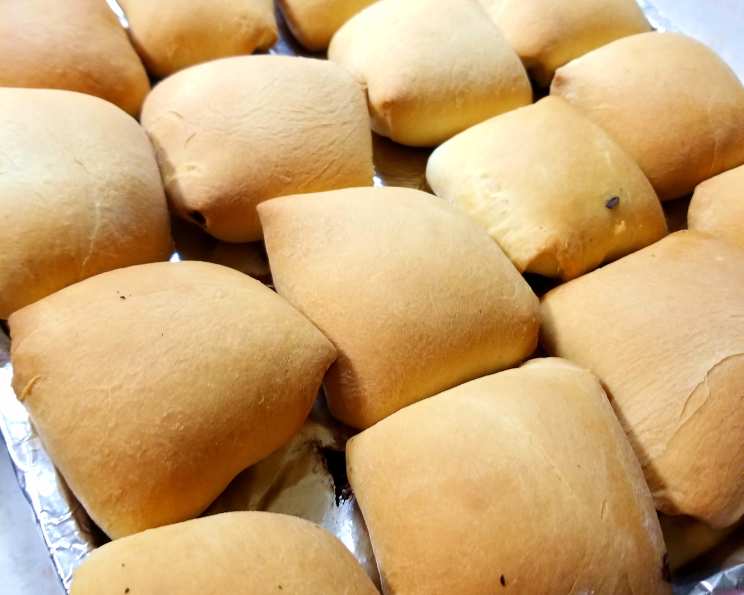
Bierocks: A Taste of Home, Far From Home
The scent alone transports me. It’s not just the yeasty aroma of baking bread, but the savory fragrance of cabbage and browned hamburger mingling in the oven’s warmth. For me, that smell is pure nostalgia, a potent reminder of my grandmother’s kitchen in Kansas, a place where love was always the main ingredient. Even now, living thousands of miles away in Belgium, recreating her bierocks brings me a little closer to home, a comforting taste of childhood that transcends borders.
Recipe Overview
- Prep Time: 1 hour 30 minutes
- Cook Time: 30 minutes
- Total Time: 2 hours 30 minutes
- Yields: 15-20 bierocks
- Dietary Type: Varies (can be adapted)
Ingredients
Filling Ingredients
- 4 cups cabbage, cut fine
- ½ cup onion, cut fine
- 2 tablespoons olive oil
- 1 lb hamburger
- Salt and pepper to taste
- Cayenne pepper (optional)
Dough Ingredients
- 4 1/3 cups all-purpose flour
- 1 package active dry yeast
- 1 cup milk
- 1/3 cup sugar
- 1/3 cup butter
- 1 teaspoon salt
- 2 eggs
Equipment Needed
- Large frying pan
- Separate pan for browning meat
- Large mixing bowl
- Saucepan
- Baking sheet
- Measuring cups and spoons
- Mixing spoon
- Floured surface
- Greased bowl
Instructions
-
Prepare the Cabbage Mixture: In a large frying pan, heat the olive oil over medium heat. Add the finely cut cabbage and onion. Cook until the cabbage is completely softened and golden brown. To expedite the process, add about ½ cup of water, cover the pan, and allow the cabbage to steam. Ensure all the liquid evaporates before proceeding. Season generously with salt, pepper, and cayenne pepper (if using). Set aside.
-
Brown the Hamburger: In a separate pan, brown the hamburger over medium-high heat. Crumble the hamburger as it cooks, ensuring even browning. Drain off any excess grease. Season with salt, pepper, and cayenne pepper (optional).
-
Combine the Filling: Thoroughly mix the cooked cabbage and onion mixture with the browned hamburger. This can be done in advance; refrigerate until ready to assemble the bierocks, or use immediately.
-
Prepare the Dough: In a large mixing bowl, combine 2 cups of the flour with the package of active dry yeast.
-
Heat the Wet Ingredients: In a saucepan, combine the milk, sugar, butter, and salt. Heat over low heat just until warm (115-120 degrees F) and the butter is almost melted, stirring constantly.
-
Combine Wet and Dry Ingredients: Add the warm milk mixture to the flour and yeast mixture. Add the eggs. Beat at low speed for ½ minute, then at high speed for three minutes.
-
Knead the Dough: Stir in as much of the remaining flour as you can mix in with a spoon. Turn the dough out onto a lightly floured surface.
-
Knead Until Smooth: Knead in enough of the remaining flour to make a moderately stiff dough that is smooth and elastic (6 to 8 minutes total).
-
First Rise: Shape the dough into a ball and place it in a greased bowl, turning once to coat. Cover and let rise in a warm place until doubled in size (about 1 hour).
-
Punch Down and Rest: Punch down the risen dough to release the air. Cover and let it rest for 10 minutes.
-
Assemble the Bierocks: Roll out the dough into a large rectangle, approximately ¼ inch thick.
-
Cut into Squares: Cut the rectangle into squares, about 3 inches by 3 inches or 4 inches by 4 inches. The size is not critical, but consistency is helpful for even cooking.
-
Fill the Squares: By the spoonful, place some of the filling mixture into the center of each square, dividing the filling evenly among the squares.
-
Seal the Bierocks: For each square, bring two opposite corner ends of the dough square up to meet one another, then do the same with the remaining ends. Pinch all four corners together firmly with your fingers. You will now have open slits along the diagonals; pinch these together as well, creating a seam along each. A little water on your fingertips will help the dough stick together. The end product should be a square with a seam running from each corner to the center where all four are joined.
-
Second Rise: Set the squares on a baking sheet. If you had trouble keeping the seams closed, you can flip them over so that the seams are against the baking sheet, which will help keep the filling in place. Let the assembled bierocks rise for 30 minutes.
-
Bake: Bake in a preheated oven at 375 °F (190 °C) for 30 minutes, or until golden brown.
Expert Tips & Tricks
- Cabbage Prep: Don’t skimp on cooking the cabbage. The sweetness that comes from caramelization is key to the flavor.
- Dough Temperature: Make sure your milk mixture is not too hot, or it will kill the yeast. Aim for that sweet spot between 115-120°F.
- Sealing the Bierocks: A little moisture is your friend! If the dough isn’t sticking, a dab of water on your fingertips will work wonders.
- Freezing for Later: Assembled, unbaked bierocks freeze beautifully. Freeze them on a baking sheet until solid, then transfer them to a freezer bag. Bake from frozen, adding about 10-15 minutes to the baking time.
- Flavor Boost: Add a pinch of caraway seeds to the cabbage mixture for an extra layer of authentic German flavor.
Serving & Storage Suggestions
Bierocks are delicious served warm straight from the oven. They’re equally enjoyable at room temperature, making them perfect for lunchboxes or picnics.
- Storage: Leftover bierocks can be stored in an airtight container in the refrigerator for up to 3 days.
- Reheating: Reheat in a 350°F (175°C) oven for about 10-15 minutes, or microwave for 30-60 seconds until heated through. For best results, wrap them in foil before reheating in the oven to prevent drying.
- Freezing: Baked bierocks can also be frozen. Wrap them individually in plastic wrap and then place them in a freezer bag for up to 2 months. Reheat from frozen as described above.
Nutritional Information
(Estimated values per serving, based on 18 bierocks from the recipe)
| Nutrient | Amount per Serving | % Daily Value |
|---|---|---|
| Calories | 250 kcal | 13% |
| Total Fat | 10g | 15% |
| Saturated Fat | 4g | 20% |
| Cholesterol | 45mg | 15% |
| Sodium | 200mg | 8% |
| Total Carbs | 30g | 10% |
| Dietary Fiber | 2g | 7% |
| Sugars | 5g | — |
| Protein | 10g | 20% |
Variations & Substitutions
- Gluten-Free Bierocks: Substitute a gluten-free all-purpose flour blend for the regular flour in the dough. Be sure to use a blend that contains xanthan gum or add it separately according to the package directions for best results.
- Vegan Bierocks: Replace the butter in the dough with vegan butter or oil. Substitute the eggs with flax eggs (1 tablespoon flaxseed meal mixed with 3 tablespoons water per egg, let sit for 5 minutes to thicken). Ensure the hamburger is replaced with a plant-based ground meat alternative.
- Different Meats: Experiment with ground turkey, pork, or even a combination of meats for a different flavor profile.
- Spicy Bierocks: Add a pinch of red pepper flakes or a dash of your favorite hot sauce to the filling for an extra kick.
- Cheese Please: Add a handful of shredded cheddar or Monterey Jack cheese to the filling for a cheesy twist.
FAQs (Frequently Asked Questions)
Q: Can I use pre-shredded cabbage?
A: Yes, pre-shredded cabbage will work, but freshly shredded cabbage tends to have a better texture and flavor.
Q: How do I keep the filling from leaking out while baking?
A: Ensure the seams are tightly pinched together and consider placing the bierocks seam-side down on the baking sheet.
Q: Can I make the dough in a bread machine?
A: Yes, you can use a bread machine to make the dough. Follow your machine’s instructions for making dough, then proceed with the recipe from the “ASSEMBLY” step.
Q: What is the best way to reheat bierocks?
A: Reheating in the oven at 350°F (175°C) for 10-15 minutes wrapped in foil prevents them from drying out.
Q: Can I add other vegetables to the filling?
A: Absolutely! Consider adding diced carrots, celery, or bell peppers to the filling for extra nutrients and flavor. Just make sure to cook them along with the cabbage and onions until softened.
Final Thoughts
Bierocks are more than just a recipe; they’re a tradition, a connection to family, and a taste of home, no matter where home might be. Don’t be intimidated by the steps – the process is simpler than it looks, and the results are truly rewarding. Gather your ingredients, roll up your sleeves, and prepare to be transported. I encourage you to try this recipe and share your own variations or family stories. Serve these comforting rolls with a side of German potato salad or a crisp green salad for a complete and satisfying meal. Guten Appetit!