
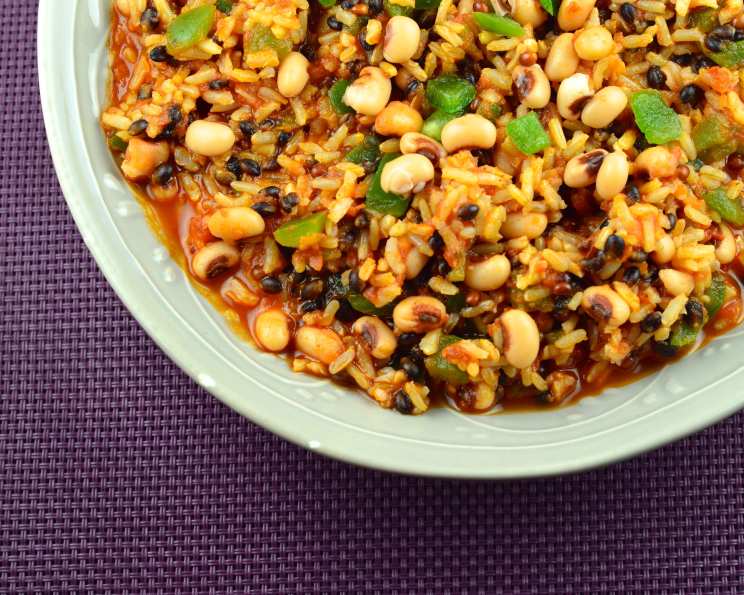
Black-Eyed Peas Veggie Jambalaya: A Taste of Louisiana, Meat-Free
The scent always takes me back – that warm, earthy aroma of simmered tomatoes, herbs, and peppers swirling through the air. It’s the smell of home, of Sunday suppers with my Cajun grandma, and laughter echoing across generations. While her jambalaya was always brimming with sausage and shrimp, I’ve found immense comfort (and deliciousness!) in this veggie-packed version that honors her traditions while embracing plant-based goodness.
Recipe Overview
- Prep Time: 15 minutes
- Cook Time: 25-60 minutes
- Total Time: 40-75 minutes
- Servings: 4
- Yield: About 6 cups
- Dietary Type: Vegan, Gluten-Free
Ingredients
- 1 (28 ounce) can Italian plum tomatoes
- 1 cup vegetable broth
- 1 cup quick-cooking brown rice (see note below)
- 1 teaspoon garlic, minced
- 2 bay leaves
- 1 teaspoon dried basil
- 1 teaspoon dried thyme
- 1 teaspoon hot pepper sauce (to taste)
- 1 large green bell pepper, seeded
- 1 (16 ounce) can black-eyed peas, drained
- Parsley, chopped, for garnish
- Chives, chopped, for garnish
Ingredient Notes:
- While quick-cooking brown rice cuts down the cooking time significantly, regular brown rice can be used instead. Just be prepared to increase the cooking time to around 50 minutes or until the rice is tender.
Equipment Needed
- Large saucepan with lid
- Measuring cups and spoons
- Cutting board
- Knife
Instructions
- In a large saucepan, combine the canned Italian plum tomatoes, vegetable broth, quick-cooking brown rice, minced garlic, bay leaves, dried basil, dried thyme, and hot pepper sauce. Adjust the amount of hot pepper sauce to your preferred level of spiciness.
- Cover the saucepan and bring the mixture to a boil over high heat.
- Once boiling, reduce the heat to a low simmer. Cook time will vary depending on the type of rice used.
- Quick-cooking rice: Simmer for about 15 minutes.
- Regular brown rice: Simmer for about 50 minutes.
Keep the saucepan covered throughout the simmering process. Check the rice periodically and add a splash of water if needed to prevent sticking.
- While the rice is cooking, prepare the green bell pepper. Seed the pepper and cut it into approximately 1-inch pieces.
- Once the rice is cooked and tender, stir in the chopped green bell pepper pieces and the drained black-eyed peas into the saucepan.
- Cover the saucepan again and allow the mixture to simmer for an additional 10 to 12 minutes, stirring once during this time. This step allows the flavors to meld together and the green pepper to soften slightly.
- Before serving, remove and discard the bay leaves from the jambalaya.
- Garnish the jambalaya with freshly chopped parsley and/or chives, if desired, for a burst of fresh flavor and visual appeal.
- Ladle the Black-Eyed Peas Veggie Jambalaya into bowls and serve hot.
Expert Tips & Tricks
- Spice it up! If you’re a fan of heat, consider adding a pinch of cayenne pepper or a dash more hot pepper sauce to the jambalaya.
- Tomato Paste Boost: For a deeper, richer tomato flavor, stir in a tablespoon of tomato paste when you add the other ingredients.
- Veggie Variety: Feel free to add other vegetables to the jambalaya, such as diced celery, onions, or mushrooms. Add them along with the green bell pepper for the last 10-12 minutes of cooking time.
- Make-Ahead Magic: This jambalaya can be made ahead of time and reheated. The flavors actually meld and deepen overnight, making it even more delicious the next day!
- Rice Rescue: If your rice is still too firm after the recommended cooking time, add a little more broth and continue to simmer until tender. Conversely, if the jambalaya seems too watery, remove the lid and simmer for a few minutes to allow some of the liquid to evaporate.
Serving & Storage Suggestions
Serve this hearty Black-Eyed Peas Veggie Jambalaya hot, ladled into bowls. Garnish with fresh parsley or chives for a pop of color and fresh flavor. It pairs perfectly with a side of crusty garlic bread for soaking up all the delicious sauce.
Storage: Leftover jambalaya can be stored in an airtight container in the refrigerator for up to 3-4 days. For longer storage, freeze in individual portions for up to 2-3 months.
Reheating: Reheat refrigerated jambalaya in a saucepan over medium heat, stirring occasionally, until heated through. Add a splash of water or broth if needed to prevent sticking. Frozen jambalaya should be thawed in the refrigerator overnight before reheating.
Nutritional Information
(Estimated values per serving)
| Nutrient | Amount per Serving | % Daily Value |
|---|---|---|
| Calories | 134 kcal | N/A |
| Total Fat | 1.1g | 1% |
| Saturated Fat | 0.3g | 1% |
| Cholesterol | 0mg | 0% |
| Sodium | 381.8mg | 15% |
| Total Carbohydrate | 25.7g | 8% |
| Dietary Fiber | 7g | 28% |
| Sugars | 6.2g | N/A |
| Protein | 7.6g | N/A |
Note: Nutritional information is an estimate and may vary based on specific ingredients and preparation methods.
Variations & Substitutions
- Spicy Sausage Substitute: For a bolder flavor without the meat, try adding plant-based sausage crumbles during the last 10-12 minutes of cooking. Look for brands that offer spicy or andouille-style vegan sausages.
- Quinoa Option: If you’re looking for a grain-free alternative, quinoa can be used in place of the rice. Reduce the cooking time to approximately 15-20 minutes.
- Creamy Coconut Twist: For a richer, creamier texture, substitute half of the vegetable broth with coconut milk. This will add a subtle sweetness to the jambalaya.
- Seasonal Veggies: Adapt the recipe to the seasons by using whatever fresh vegetables are available. In the fall, add butternut squash or sweet potatoes. In the summer, try zucchini or corn.
- Smoked Paprika: For a smoky flavor, add 1/2 teaspoon of smoked paprika along with the other spices.
FAQs (Frequently Asked Questions)
Q: Can I use canned diced tomatoes instead of Italian plum tomatoes?
A: Yes, you can substitute canned diced tomatoes. However, Italian plum tomatoes tend to have a slightly sweeter and richer flavor that enhances the overall taste of the jambalaya. If using diced tomatoes, consider adding a pinch of sugar to balance the acidity.
Q: How do I prevent the rice from sticking to the bottom of the pan?
A: To prevent sticking, ensure that the saucepan is properly covered during simmering and check the liquid level periodically. If the jambalaya seems dry, add a splash of vegetable broth or water. Stirring occasionally also helps to prevent sticking.
Q: Can I add other beans besides black-eyed peas?
A: Absolutely! Kidney beans, pinto beans, or even white beans would all be delicious additions or substitutions for black-eyed peas.
Q: Is it necessary to drain and rinse the black-eyed peas?
A: Yes, it’s generally recommended to drain and rinse canned beans to remove excess sodium and any preservatives. This will also improve the flavor of the jambalaya.
Q: How can I make this recipe even more flavorful?
A: Consider sautéing some diced onions, celery, and bell peppers at the beginning of the recipe before adding the other ingredients. This will create a flavorful base for the jambalaya. You can also add a splash of white wine or apple cider vinegar for extra depth.
Final Thoughts
This Black-Eyed Peas Veggie Jambalaya is more than just a meatless adaptation; it’s a celebration of vibrant flavors, comforting textures, and the joy of sharing a delicious meal with loved ones. I hope this recipe inspires you to experiment in the kitchen, embrace plant-based cuisine, and create your own memories around this versatile dish. Don’t hesitate to add your personal touch, and I’d love to hear about your variations and experiences! Serve alongside a crisp salad or a refreshing glass of iced tea for the ultimate Southern-inspired feast. Enjoy!