
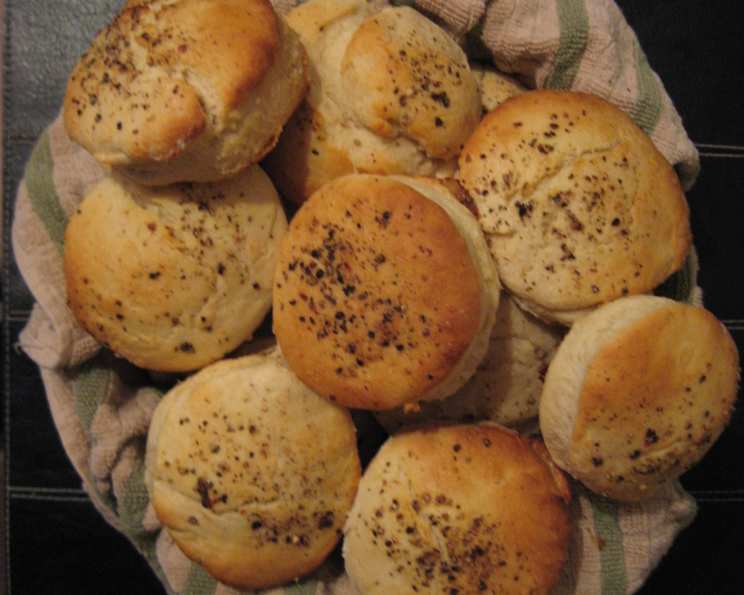
Black Pepper Biscuits: A Baker’s Ode to Savory Delights
The memory is etched in my mind: a frosty winter morning, the kitchen still dark save for the pilot light on the ancient gas stove. My grandmother, a woman whose hands could coax magic from flour and water, would be up before dawn, her silhouette framed by the soft glow. The air would soon be filled with the sharp, awakening aroma of freshly ground black pepper, the foundation of her now-legendary biscuits. Those weren’t just biscuits; they were warm hugs on a plate, savory anchors in a world that sometimes felt too sweet. Today, I share a recipe that evokes that very same feeling – a celebration of simple ingredients elevated by the bold kick of pepper.
Recipe Overview
- Prep Time: 20 minutes
- Cook Time: 12-15 minutes
- Total Time: 35 minutes
- Yields: 10-12 biscuits
- Serves: 10-12
- Dietary Type: Comfort Food
Ingredients
- 4 cups all-purpose flour
- 4 teaspoons baking powder
- 1 teaspoon baking soda
- 1 teaspoon salt
- 12 tablespoons unsalted butter, cold, cut into small pieces, plus
- 4 tablespoons unsalted butter, melted
- 1 1/2 cups buttermilk, cold
- 1/2 cup heavy cream
- 2 teaspoons fresh ground black pepper, not super fine and not coarse, somewhere in between
Equipment Needed
- Large mixing bowl
- Pastry cutter or food processor
- Lightly floured work surface
- 3-inch round cutter
- 2 baking sheets
- Parchment paper
- Pastry brush
Instructions
-
Preheat your oven to 450 degrees F (232 degrees C). It’s crucial that the oven is fully preheated to ensure the biscuits rise properly and achieve a golden-brown crust.
-
In a large bowl, whisk together the flour, baking powder, baking soda, and salt. Make sure the dry ingredients are evenly distributed, which helps the biscuits rise uniformly.
-
Add the cold, cubed butter to the flour mixture. Using a pastry cutter (or pulse briefly in a food processor), cut the butter into the flour until the mixture resembles coarse meal. The butter should be in small pieces and coated with flour; this creates pockets of fat that will steam during baking, resulting in flaky layers. Avoid over-mixing at this stage.
-
Gently pour in the cold buttermilk and combine until the dough just begins to come together. Do not overmix! Overworking the dough will develop the gluten, leading to tough biscuits. A shaggy, slightly sticky dough is ideal.
-
Scrape the dough onto a lightly floured counter. Gently pat the dough into a 10 by 12-inch rectangle about 3/4 inch thick. Avoid pressing down too hard; you want to keep the dough light and airy.
-
Use a 3-inch round cutter to cut out the biscuits. Press straight down; twisting the cutter can seal the edges and prevent the biscuits from rising fully.
-
Press together the scraps of dough, and repeat the cutting process until all the dough is used. Be gentle when re-rolling the scraps; the more you work the dough, the tougher the resulting biscuits will be.
-
Place the biscuits on 2 baking sheets lined with parchment paper. Give them some space to spread out during baking.
-
Brush the tops of the biscuits with heavy cream. This will give them a beautiful golden-brown color and a slightly crisp crust.
-
Sprinkle the tops generously with fresh ground black pepper. Don’t skimp on the pepper; it’s the star of the show!
-
Bake the biscuits for 12 to 15 minutes, or until lightly golden brown. Keep a close eye on them during the last few minutes of baking, as ovens can vary. A toothpick inserted into the center of a biscuit should come out clean.
-
Remove the biscuits from the oven and brush the tops with the melted butter. This adds richness and a glossy sheen.
Expert Tips & Tricks
- Cold is Key: The colder the butter and buttermilk, the better the biscuits. Cold ingredients help prevent the butter from melting into the flour, which is essential for creating flaky layers. You can even chill the flour mixture before adding the buttermilk.
- Don’t Overmix: Overmixing the dough develops the gluten in the flour, resulting in tough, dense biscuits. Mix just until the dough comes together.
- Lamination Technique: For even flakier biscuits, try incorporating a lamination technique. After the initial mixing, gently pat the dough into a rectangle, fold it in thirds like a letter, and then pat it out again. Repeat this process two or three times before cutting out the biscuits.
- Baking Sheets: For even baking, rotate the baking sheets halfway through the baking time.
- High Heat: The high oven temperature is crucial for creating a good rise and a golden-brown crust.
- Make-Ahead Tip: You can prepare the dough ahead of time and store it in the refrigerator for up to 24 hours. Cut out the biscuits just before baking.
Serving & Storage Suggestions
These Black Pepper Biscuits are best served warm, straight from the oven. They’re delicious on their own, or served with:
- Butter and honey or jam: A classic pairing.
- Savory toppings: Cream cheese, chives, and smoked salmon.
- Alongside soup or chili: The perfect accompaniment to a comforting bowl.
- With fried chicken: A Southern staple.
- As part of a breakfast sandwich: With eggs, bacon, and cheese.
Storage:
- Room Temperature: Biscuits are best enjoyed fresh, but can be stored at room temperature in an airtight container for up to 2 days.
- Refrigerator: Store in an airtight container in the refrigerator for up to 4 days.
- Freezer: For longer storage, freeze the biscuits in an airtight container for up to 2 months. Thaw completely before reheating.
Reheating:
- Oven: Reheat in a preheated oven at 350 degrees F (175 degrees C) for 5-10 minutes, or until warmed through.
- Microwave: Reheat in the microwave for 15-30 seconds. Be careful not to overheat, as this can make the biscuits tough.
Nutritional Information
| Nutrient | Amount per Serving | % Daily Value |
|---|---|---|
| Calories | 251.7 kcal | N/A |
| Calories from Fat | 133g | 53% |
| Total Fat | 14.8 g | 22% |
| Saturated Fat | 9.2 g | 45% |
| Cholesterol | 41.6 mg | 13% |
| Sodium | 344 mg | 14% |
| Total Carbohydrate | 25.6 g | 8% |
| Dietary Fiber | 0.9 g | 3% |
| Sugars | 1.2 g | 4% |
| Protein | 4.3 g | 8% |
Note: Nutritional information is an estimate and may vary depending on specific ingredients and preparation methods.
Variations & Substitutions
- Gluten-Free: Use a gluten-free all-purpose flour blend. You may need to add a binder, such as xanthan gum, to help the biscuits hold their shape.
- Dairy-Free: Substitute the buttermilk with a mixture of non-dairy milk and lemon juice or vinegar (1 tablespoon of lemon juice/vinegar per cup of non-dairy milk). Use a dairy-free butter substitute.
- Herbed Biscuits: Add fresh herbs, such as rosemary, thyme, or chives, to the flour mixture.
- Cheese Biscuits: Add shredded cheddar, Parmesan, or Gruyere cheese to the flour mixture.
- Spicy Biscuits: Add a pinch of cayenne pepper or red pepper flakes to the flour mixture.
FAQs (Frequently Asked Questions)
Q: Why are my biscuits flat?
A: This can be caused by several factors, including using old baking powder, overmixing the dough, or not using cold enough ingredients. Make sure your baking powder is fresh, avoid overmixing, and use cold butter and buttermilk.
Q: Can I use salted butter instead of unsalted butter?
A: Yes, you can, but you may want to reduce the amount of salt you add to the flour mixture.
Q: How do I prevent the bottoms of my biscuits from burning?
A: Line your baking sheets with parchment paper. This will help to insulate the bottoms of the biscuits and prevent them from burning.
Q: Can I make these biscuits ahead of time and bake them later?
A: Yes, you can prepare the dough ahead of time and store it in the refrigerator for up to 24 hours. Cut out the biscuits just before baking.
Q: Can I use a different type of milk instead of buttermilk?
A: While buttermilk is ideal for its tanginess and ability to tenderize the dough, you can substitute it with a mixture of regular milk and lemon juice or vinegar (1 tablespoon of lemon juice/vinegar per cup of milk).
Final Thoughts
These Black Pepper Biscuits are more than just a recipe; they’re a taste of nostalgia, a reminder of simple pleasures, and a celebration of bold flavors. I encourage you to try them out and experiment with your own variations. Don’t be afraid to adjust the amount of pepper to your liking, add your favorite herbs or cheeses, and make them your own. These biscuits are incredibly versatile and pair well with a variety of dishes. Share your creations and feedback – I’d love to hear about your baking adventures!