
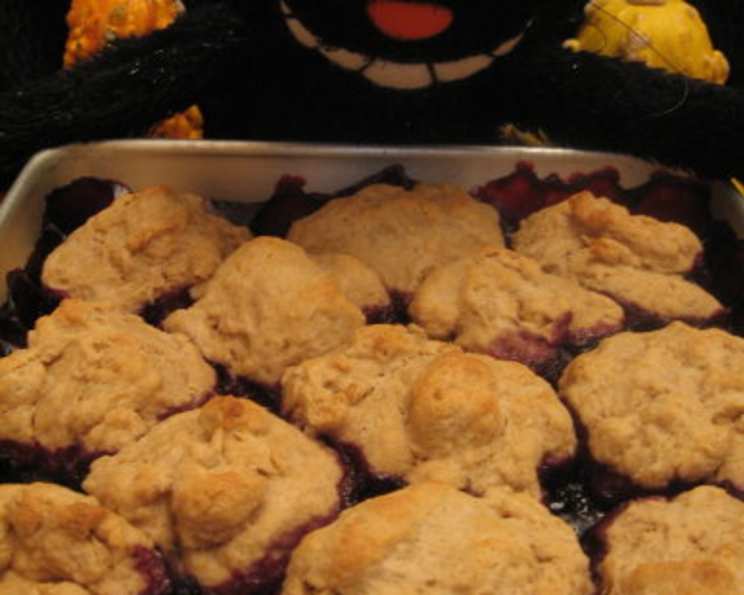
Blackberry Grunt: A Taste of Summer Comfort
My grandmother’s kitchen always smelled of warm berries and simmering sugar during the summer. She would can jams and preserves, and sometimes, if we were lucky, she’d whip up a Blackberry Grunt. The aroma alone transported me back to those sun-drenched afternoons spent picking berries, my hands stained purple and my heart full of joy. This recipe is a reminder of her warmth and the simple pleasure of a homemade dessert, best enjoyed on a porch swing as the evening cools down.
Recipe Overview
- Prep Time: 20 minutes
- Cook Time: 35 minutes
- Total Time: 55 minutes
- Servings: 8
- Dietary Type: Vegetarian
Ingredients
- 9 ½ ounces all-purpose flour (approximately 2 cups)
- 2 teaspoons baking powder
- 1 teaspoon kosher salt
- ¼ teaspoon baking soda
- 2 ounces unsalted butter, cut into small pieces and chilled
- 1 cup buttermilk
- 19 ounces blackberries (fresh or frozen)
- 1 cup sugar
- 1 cup water
- ½ teaspoon ground ginger
Equipment Needed
- Food processor
- Large mixing bowl
- Rubber spatula or wooden spoon
- Parchment or waxed paper
- 10-inch cast iron skillet
- 1-ounce disher or large spoon
Instructions
-
Preheat oven to 400 degrees F. Place a piece of foil on the bottom rack of the oven to catch any drippings. This is crucial, as the blackberry filling tends to bubble over during baking.
-
Place the flour, baking powder, salt, and baking soda into the bowl of a food processor and process for 3 to 4 pulses. The goal here is to evenly distribute the leavening agents without overworking the flour.
-
Pour the flour mixture into a large mixing bowl and, using your hands, work the butter into the flour mixture until about half of the fat disappears and the rest is left in pea-size pieces. This creates pockets of fat that will melt during baking, resulting in a tender and flaky dough. Don’t be afraid to get your hands dirty!
-
Make a well in the center of the mixture and add the buttermilk and stir with a rubber spatula or wooden spoon just until it comes together. Be careful not to overmix the dough. Overmixing develops the gluten, leading to a tough grunt.
-
Turn the mixture out onto a piece of parchment or waxed paper that has been lightly dusted with flour, shape into a ball and wrap and store in the refrigerator while you prepare the filling. This chilling period allows the gluten to relax and the butter to firm up, which prevents the dough from shrinking during baking.
-
Combine the blackberries, sugar, water, and ginger in a large mixing bowl. The ginger adds a subtle warmth that complements the tartness of the blackberries.
-
Pour the mixture into a 10-inch cast iron skillet and place over medium heat. A cast iron skillet is ideal for this recipe because it distributes heat evenly, ensuring that the filling cooks uniformly.
-
Bring this to a simmer, decrease the heat to medium-low and continue to cook, stirring occasionally, for 15 minutes, or until the liquid is thick enough to coat the back of a spoon. This is a crucial step for achieving the right consistency of the filling. If the liquid is too thin, the grunt will be watery.
-
Retrieve the dough from the refrigerator and gently drop it on the fruit mixture using a 1-ounce disher or large spoon, evenly distributing it over the top. Don’t worry about making it perfect; the rustic look is part of the charm of a grunt.
-
Bake in the oven for 15 to 20 minutes, or until the top is just starting to brown. Keep a close eye on it, as ovens vary. The grunt is done when the topping is golden brown and a toothpick inserted into the center comes out clean.
-
Remove from the oven and allow the grunt to cool for 15 to 30 minutes before serving. This allows the filling to thicken slightly and prevents burning your mouth.
Expert Tips & Tricks
- For a richer flavor, use brown sugar instead of granulated sugar in the filling.
- If you don’t have buttermilk, you can make a substitute by adding 1 tablespoon of lemon juice or vinegar to a cup of milk and letting it sit for 5 minutes.
- If you want to add a bit of crunch, sprinkle some oats or chopped nuts on top of the dough before baking.
- If your dough is too sticky to handle, add a little more flour, one tablespoon at a time, until it reaches the desired consistency.
- To prevent the crust from getting soggy, you can lightly brush it with melted butter before adding the fruit filling.
Serving & Storage Suggestions
Serve the Blackberry Grunt warm, straight from the skillet, preferably with a scoop of vanilla ice cream or a dollop of whipped cream. Leftovers can be stored in the refrigerator for up to 3 days. To reheat, simply warm it up in the oven at 350 degrees F until heated through. You can also reheat individual portions in the microwave. While the grunt can be frozen, the texture of the topping may change slightly.
Nutritional Information
| Nutrient | Amount per Serving | % Daily Value |
|---|---|---|
| Calories | 313.5 kcal | N/A |
| Calories from Fat | N/A | 19% |
| Total Fat | 6.7 g | 10% |
| Saturated Fat | 3.9 g | 19% |
| Cholesterol | 16.5 mg | 5% |
| Sodium | 383 mg | 15% |
| Total Carbohydrate | 59.2 g | 19% |
| Dietary Fiber | 4.5 g | 18% |
| Sugars | 29.9 g | N/A |
| Protein | 5.5 g | 11% |
Note: Percent Daily Values are based on a 2,000 calorie diet.
Variations & Substitutions
- Other Berries: Feel free to substitute other berries, such as blueberries, raspberries, or a combination of your favorites.
- Gluten-Free: Use a gluten-free all-purpose flour blend to make this recipe gluten-free. You may need to add a bit more liquid to achieve the right dough consistency.
- Vegan: Replace the butter with a vegan butter alternative and the buttermilk with a plant-based buttermilk (a mixture of plant-based milk and lemon juice or vinegar).
- Spices: Experiment with different spices, such as cinnamon, nutmeg, or cardamom, to add a unique flavor to the filling. A pinch of lemon zest can also brighten the flavors.
FAQs (Frequently Asked Questions)
Q: What is the difference between a grunt and a cobbler?
A: Both are fruit desserts with a topping, but a grunt is typically cooked on the stovetop or baked in a skillet, while a cobbler is usually baked in a deeper dish. The topping of a grunt is also often dropped in spoonfuls, creating a more rustic appearance than a cobbler’s more uniform crust.
Q: Can I use frozen blackberries?
A: Yes, frozen blackberries work perfectly well in this recipe. There’s no need to thaw them before using. Just be aware that they may release more liquid during cooking, so you might need to cook the filling for a longer time to thicken it.
Q: How do I know when the grunt is done?
A: The grunt is done when the topping is golden brown and a toothpick inserted into the center of the topping comes out clean. The filling should also be bubbly and thickened.
Q: Can I make the dough ahead of time?
A: Yes, you can make the dough ahead of time and store it in the refrigerator for up to 24 hours. This is a great way to break up the preparation process.
Q: Why is my grunt topping tough?
A: Overmixing the dough is the most common cause of a tough grunt topping. Be sure to mix the dough just until the ingredients come together, and avoid overworking it.
Final Thoughts
Blackberry Grunt is more than just a dessert; it’s a warm hug on a plate, a reminder of simpler times, and a celebration of summer’s bounty. Don’t be intimidated by the rustic appearance; this recipe is surprisingly easy to make, and the results are incredibly rewarding. Gather your ingredients, preheat your oven, and get ready to create a dessert that will evoke memories and create new ones. Serve it with a scoop of vanilla ice cream and a steaming mug of coffee, and watch as smiles spread around the table. I encourage you to try this recipe and share your experience! What variations did you try? What berries did you use? I can’t wait to hear your feedback.