
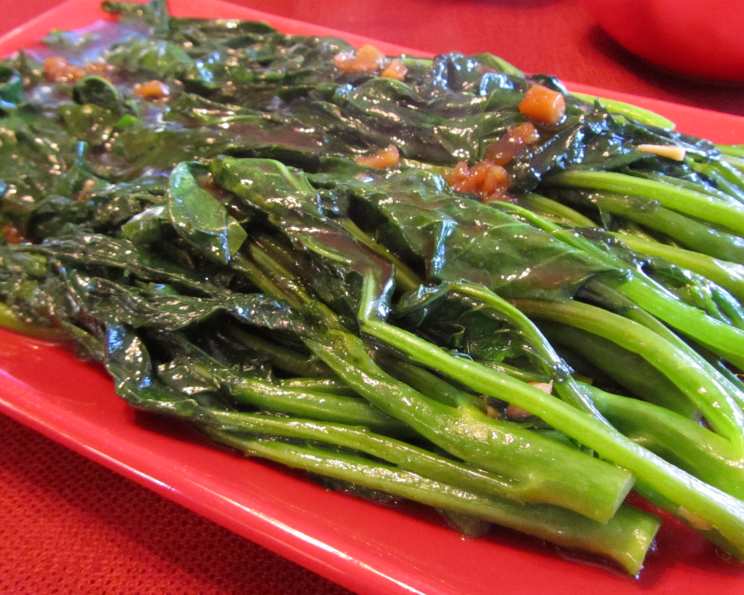
Blanched Gai Lan With Oyster Sauce (Chinese Broccoli)
The scent of garlic sizzling in a wok always transports me back to my grandmother’s tiny kitchen. She would hum softly as she expertly tossed gai lan in a simple yet profound sauce, the steam carrying the promise of a comforting meal. The slightly bitter, vibrant green of the Chinese broccoli against the glossy, dark sauce was always a feast for the eyes, but the first bite – the crisp-tender stalks yielding to the savory-sweet dressing – was pure bliss. It’s a dish that speaks of family, tradition, and the simple pleasures of home-cooked food.
Recipe Overview
- Prep Time: 10 minutes
- Cook Time: 10 minutes
- Total Time: 20 minutes
- Servings: 4-6
- Yield: About 4-6 cups
- Dietary Type: Adaptable to Gluten-Free
Ingredients
- 2 tablespoons oyster sauce
- ½ teaspoon cornstarch
- 2 tablespoons chicken stock
- 1 tablespoon rice wine or 1 tablespoon dry sherry
- ½ teaspoon sugar
- 1 teaspoon soy sauce
- ½ teaspoon sesame oil
- 1 teaspoon finely shredded ginger
- 1 garlic clove, minced finely
- 1 – 1 ½ lb gai lan (chinese broccoli)
- 1 teaspoon soy sauce
- 1 tablespoon olive oil
Equipment Needed
- Small saucepan
- Wok or large pot
- Colander
- Platter
Instructions
-
First, prepare the sauce. In a small saucepan, combine the oyster sauce, cornstarch, chicken stock, rice wine (or dry sherry), sugar, soy sauce, ginger, garlic, and sesame oil.
-
Place the saucepan over medium heat. Bring the mixture to a boil, stirring constantly. Continue to cook until the sauce thickens, which should take just a minute or two. Once thickened, remove the saucepan from the heat and set aside.
-
Prepare the gai lan. Wash the Chinese broccoli thoroughly in cold water to remove any dirt or debris.
-
Trim off and discard the tough bottoms of the gai lan stalks. These parts can be quite fibrous, so it’s best to remove them.
-
If the stalks are particularly thick and tough, use a vegetable peeler to peel the outer layer. This will help make them more tender. You can leave the gai lan whole, or cut it into thirds, depending on your preference. Cutting them into thirds makes them easier to eat.
-
Bring 1 to 3 quarts of water to a boil in a wok (or a large pot). Add the 1 teaspoon of soy sauce and the tablespoon of olive oil to the boiling water. The soy sauce adds a bit of flavor to the cooking water, and the oil helps to keep the greens bright and tender.
-
Add the gai lan to the boiling water. Bring the water back to a second boil, then cover the wok or pot with a lid.
-
Turn off the heat and let the gai lan steam in the covered pot for a minute or two. This brief steaming ensures the gai lan cooks evenly and retains its vibrant color.
-
After steaming, check the gai lan for doneness. The green stalks should be bright green, tender, and slightly crisp. To test, take one stalk and bite into it. It should be easy to chew, but still have a bit of bite.
-
Immediately drain the gai lan in a colander to stop the cooking process. Shake off any excess water to prevent the sauce from becoming diluted.
-
Transfer the drained gai lan to a serving platter.
-
Pour the prepared oyster sauce dressing evenly over the gai lan. Serve immediately while the gai lan is still warm and the sauce is glossy.
Expert Tips & Tricks
- Achieve Perfectly Cooked Gai Lan: The key to great gai lan is to blanch it just enough to tenderize the stalks while maintaining a slight crispness. Overcooking will result in mushy greens.
- Enhance the Sauce: For a richer flavor, try adding a dash of Shaoxing wine to the sauce. It adds a depth of umami that elevates the dish. You can also add a tiny pinch of white pepper for a subtle kick.
- Ginger Preparation: Finely shredding the ginger allows its flavor to infuse the sauce more effectively. A microplane grater works wonderfully for this purpose.
- Garlic, Freshness is Key: Use freshly minced garlic for the best flavor. Avoid pre-minced garlic, which can sometimes have a metallic taste.
- Make Ahead: You can prepare the sauce a day in advance and store it in the refrigerator. Just be sure to reheat it gently before serving.
Serving & Storage Suggestions
Serve blanched gai lan immediately after cooking for the best texture and flavor. It makes an excellent side dish for stir-fries, roasted meats, or steamed fish. You can also serve it as a light lunch with a bowl of steamed rice.
Leftover gai lan can be stored in an airtight container in the refrigerator for up to 2 days. However, the texture may soften slightly. To reheat, gently steam or microwave until warmed through. Adding a splash of water can help to rehydrate the sauce. It’s best not to freeze blanched gai lan, as it will become quite mushy.
Nutritional Information
Please note that nutritional information is an estimate and can vary based on specific ingredients and portion sizes.
| Nutrient | Amount per Serving | % Daily Value |
|---|---|---|
| Calories | 75 kcal | 4% |
| Total Fat | 5g | 6% |
| Saturated Fat | 1g | 5% |
| Cholesterol | 0mg | 0% |
| Sodium | 520mg | 23% |
| Total Carbohydrate | 5g | 2% |
| Dietary Fiber | 2g | 7% |
| Sugars | 3g | |
| Protein | 3g | 6% |
| Vitamin A | 2400 IU | 48% |
| Vitamin C | 70mg | 117% |
| Calcium | 80mg | 8% |
| Iron | 1mg | 6% |
Variations & Substitutions
- Gluten-Free: To make this dish gluten-free, use a gluten-free oyster sauce and tamari instead of regular soy sauce. Always double-check the labels of your ingredients to ensure they are certified gluten-free.
- Vegan: To make this dish vegan, substitute the oyster sauce with a mushroom-based vegetarian stir-fry sauce. Look for sauces specifically labeled “vegetarian oyster sauce” or “mushroom stir-fry sauce.”
- Spicy: Add a pinch of red pepper flakes or a finely chopped chili pepper to the sauce for a spicy kick.
- Garlic Lovers: If you love garlic, add an extra clove or two to the sauce.
- Other Greens: If you can’t find gai lan, you can substitute it with other hearty greens like broccoli rabe or bok choy. Adjust the cooking time accordingly.
FAQs (Frequently Asked Questions)
Q: Can I use dried ginger instead of fresh?
A: While fresh ginger is preferred for its vibrant flavor, you can use dried ginger in a pinch. Use about 1/4 teaspoon of ground ginger in place of the fresh ginger.
Q: How do I know when the gai lan is cooked perfectly?
A: The gai lan should be bright green and tender-crisp. It should be easy to bite into, but still have a bit of a snap. Avoid overcooking, as it will become mushy.
Q: Can I make the sauce ahead of time?
A: Yes, the sauce can be made up to a day in advance and stored in the refrigerator. Reheat it gently before serving.
Q: What if I can’t find rice wine?
A: Dry sherry is a good substitute for rice wine in this recipe. You can also use chicken broth or vegetable broth in a pinch, although the flavor will be slightly different.
Q: Can I add other vegetables to this dish?
A: Absolutely! Feel free to add other vegetables like sliced mushrooms, bell peppers, or snow peas to the wok along with the gai lan.
Final Thoughts
I hope this recipe inspires you to create your own delicious version of blanched gai lan with oyster sauce. It’s a dish that’s both simple and satisfying, perfect for a weeknight meal or a special occasion. Don’t be afraid to experiment with the variations and substitutions to make it your own. And most importantly, enjoy the process of cooking and sharing this dish with your loved ones. Let me know how it turns out!