
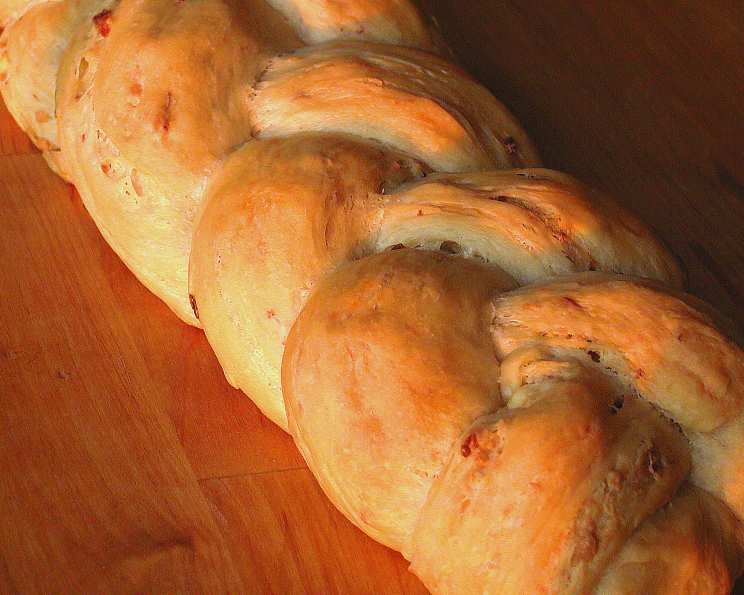
Blue Cheese and Bacon Bread Twist: A Culinary Embrace
The memory of that first bite is forever etched in my mind. It was a chilly autumn evening, the kind that calls for comforting warmth. The aroma of freshly baked bread, mingled with the sharp tang of blue cheese and the smoky allure of bacon, filled my kitchen. I pulled the twisted loaf from the oven, its crust a deep golden brown, and as I sliced into it, the anticipation was almost unbearable. That first taste – the satisfying crunch of the crust giving way to the soft, flavorful interior – it was pure bliss. That Blue Cheese and Bacon Bread Twist wasn’t just food; it was a culinary hug, a moment of pure comfort and joy. And it all started with a little bit of planning ahead…
Recipe Overview
- Prep Time: 30 minutes
- Cook Time: 30-35 minutes
- Total Time: 24 hours 30 minutes
- Yields: 20 slices
- Dietary Type: Not Gluten-Free
Ingredients
- 2 cups white flour
- 1 cup cold water
- 1 (7 g) packet fast-rising active dry yeast (or about three tsp)
- 1 teaspoon salt
- 6-8 slices bacon
- 1 cup crumbled blue cheese
Equipment Needed
- Large mixing bowl
- Cling film
- Floured work surface
- Large bowl
- Frying pan
- Greased and floured baking sheet
Instructions
- The day before you plan to bake the bread, begin by creating a sticky paste. In a mixing bowl, combine 1/2 cup of the white flour, 1/2 cup of the cold water, and two teaspoons of the fast-rising active dry yeast. Ensure all ingredients are thoroughly mixed.
- Once the ingredients are fully combined, cover the bowl tightly with cling film. Place the covered bowl in the refrigerator and allow it to rest overnight. This initial step allows the yeast to activate and develop a rich, complex flavor profile.
- The following day, remove the bowl from the refrigerator. You’ll notice bubbles on top of the mixture, and it will have a distinct, slightly fermented aroma. This is a sign that the yeast has done its work.
- Add the remaining flour, yeast, and salt to the bowl. Begin adding the remaining water gradually, a little at a time. The goal is to achieve a sticky consistency.
- Transfer the dough onto a floured work surface. Sprinkle additional flour on top of the dough. Now, knead the dough for 3-5 minutes, or until it becomes smooth and elastic. The kneading process develops the gluten, which provides structure to the bread.
- Place the kneaded dough in a large bowl. Cover the bowl with cling film and allow the dough to rise in a warm place until it has doubled in size. This process typically takes between 1-2 hours, depending on the temperature of your environment.
- While the dough is rising, prepare the filling. Fry the bacon in a pan until it is crispy. Once cooked, remove the bacon from the pan and allow it to cool slightly. Then, cut the bacon into small pieces.
- In a small bowl, crumble the blue cheese and mix it with the cooked bacon pieces. This combination will provide a burst of flavor in every bite of the bread.
- Once the dough has doubled in size, turn it out onto a floured work surface once more. This time, incorporate the bacon and cheese mixture into the dough. Knead the dough for another 3-5 minutes, ensuring that the filling is evenly distributed throughout.
- Return the dough to the bowl, cover it, and allow it to rise again for approximately one hour. It should increase in size by about a third to a half.
- After the second rise, transfer the dough to a floured work surface. Divide the dough into three equal pieces.
- On a lightly floured surface, roll each piece into a sausage shape, approximately 20 inches long.
- Take the three “sausages” and lay them out in front of you, each at a slight angle to the other. This is where the “twist” comes into play.
- Pinch the three pieces together at one end to secure them. Then, begin the braiding process: take the piece on the left side and bring it over the center piece. Next, take the piece on the right side and bring it over the center piece.
- Continue this braiding pattern until all the dough is braided together. Pinch the ends together to secure the braid.
- Carefully place the braided bread on a greased and floured baking sheet. Cover it with cling film and allow it to rise for one final hour. This final proofing helps to create a light and airy texture.
- Bake the bread in a preheated oven at 200°C (approximately 350°F) for 30-35 minutes, or until it is golden brown and sounds hollow when tapped on the bottom.
Expert Tips & Tricks
- Don’t skip the overnight rest: That long, slow fermentation in the fridge is key to developing a deeply flavorful bread. It’s what separates this from a quick loaf.
- Handle the dough gently: Over-kneading can result in a tough bread. Aim for a smooth, elastic dough, but don’t overwork it.
- Proofing in a warm environment: A slightly warm environment speeds up the rising process. Place the dough in a slightly warm (but not hot!) place.
- Adjust baking time: Ovens vary, so keep an eye on the bread during the last 10 minutes of baking. If it’s browning too quickly, tent it with foil.
Serving & Storage Suggestions
Serve the Blue Cheese and Bacon Bread Twist warm, sliced, and ideally with a smear of butter (if you’re not dairy-free!). It’s fantastic alongside a hearty soup or stew, or as part of a cheese board.
To store leftovers, wrap the bread tightly in plastic wrap or place it in an airtight container. It will keep at room temperature for 2-3 days, in the refrigerator for up to a week, or in the freezer for up to 2 months. To reheat, wrap it in foil and warm it in a low oven (around 150°C or 300°F) until heated through. You can also toast individual slices.
Nutritional Information
| Nutrient | Amount per Serving | % Daily Value |
|---|---|---|
| Calories | 84 kcal | – |
| Calories from Fat | 28 kcal | – |
| Total Fat | 3.2g | 4% |
| Saturated Fat | 1.6g | 8% |
| Cholesterol | 6.7mg | 2% |
| Sodium | 231.6mg | 9% |
| Total Carbohydrate | 10.2g | 3% |
| Dietary Fiber | 0.6g | 2% |
| Sugars | 0.1g | 0% |
| Protein | 3.4g | 6% |
Please note: This nutritional information is an estimate and can vary based on specific ingredients and portion sizes.
Variations & Substitutions
- Cheese variations: Feel free to experiment with different types of cheese. Sharp cheddar, Gruyere, or even a spicy pepper jack would all be delicious.
- Bacon alternatives: If you’re not a bacon fan, try using diced ham, prosciutto, or even vegetarian bacon substitutes.
- Herb additions: Incorporating fresh herbs like rosemary, thyme, or chives into the dough can add another layer of flavor.
- Sweet twist: For a sweet variation, replace the bacon and blue cheese with cinnamon, sugar, and chopped nuts.
FAQs (Frequently Asked Questions)
Q: Can I use a stand mixer to make the dough?
A: Absolutely! Use the dough hook attachment and follow the same steps, adjusting the water amount as needed to achieve the right consistency.
Q: What if my dough doesn’t rise properly?
A: Ensure your yeast is fresh and that the environment is warm enough. Cold temperatures can inhibit yeast activity.
Q: Can I make this bread ahead of time?
A: Yes, you can prepare the dough up to the braiding stage, then refrigerate it overnight. Allow it to come to room temperature before the final rise and baking.
Q: What’s the best way to get a crispy crust?
A: Baking the bread at a slightly higher temperature for the last few minutes can help to achieve a crispier crust. You can also brush the loaf with an egg wash before baking.
Q: Can I freeze the baked bread?
A: Yes, allow the bread to cool completely before wrapping it tightly in plastic wrap and foil. Freeze for up to 2 months. Thaw completely before reheating.
Final Thoughts
This Blue Cheese and Bacon Bread Twist is more than just a recipe; it’s an experience. It’s a chance to slow down, get your hands dirty, and create something truly special. Don’t be intimidated by the overnight step – it’s what gives this bread its incredible flavor. I wholeheartedly encourage you to try this recipe. Share your creations, and don’t hesitate to experiment with your own variations. Enjoy the process, savor the aroma, and relish every delicious bite. Happy baking!