
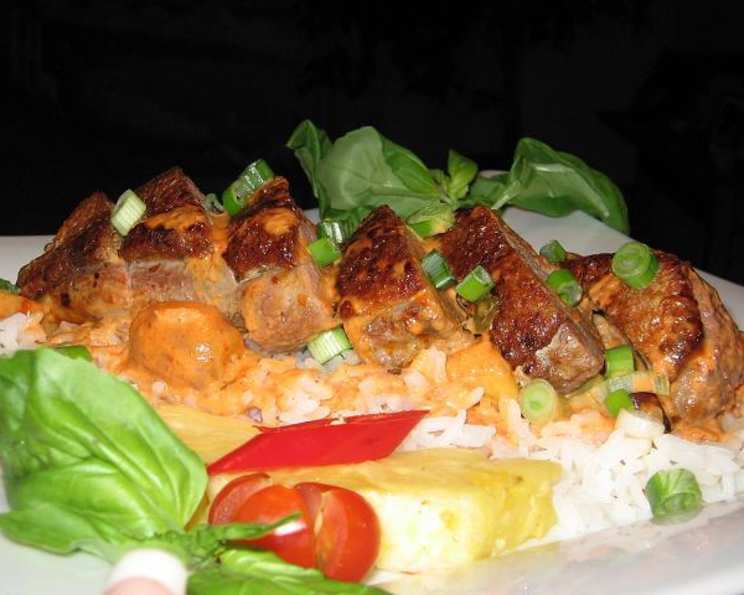
Blue Elephant Thai Red Curry: A Culinary Journey
My first taste of authentic Thai Red Curry wasn’t in a bustling Bangkok street market, but rather in a quiet, unassuming restaurant tucked away in my own neighborhood. The aroma alone, a heady mix of fragrant spices and creamy coconut milk, transported me. Each bite was an explosion of flavor—sweet pineapple dancing with savory duck, the gentle heat of chilies balanced by the coolness of fresh basil. It was an experience that ignited my love for Thai cuisine and set me on a path to mastering the art of the perfect red curry. This recipe, inspired by the Blue Elephant’s Royal Thai Cuisine Red Curry Paste, captures the essence of that first unforgettable taste.
Recipe Overview
- Prep Time: 10 minutes
- Cook Time: 10 minutes
- Total Time: 20 minutes
- Servings: 4
- Dietary Type: Adaptable (can be made gluten-free and dairy-free)
Ingredients
- 1 tablespoon vegetable oil
- 70 g red curry paste (Blue Elephant recommended)
- 400 ml coconut cream
- 180 ml water
- 70 g pineapple, diced
- 5 grapes, preferably black and large
- 2 cherry tomatoes, cut in half
- 2 kaffir lime leaves
- 250 g roasted duck breasts, sliced
- ½ tablespoon fish sauce
- 1 tablespoon sugar
- 1 chili, sliced
- 5 g fresh basil
Optional Notes:
- For a less spicy curry, use less red curry paste.
- Kaffir lime leaves are often available at Asian supermarkets.
- Roasted chicken, tofu, or vegetables can be used instead of duck.
- For a vegan version, use soy sauce or tamari instead of fish sauce.
Equipment Needed
- Saucepan
- Knife
- Cutting board
- Measuring spoons and cups
Instructions
- Heat 1 tablespoon of vegetable oil in a saucepan over medium heat. The pan should be large enough to hold all the ingredients comfortably.
- Add 70g of red curry paste to the heated oil.
- Stir-fry the curry paste until a fragrant aroma develops. This usually takes about 1-2 minutes. Be careful not to burn the paste; reduce the heat if necessary. The aroma is key, it means the paste is blooming and releasing its flavors.
- Reduce the heat to low.
- Pour in 400ml of coconut cream and 180ml of water into the saucepan.
- Stir well to combine the curry paste, coconut cream, and water, ensuring the paste is fully dissolved.
- Bring the mixture to a boil, stirring occasionally to prevent sticking.
- Add the diced 70g of pineapple, 5 grapes, halved 2 cherry tomatoes, and 2 kaffir lime leaves to the boiling curry.
- Gently incorporate 250g of sliced roasted duck breasts into the curry.
- Season with ½ tablespoon of fish sauce and 1 tablespoon of sugar. Adjust these amounts to your preference, tasting as you go.
- Simmer the curry until the ingredients are cooked through and the flavors have melded together. This should take approximately 5-7 minutes.
- Garnish the curry with sliced 1 chili and 5g of fresh basil.
- Serve hot with basmati rice.
Expert Tips & Tricks
- Bloom the Curry Paste: Don’t skip the step of frying the curry paste in oil. This process, known as “blooming,” intensifies the flavor and releases the aromatic oils, creating a richer and more complex curry.
- Adjust the Spice Level: If you’re sensitive to heat, start with a smaller amount of red curry paste and gradually add more to taste. Remember, you can always add more spice, but it’s difficult to remove it once it’s in the dish.
- Kaffir Lime Leaves: Don’t be tempted to eat the kaffir lime leaves. They are added for fragrance and flavor but are not meant to be consumed. You can remove them before serving.
- Coconut Cream vs. Coconut Milk: Coconut cream provides a richer and creamier texture than coconut milk. If you only have coconut milk, you can use it, but be aware that the curry will be less thick.
- Roasting the Duck: For the best flavor, use high-quality roasted duck breasts. If you’re roasting the duck yourself, be sure to score the skin and render the fat properly for crispy skin. You can roast duck breasts at 400°F (200°C) for about 20-25 minutes, or until the internal temperature reaches 160°F (71°C). Allow the duck to rest before slicing.
Serving & Storage Suggestions
Serve your Thai Red Curry hot, ideally with fluffy basmati rice. Garnish with extra fresh basil and sliced chili for a pop of color and flavor.
Leftovers can be stored in an airtight container in the refrigerator for up to 3 days. To reheat, gently warm the curry in a saucepan over low heat or in the microwave. Add a splash of water or coconut milk if the curry becomes too thick.
While freezing is possible, it may slightly alter the texture of the coconut cream. If freezing, use a freezer-safe container and consume within 2 months. Thaw overnight in the refrigerator before reheating.
Do not leave at room temperature for more than 2 hours.
Nutritional Information
| Nutrient | Amount per Serving | % Daily Value* |
|---|---|---|
| Calories | 380 kcal | 19% |
| Total Fat | 25g | 38% |
| Saturated Fat | 18g | 90% |
| Cholesterol | 75mg | 25% |
| Sodium | 300mg | 13% |
| Total Carbohydrate | 20g | 7% |
| Dietary Fiber | 4g | 16% |
| Sugars | 15g | |
| Protein | 20g | 40% |
*Percent Daily Values are based on a 2000 calorie diet. Your daily values may be higher or lower depending on your calorie needs.
Variations & Substitutions
- Vegan Red Curry: Substitute the duck with firm tofu or mixed vegetables such as bell peppers, broccoli, and mushrooms. Replace the fish sauce with soy sauce or tamari.
- Chicken Red Curry: Use sliced cooked chicken breast or thighs instead of duck.
- Seafood Red Curry: Shrimp, scallops, or fish fillets work beautifully in this curry. Add the seafood towards the end of the cooking time, as they cook quickly.
- Gluten-Free Red Curry: Ensure that the red curry paste and fish sauce are gluten-free. Many brands offer gluten-free options.
- Spice Level Adjustment: Use different types of chilies, such as bird’s eye chilies for extra heat or milder jalapeños for less spice.
- Seasonal Fruit: Experiment with different fruits depending on the season. Mangoes, lychees, or rambutan can be delicious additions.
FAQs (Frequently Asked Questions)
Q: Can I use regular curry powder instead of red curry paste?
A: While you could, it won’t provide the same authentic flavor. Red curry paste is a complex blend of herbs and spices that create a unique depth of flavor.
Q: How do I prevent the coconut cream from separating?
A: Use full-fat coconut cream and avoid boiling the curry vigorously for too long. Gentle simmering is key.
Q: Can I make this curry ahead of time?
A: Yes, the curry can be made a day or two in advance. Store it in the refrigerator and reheat it before serving. The flavors often meld and improve overnight.
Q: What kind of rice is best with Thai Red Curry?
A: Fragrant basmati rice is a classic choice, but jasmine rice also works well.
Q: Is it necessary to use kaffir lime leaves?
A: While not strictly necessary, kaffir lime leaves add a distinctive citrusy aroma that enhances the overall flavor of the curry. If you can’t find them, you can substitute with a small amount of lime zest.
Final Thoughts
This Blue Elephant Thai Red Curry recipe is more than just a dish; it’s an invitation to explore the vibrant flavors of Thailand. Don’t be intimidated by the ingredient list – the process is simple and the results are incredibly rewarding. Whether you’re a seasoned cook or just starting your culinary journey, I encourage you to give this recipe a try. Feel free to adjust the ingredients and spice levels to your liking, and don’t hesitate to share your creations and feedback. Pair this curry with a crisp, cold beer or a refreshing glass of Thai iced tea for the ultimate culinary experience. Happy cooking!