
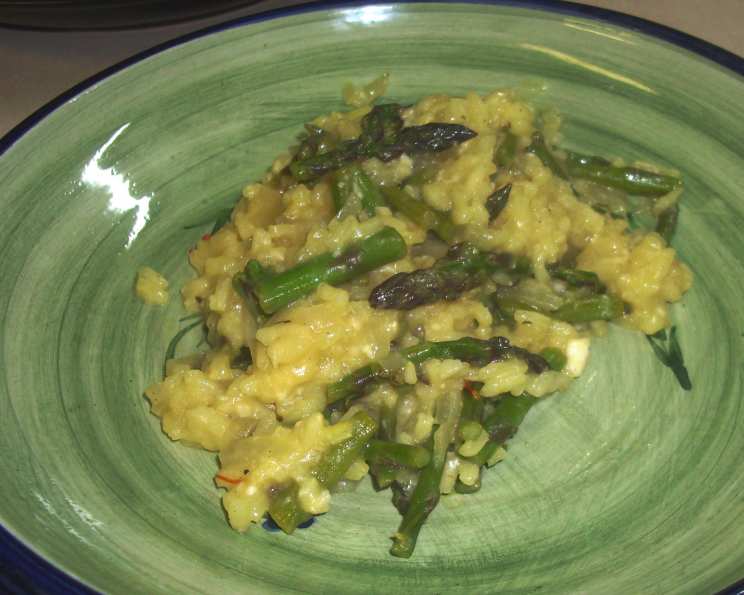
Bobby Flay’s Quick Saffron Risotto With Roasted Asparagus: A Symphony of Flavors
The first time I tasted saffron risotto was at a tiny trattoria tucked away on a cobbled street in Florence. The vibrant yellow hue, the creamy texture, and that subtle, almost floral aroma… it was an experience that transported me. I’ve chased that flavor ever since, and while many recipes claim authenticity, Bobby Flay’s version comes remarkably close. It’s surprisingly quick, packed with bright flavors, and the roasted asparagus adds a welcome earthy counterpoint.
Recipe Overview
- Prep Time: 15 minutes
- Cook Time: 25 minutes
- Total Time: 40 minutes
- Servings: 4
- Dietary Type: Gluten-Free
Ingredients
- 12 asparagus stalks
- 4 tablespoons olive oil
- 1/2 teaspoon salt
- 1/2 teaspoon ground black pepper
- 5 cups chicken stock (or 5 cups water)
- 1/2 teaspoon saffron, large pinch
- 1 small Spanish onion, finely chopped
- 1 garlic clove, finely chopped
- 1 cup arborio rice, uncooked
- 1 cup dry white wine
- 1/4 cup Parmesan cheese, freshly grated
Equipment Needed
- Rimmed baking sheet
- Foil
- Medium pot
- Large, high-sided sauté pan
Instructions
-
Prepare the Asparagus: Preheat your oven to 425 degrees Fahrenheit (220 degrees Celsius). Line a rimmed baking sheet with foil.
-
Roast the Asparagus: Place the asparagus on the prepared baking sheet. Toss with some of the olive oil (approximately 2 tablespoons), ensuring each stalk is lightly coated. Sprinkle with salt and pepper, spreading the asparagus out in a single layer on the sheet.
-
Roasting Time: Roast the asparagus for 6 to 8 minutes, or until tender-crisp and lightly browned. Keep a close eye; ovens vary, and you want them cooked through but still a little snappy.
-
Cool and Chop: Once roasted, remove the asparagus from the oven and let it cool slightly. Then, cut the roasted asparagus into approximately ½-inch pieces on the bias (at an angle). Set aside for later.
-
Heat the Stock: In a medium pot, heat the chicken stock (or water, if using) to a simmer over high heat. Once bubbles start to form around the edges, reduce the heat to low, so the stock is barely simmering.
-
Infuse the Saffron: Add the saffron to the simmering chicken stock. Stir occasionally, about every 5 minutes, to help release the color and flavor of the saffron. This steeping process is crucial for maximizing the saffron’s impact on the risotto.
-
Sauté the Onion: In a large, high-sided sauté pan, heat the remaining olive oil (approximately 2 tablespoons) over medium heat. Add the finely chopped Spanish onion and sauté for 4 to 5 minutes, or until softened and translucent. Don’t let it brown.
-
Add the Garlic: Add the finely chopped garlic to the pan and sauté for 1 minute more, stirring constantly, until fragrant. Be careful not to burn the garlic, as it can become bitter.
-
Toast the Rice: Add the uncooked arborio rice to the pan with the onion and garlic. Stir continuously for 2 minutes to toast the rice grains. This helps prevent the risotto from becoming gluey. The rice should become slightly translucent around the edges.
-
Deglaze with Wine: Pour the dry white wine into the pan. Stir constantly until the wine is completely absorbed by the rice. This will take a minute or two. The wine adds acidity and complexity to the risotto.
-
Add Stock Gradually: Now, begin adding the simmering chicken stock to the rice, one cup at a time. Stir constantly until each cup of stock is almost completely absorbed before adding the next. This is the key to achieving the creamy texture of risotto.
-
Patience is Key: Continue adding the chicken stock one cup at a time, stirring continuously, until all 5 cups of stock have been used. This process will take approximately 20 to 30 minutes. The rice may not look fully cooked until most of the liquid is gone.
-
Check for Doneness: Taste the rice as you near the end of the cooking time. It should be al dente – tender but with a slight bite. The final product should be thick and creamy, not soupy.
-
Incorporate the Asparagus and Cheese: Stir in the roasted asparagus pieces and the freshly grated Parmesan cheese into the risotto. Cook for a few minutes more, stirring constantly, until the asparagus is heated through and the cheese is melted and incorporated.
-
Season to Taste: Season the risotto with additional salt and pepper to taste. Remember that the Parmesan cheese is already salty, so adjust accordingly.
-
Serve Immediately: Serve the saffron risotto with roasted asparagus immediately. Risotto is best enjoyed hot and freshly made.
Expert Tips & Tricks
- Warm Stock is Crucial: Ensure your chicken stock is hot and simmering throughout the cooking process. Cold stock will lower the temperature of the rice and slow down the cooking time, potentially resulting in unevenly cooked risotto.
- Stir, Stir, Stir: Constant stirring is essential for releasing the starches in the arborio rice, which creates the creamy texture that defines risotto. Don’t be tempted to walk away from the stove!
- Don’t Overcook the Asparagus: Roasted asparagus should be tender-crisp, not mushy. Keep a close eye on it in the oven and adjust the cooking time as needed.
- Saffron Quality Matters: The quality of your saffron will directly impact the flavor and color of your risotto. Use high-quality saffron threads for the best results.
- Add a knob of butter: Right at the very end, swirl in a tablespoon of cold butter for extra richness and shine. This technique, called “mantecare,” is a classic Italian trick.
Serving & Storage Suggestions
Serve the saffron risotto with roasted asparagus immediately as a main course or a side dish. Garnish with a sprinkle of extra grated Parmesan cheese and a drizzle of olive oil for an elegant presentation. A sprig of fresh parsley adds a touch of color.
Leftover risotto can be stored in an airtight container in the refrigerator for up to 2 days. Reheat gently in a saucepan over low heat, adding a splash of chicken stock or water to loosen it up. While risotto is best fresh, reheating it properly can still yield a delicious result. Freezing is not recommended, as the texture can become grainy.
Nutritional Information
| Nutrient | Amount per Serving | % Daily Value |
|---|---|---|
| Calories | 380 kcal | 19% |
| Total Fat | 16g | 25% |
| Saturated Fat | 5g | 25% |
| Cholesterol | 15mg | 5% |
| Sodium | 850mg | 35% |
| Total Carbohydrate | 50g | 17% |
| Dietary Fiber | 3g | 12% |
| Sugars | 5g | N/A |
| Protein | 10g | 20% |
Note: Nutritional information is an estimate and may vary based on specific ingredients and preparation methods.
Variations & Substitutions
- Vegetarian/Vegan: Substitute vegetable broth for the chicken stock and omit the Parmesan cheese (or use a vegan Parmesan alternative).
- Other Vegetables: Experiment with adding other roasted vegetables, such as mushrooms, bell peppers, or zucchini.
- Seafood Risotto: Add shrimp, scallops, or mussels during the last few minutes of cooking for a seafood twist.
- Lemon Zest: Grate lemon zest into the risotto during the last few minutes of cooking for a bright, citrusy flavor.
- Herbs: Incorporate fresh herbs like thyme, rosemary, or chives for added aroma and flavor.
FAQs (Frequently Asked Questions)
Q: Can I use a different type of rice?
A: While other types of rice might work, arborio rice is highly recommended for risotto. Its high starch content is what gives risotto its signature creamy texture.
Q: Can I make this risotto ahead of time?
A: Risotto is best enjoyed fresh, but you can prepare the roasted asparagus ahead of time. Store it in the refrigerator until ready to use.
Q: My risotto is too thick. What should I do?
A: Add a little more hot chicken stock or water, one tablespoon at a time, until the risotto reaches your desired consistency.
Q: How do I know when the risotto is done?
A: The rice should be al dente, meaning it’s tender but still has a slight bite. The risotto should be thick and creamy, but not soupy.
Q: Can I use salted butter instead of olive oil?
A: Yes, you can substitute salted butter for the olive oil, but be mindful of the added salt content. Adjust the amount of salt you add to the risotto accordingly.
Final Thoughts
This saffron risotto with roasted asparagus is more than just a meal; it’s an experience. The vibrant color, the fragrant aroma, and the creamy texture all come together to create a dish that is both comforting and elegant. Don’t be intimidated by the process – with a little patience and attention, you can easily create this restaurant-quality dish at home. So, gather your ingredients, put on some music, and get ready to transport yourself to Italy with every delicious bite. I encourage you to try this recipe, and I’d love to hear your feedback and any variations you come up with! Pair it with a crisp glass of Pinot Grigio for a truly unforgettable dining experience.