
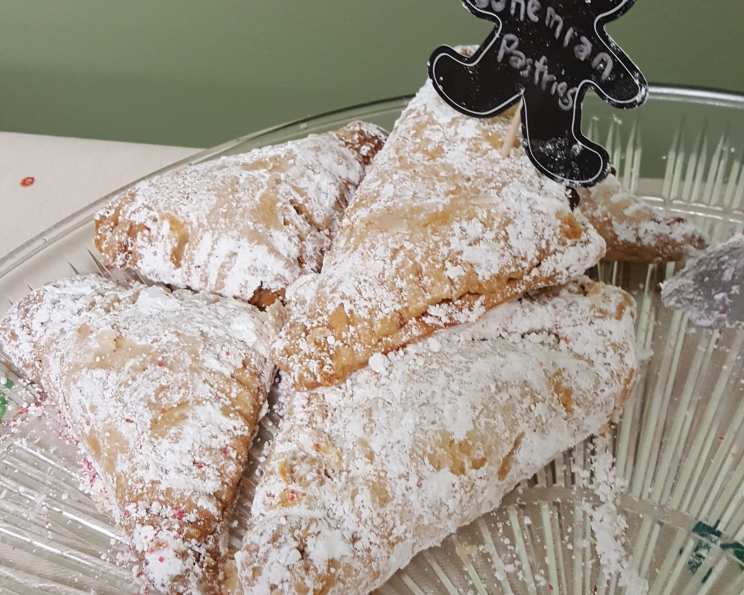
Bohemian Pastry: A Taste of Nostalgia
The aroma of these pastries always takes me back to my grandmother’s kitchen. She had a knack for creating simple yet unforgettable treats, and these Bohemian pastries were a Christmas staple. I remember standing on a stool, mesmerized as she carefully folded each square of dough, sealing in the sweet, jewel-toned preserves. The anticipation while they baked, filling the house with warmth and a delicate buttery fragrance, was almost unbearable. And finally, the first bite – the flaky crust yielding to the burst of fruit, dusted with a cloud of powdered sugar – pure bliss.
Recipe Overview
- Prep Time: 45 minutes (plus chilling time)
- Cook Time: 20-25 minutes
- Total Time: 1 hour 5 minutes (plus chilling time)
- Yields: 20 pastries
- Serves: 10
- Dietary Type: Vegetarian
Ingredients
- 3 cups all-purpose flour
- 1 1/2 cups vegetable shortening
- 1/2 cup unsalted butter, cold and cubed
- 1/2 teaspoon salt
- 1 tablespoon granulated sugar
- 1 1/4 ounces active dry yeast (about 1 1/4 packages)
- 1/2 cup whole milk, lukewarm
- 2 large egg yolks, slightly beaten
- 1 1/2 cups fruit preserves or marmalade (apricot, raspberry, or prune are excellent choices)
- Powdered sugar, for dusting
Equipment Needed
- Large mixing bowl
- Measuring cups and spoons
- Pastry blender or food processor
- Small bowl
- Plastic wrap
- Rolling pin
- Pizza cutter or knife
- Baking sheet
- Fork
- Cooling rack
Instructions
-
In a large mixing bowl, combine the flour and salt. Cut in the vegetable shortening and cold butter using a pastry blender or pulse in a food processor until the mixture resembles coarse crumbs. The colder the butter, the flakier the final pastry will be.
-
In a separate small bowl, combine the granulated sugar, yeast, lukewarm milk, and egg yolks. Stir well to dissolve the yeast. Let the mixture stand for 5-10 minutes, or until it becomes foamy, indicating that the yeast is active.
-
Add the liquid mixture to the flour/shortening mixture in the large bowl. Mix until just combined. The dough should come together and form a nice ball. Avoid overmixing, which can develop the gluten and result in a tough pastry.
-
Cover the dough ball tightly with plastic wrap and refrigerate overnight, or for at least 5 hours. This chilling period is crucial for developing the flavor and relaxing the gluten, making the dough easier to roll out.
-
Preheat your oven to 375°F (190°C).
-
Remove the dough from the refrigerator. On a lightly floured surface, roll the dough out thinly, like pie crust. Aim for a thickness of about 1/8 inch.
-
Using a pizza cutter or sharp knife, cut the dough into 3-inch squares.
-
Place a teaspoon of preserves or marmalade in the center of each square. Be careful not to overfill, as the filling can run out during baking.
-
Fold each pastry from corner to corner, forming a triangle.
-
Use a fork or your thumb to crimp and seal the edges of each triangle tightly, preventing the filling from escaping.
-
Place the filled and sealed pastries on a lightly greased baking sheet or one lined with parchment paper.
-
Bake in the preheated oven for 20 to 25 minutes, or until the pastries are golden brown.
-
Remove from the oven and let the pastries cool slightly on the baking sheet before transferring them to a cooling rack.
-
While the pastries are still slightly warm, dust them generously with powdered sugar.
-
Cool completely before serving.
Expert Tips & Tricks
- For an even flakier crust, use ice-cold butter and shortening. You can even chill the flour and mixing bowl before starting.
- If the dough is too sticky to roll out easily, lightly dust it with more flour.
- Ensure the oven is fully preheated before baking to ensure even browning and a properly cooked crust.
- For a richer flavor, brush the pastries with a beaten egg wash before baking. This will also give them a beautiful golden sheen.
- Don’t have preserves? Try using thick pie fillings or even sweetened cream cheese.
Serving & Storage Suggestions
These Bohemian pastries are best served warm or at room temperature, ideally on the day they are baked. They make a delightful addition to breakfast, brunch, or afternoon tea. Store any leftovers in an airtight container at room temperature for up to 3 days, or in the refrigerator for up to a week. You can also freeze them for longer storage; just wrap them individually in plastic wrap before placing them in a freezer bag. To reheat, simply warm them in a preheated oven at 300°F (150°C) for a few minutes, or microwave them briefly.
Nutritional Information
| Nutrient | Amount per Serving | % Daily Value |
|---|---|---|
| Calories | 657 kcal | 33% |
| Total Fat | 42 g | 54% |
| Saturated Fat | 15 g | 75% |
| Cholesterol | 59 mg | 20% |
| Sodium | 223 mg | 10% |
| Carbohydrate | 65 g | 24% |
| Fiber | 3 g | 12% |
| Sugar | 25 g | N/A |
| Protein | 7 g | 14% |
Note: Nutritional information is an estimate and may vary depending on specific ingredients and portion sizes.
Variations & Substitutions
- Gluten-Free: Substitute the all-purpose flour with a gluten-free blend designed for baking. You may need to add a binder like xanthan gum to help hold the dough together.
- Dairy-Free: Use a plant-based butter substitute in place of the butter. Ensure your milk is also a plant-based alternative like almond, soy, or oat milk.
- Filling Variations: Experiment with different fruit preserves, marmalades, or even nut butters. Consider adding a sprinkle of chopped nuts or seeds to the filling for added texture and flavor. You can also use a poppy seed filling for a more traditional Bohemian flavor.
- Citrus Zest: Add the zest of a lemon or orange to the dough for a brighter, more aromatic pastry.
- Spice Infusion: Incorporate a pinch of cinnamon, nutmeg, or cardamom into the dough or filling for a warm, comforting flavor.
FAQs (Frequently Asked Questions)
Q: Can I use margarine instead of butter?
A: While butter is recommended for the best flavor and texture, margarine can be substituted. However, keep in mind that margarine may alter the taste and flakiness of the pastry.
Q: Why is it important to chill the dough overnight?
A: Chilling the dough allows the gluten to relax, which results in a more tender and flaky pastry. It also helps the flavors to meld together and makes the dough easier to handle.
Q: What if my filling runs out during baking?
A: To prevent the filling from running out, make sure to seal the edges of the pastries tightly with a fork or your thumb. Also, avoid overfilling the pastries with too much preserve.
Q: Can I freeze the unbaked pastries?
A: Yes, you can freeze the unbaked pastries. Place them on a baking sheet lined with parchment paper and freeze until solid. Then, transfer them to a freezer bag and store for up to 2 months. When ready to bake, bake from frozen, adding a few extra minutes to the baking time.
Q: How can I tell if the pastries are done baking?
A: The pastries are done when they are golden brown and the crust is firm to the touch. The bottom should also be lightly browned.
Final Thoughts
These Bohemian pastries are more than just a delicious treat; they’re a taste of tradition and a connection to cherished memories. Don’t be intimidated by the seemingly long process – each step is simple and rewarding. Gather your ingredients, roll up your sleeves, and create a batch of these delightful pastries. Share them with loved ones, and watch as their faces light up with joy. And please, feel free to adjust the recipe to your liking. Happy baking!