
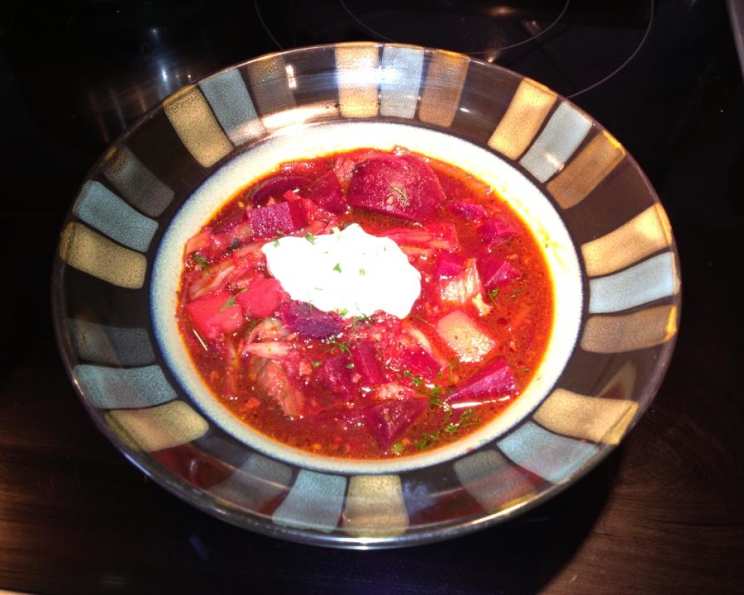
Authentic Ukrainian Classic Borsch
The scent of borsch always brings me back to my childhood. I remember huddling in my grandmother’s cozy kitchen, the aroma of earthy beets mingling with the savory scent of simmering beef. She would hum quietly as she stirred the deep red soup, a symphony of flavors and traditions passed down through generations. Every spoonful was a warm embrace, a taste of home, and a reminder of the love that nourished both body and soul. To this day, borsch remains more than just a soup; it’s a vibrant tapestry woven with cherished memories.
Recipe Overview
- Prep Time: 45 minutes
- Cook Time: 2 hours 20 minutes
- Total Time: 3 hours 5 minutes
- Servings: 10
- Yield: Approximately 4 quarts
- Dietary Type: Varies based on modifications, see variations below
Ingredients
- 1 1/2 lbs red beets (green tops removed)
- 1 lb lean beef chuck (cut into bite-size pieces)
- 1/2 lb thick slab bacon (diced) or 1/2 lb pancetta (diced)
- 1 cup yellow onion (chopped)
- 1 carrot (peeled & grated)
- 2 teaspoons dried oregano
- 1 teaspoon celery salt or 1 teaspoon celery seeds
- 2 teaspoons dill seeds
- 1 tablespoon minced garlic
- 2 bay leaves
- 3 tablespoons red wine vinegar
- 1 teaspoon salt
- 1 teaspoon ground black pepper
- 3 tablespoons tomato paste
- 2 quarts water or 2 quarts beef broth
- 1 tablespoon vegetable oil
- 1 large potato (peeled & diced)
- 6 cups green cabbage (shredded)
- 3 tablespoons fresh flat-leaf parsley (chopped)
- Sugar (to taste)
- 1 cup real sour cream
- 1/2 cup fresh dill (chopped)
- Russian black bread (for serving)
Equipment Needed
- Dutch oven or stockpot
- Baking sheet
- Slotted spoon
- Paper towels
- Grater
- Knife
Instructions
- Preheat your oven to 350 degrees Fahrenheit (175 degrees Celsius).
- In a Dutch oven or stockpot, place the diced bacon or pancetta and cook over medium-high heat, stirring, until the fat begins to render, about 3 minutes. You want the bacon to become slightly crispy.
- Add the beef and continue to cook, stirring, until the beef is brown on all sides, about 6 minutes. Browning the beef adds depth of flavor to the borsch.
- Remove both meats from the pan with a slotted spoon and drain on paper towels. This step removes excess grease and keeps the meat from becoming greasy in the soup.
- Add the onions and carrot to the rendered fat in the Dutch oven or stockpot and stir to coat. Ensure the vegetables are evenly coated in the fat.
- Cook until soft, about 4 minutes. The onions should become translucent and the carrots slightly tender.
- Add the garlic, oregano, dill seeds, and bay leaves and cook, stirring, for 1 minute. This allows the spices to bloom and release their aromas. Be careful not to burn the garlic.
- Add the red wine vinegar and stir to deglaze the pot. Use a wooden spoon to scrape up any browned bits from the bottom of the pot – these bits are packed with flavor!
- Return both meats to the pot and add the water (or beef broth), salt, and pepper, and bring to a boil. Using beef broth will result in a richer, more intense flavor.
- Reduce the heat and simmer, partially covered, until the beef is tender, about 2 hours. Check the beef periodically and add more water if needed to keep the ingredients submerged.
- Meanwhile, place the beets on a baking sheet and brush with the vegetable oil. This helps the beets roast evenly and prevents them from drying out.
- Roast until tender and can be pierced easily with a fork or knife, about 1 hour. Roasting the beets concentrates their sweetness and enhances their earthy flavor.
- Remove from the oven and set aside until cool enough to handle. Handle the beets carefully as they will be hot.
- When the beets are cool enough to handle, trim the stem and root ends and remove the skins. You can use your hands or a small paring knife to peel the beets. The skins should slip off easily once the beets are roasted.
- Coarsely grate or chop the beets and set aside. The size of the beets is a matter of preference. Grating results in a more even distribution of color and flavor, while chopping provides a chunkier texture.
- When the meat is tender and falling apart, add the beets, potatoes, cabbage, parsley, tomato paste, and celery salt (or celery seeds) and simmer over low heat for another 30 minutes. The potatoes and cabbage should become tender during this time.
- Season with additional red wine vinegar, salt, freshly ground black pepper, and sugar to taste. Taste the borsch frequently and adjust the seasonings to your preference. The red wine vinegar adds a touch of acidity to balance the sweetness of the beets, and the sugar enhances their natural flavor.
- Ladle the borsch into bowls and garnish with a dollop of sour cream and a pinch of fresh dill. The sour cream adds richness and tanginess, while the fresh dill provides a bright, herbaceous note.
- Also, serve with Russian black bread. The hearty, slightly sour flavor of Russian black bread pairs perfectly with the richness of the borsch.
Expert Tips & Tricks
- Roast your beets in advance: Save time by roasting the beets a day or two ahead of time. Store them in the refrigerator until ready to use.
- Use good quality beef broth: If you’re not using water, opt for a homemade or high-quality store-bought beef broth to enhance the flavor of the borsch.
- Adjust the sweetness: The sweetness of beets can vary. Taste the borsch and add more sugar as needed to balance the flavors.
- Don’t skip the deglazing step: Deglazing the pot with red wine vinegar is crucial for adding depth of flavor to the borsch.
- Freeze for later: Borsch freezes beautifully, making it a great make-ahead meal.
Serving & Storage Suggestions
Serve borsch hot, garnished with a dollop of sour cream and a sprinkle of fresh dill. Accompany it with slices of hearty Russian black bread or pampushki (Ukrainian garlic bread).
Storage:
- Room Temperature: Borsch should not be left at room temperature for more than 2 hours.
- Refrigerator: Store leftover borsch in an airtight container in the refrigerator for up to 3-4 days.
- Freezer: For longer storage, freeze borsch in freezer-safe containers for up to 2-3 months. Thaw overnight in the refrigerator before reheating.
Reheating:
Reheat borsch gently in a saucepan over medium heat, stirring occasionally, until heated through. You can also reheat it in the microwave.
Nutritional Information
| Nutrient | Amount per Serving | % Daily Value |
|---|---|---|
| Calories | 352 kcal | 18% |
| Total Fat | 21g | 32% |
| Saturated Fat | 8.2g | 40% |
| Cholesterol | 71.3mg | 23% |
| Sodium | 574.4mg | 23% |
| Total Carbohydrate | 20.4g | 6% |
| Dietary Fiber | 4.6g | 18% |
| Sugars | 8g | 32% |
| Protein | 21.4g | 42% |
Note: Nutritional information is an estimate and may vary based on specific ingredients and portion sizes.
Variations & Substitutions
- Vegetarian Borsch: Omit the beef and bacon/pancetta. Use vegetable broth instead of beef broth. Add beans or mushrooms for extra protein and umami flavor.
- Vegan Borsch: Omit the beef and bacon/pancetta. Use vegetable broth. Substitute sour cream with a plant-based alternative like cashew cream or coconut cream.
- Chicken Borsch: Substitute the beef chuck with chicken thighs or drumsticks.
- White Borsch (Bialy Barszcz): This variation is popular in Poland and uses a fermented rye flour starter.
- Seasonal Variations: Adapt the recipe based on seasonal vegetables. In the summer, add fresh tomatoes and bell peppers. In the fall, incorporate pumpkin or squash.
FAQs (Frequently Asked Questions)
Q: Can I use canned beets instead of fresh beets?
A: While fresh beets are preferred for their flavor and texture, you can use canned beets in a pinch. Be sure to drain them well and adjust the seasoning accordingly, as canned beets tend to be sweeter.
Q: Can I make this borsch in a slow cooker?
A: Yes, you can adapt this recipe for a slow cooker. Brown the meat and sauté the vegetables as instructed in the recipe. Then, transfer everything to a slow cooker, add the remaining ingredients, and cook on low for 6-8 hours or on high for 3-4 hours, or until the beef is tender.
Q: How can I adjust the tartness of the borsch?
A: The tartness of borsch comes from the red wine vinegar. Add more vinegar to increase the tartness, or add a touch of sugar to balance it out. You can also add a squeeze of lemon juice for a brighter flavor.
Q: Can I add beans to this borsch recipe?
A: Yes, beans are a common addition to borsch, especially in vegetarian or vegan versions. Kidney beans or cannellini beans work well. Add them along with the potatoes and cabbage.
Q: How long does borsch last in the refrigerator?
A: Properly stored borsch will last for 3-4 days in the refrigerator. Make sure to store it in an airtight container to prevent it from absorbing other flavors in the fridge.
Final Thoughts
Now it’s your turn to embark on this culinary journey and create your own authentic Ukrainian borsch. Embrace the rich flavors, the vibrant colors, and the heartwarming tradition that this soup represents. Don’t be afraid to adjust the seasonings to your preference and make it your own. Whether you share it with family and friends or savor it on a quiet evening, I hope this borsch brings you warmth, comfort, and a taste of Ukrainian hospitality. Enjoy!