
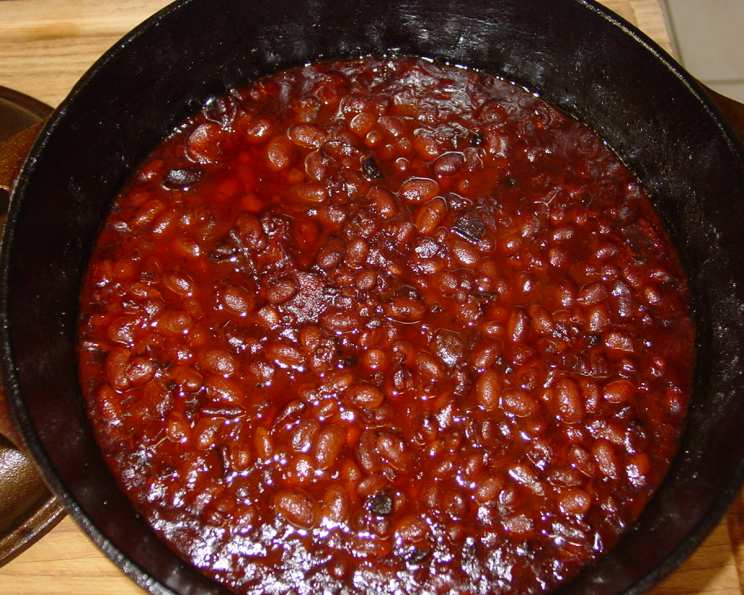
Boston Baked Beans in Bean Pot – Durgin-Park
The aroma still lingers in my mind: sweet, smoky, and deeply savory. It’s the scent of Boston Baked Beans, specifically the kind served at Durgin-Park. My first encounter with this legendary Boston establishment was during a college trip. Crammed around a communal table with strangers, a gruff waitress plopped down a steaming bean pot in front of me. One bite, and I was hooked. The rich molasses, the tender beans, the salty pork – it was pure New England comfort in a bowl, a dish that spoke of history and tradition. Now, let’s bring that iconic flavor into your kitchen!
Recipe Overview
- Prep Time: 15 minutes (plus overnight soaking)
- Cook Time: 6 hours
- Total Time: 6 hours 15 minutes (plus overnight soaking)
- Servings: Approximately 7 cups
- Yield: 1 (2 1/2-quart) bean pot
- Dietary Type: Not Vegetarian
Ingredients
- 1 pound dried navy beans (California pea beans or small white beans can be substituted)
- ½ teaspoon baking soda
- ½ pound salt pork
- ½ medium onion, peeled and uncut
- 4 tablespoons sugar
- ⅓ cup molasses
- 1 teaspoon dry mustard
- 1 teaspoon salt
- ¼ teaspoon pepper
Equipment Needed
- 2 ½-quart bean pot or covered casserole dish
- Dutch oven or large pot
- Colander
- Measuring cups and spoons
- Knife
- Cutting board
Instructions
-
Soak the beans: Place the navy beans in a large bowl or pot. Cover them with plenty of cold water. Let them soak overnight (at least 8 hours). This step is crucial for ensuring the beans cook evenly and become tender.
-
Preheat the oven: In the morning, preheat your oven to 325°F (160°C).
-
Parboil the beans: Place the baking soda in a Dutch oven or large pot. Fill the pot halfway with water and bring to a boil over high heat.
-
Add the beans: Carefully add the soaked and drained navy beans to the boiling water and baking soda mixture. Boil for 10 minutes. The baking soda helps to break down the beans’ outer layer, further aiding in tenderness.
-
Drain and rinse: Drain the navy beans in a colander and rinse them thoroughly with cold water. This removes any residue from the baking soda and cools the beans down. Set aside.
-
Prepare the salt pork: Dice the salt pork into 1-inch squares. Salt pork is usually found in the bacon section of most grocery stores. This ingredient provides the distinct salty and savory flavor that’s essential to authentic Boston Baked Beans.
-
Layer the ingredients in the bean pot: Place half of the diced salt pork on the bottom of the bean pot. Add the whole, peeled onion.
-
Add the beans: Pour the drained and rinsed navy beans into the bean pot, on top of the salt pork and onion.
-
Top with remaining salt pork: Arrange the remaining diced salt pork evenly on top of the navy beans. This ensures that the flavor infuses throughout the entire dish.
-
Prepare the sauce: In a separate bowl, combine the sugar, molasses, dry mustard, salt, and pepper. Add 3 cups of hot water and stir well until everything is dissolved and the sauce is smooth.
-
Pour the sauce: Carefully pour the molasses mixture over the navy beans in the bean pot. Ensure that the beans are mostly submerged in the liquid.
-
Bake the beans: Cover the bean pot with its lid (or a tight-fitting lid for a casserole dish). Place the bean pot in the preheated oven and bake for 6 hours.
-
Check the liquid level: Periodically check the bean pot during baking, approximately every 1-2 hours. The liquid will gradually evaporate. Add more hot water to the beans slowly as needed to keep them moist. Be careful not to flood the beans – just add enough to “top them up” and maintain a consistent level of moisture.
-
Serve: After 6 hours of baking, remove the bean pot from the oven. Let the beans rest for a few minutes before serving.
Expert Tips & Tricks
- Bean Quality: Start with the freshest dried beans you can find. Older beans may take longer to cook and may not become as tender.
- Molasses Choice: Experiment with different types of molasses. Dark molasses will give a more intense flavor, while light molasses will be milder.
- Salt Pork Alternatives: If you can’t find salt pork, you can substitute thick-cut bacon. However, the flavor will be slightly different. Consider using smoked bacon for a deeper smoky flavor.
- Slow Cooker Adaptation: This recipe can be adapted for a slow cooker. Follow steps 1-11, then cook on low for 8-10 hours, or on high for 4-5 hours, checking the liquid level periodically.
- Flavor Infusion: For an extra layer of flavor, consider adding a bay leaf to the bean pot during baking. Remember to remove it before serving.
Serving & Storage Suggestions
Serve the Boston Baked Beans hot, straight from the bean pot. They are traditionally served with brown bread and frankfurters for a classic New England meal. They also pair well with coleslaw or cornbread.
Leftover Boston Baked Beans can be stored in an airtight container in the refrigerator for up to 3-4 days. To reheat, gently warm the beans on the stovetop over low heat, adding a splash of water if needed to prevent them from drying out. You can also reheat them in the microwave.
For longer storage, the beans can be frozen in freezer-safe containers for up to 2-3 months. Thaw overnight in the refrigerator before reheating. Note that the texture may change slightly after freezing and thawing.
Nutritional Information
| Nutrient | Amount per Serving | % Daily Value |
|---|---|---|
| Calories | 540 kcal | N/A |
| Total Fat | 27g | 41% |
| Saturated Fat | 10g | 48% |
| Cholesterol | 28mg | 9% |
| Sodium | 894mg | 37% |
| Total Carbohydrate | 60g | 19% |
| Dietary Fiber | 16g | 64% |
| Sugars | 19g | N/A |
| Protein | 16g | 32% |
Note: Nutritional information is an estimate and may vary based on specific ingredients and preparation methods.
Variations & Substitutions
- Vegetarian Option: To make this recipe vegetarian, omit the salt pork. You can add smoked paprika to the sauce to mimic the smoky flavor or use vegetable broth instead of water.
- Maple Syrup Variation: Substitute some of the sugar with maple syrup for a slightly different flavor profile.
- Spicy Beans: Add a pinch of cayenne pepper or a chopped chili pepper to the sauce for a little heat.
- Pork Alternatives: For a change of pace, try using ham hocks for deeper flavor, or experiment with other cuts of smoked pork.
FAQs (Frequently Asked Questions)
Q: Why is it important to soak the beans overnight?
A: Soaking the beans overnight helps to rehydrate them, which shortens the cooking time and ensures they cook evenly. It also helps to remove some of the indigestible sugars that can cause gas.
Q: Can I use canned beans instead of dried beans?
A: While you can use canned beans in a pinch, the flavor and texture will not be the same as using dried beans that have been soaked and cooked for hours. The long, slow cooking process is what gives Boston Baked Beans their unique character.
Q: What if I don’t have a bean pot?
A: A Dutch oven or any heavy-bottomed pot with a tight-fitting lid will work as a substitute for a bean pot. The key is to have a pot that can retain heat evenly and prevent too much moisture from escaping.
Q: How do I prevent the beans from drying out during baking?
A: Check the liquid level periodically and add hot water as needed to keep the beans moist. Be careful not to flood the beans – just add enough to “top them up”.
Q: Can I add other vegetables to the beans?
A: While traditional Boston Baked Beans are quite simple, you can add other vegetables like chopped carrots or celery for added flavor and nutrition. Add them along with the onion.
Final Thoughts
Boston Baked Beans are more than just a dish; they’re a taste of history, a symbol of New England, and a testament to the power of simple ingredients cooked with time and care. Don’t be intimidated by the long cooking time – the hands-on effort is minimal, and the reward is a pot of deeply flavorful, comforting beans that will warm your soul. Gather your ingredients, fire up the oven, and embark on a culinary journey to Durgin-Park, right in your own kitchen! I encourage you to try this recipe and share your feedback – I’d love to hear how it turns out. Consider pairing these beans with a side of homemade brown bread and a frosty glass of root beer for the quintessential New England experience. Happy cooking!