
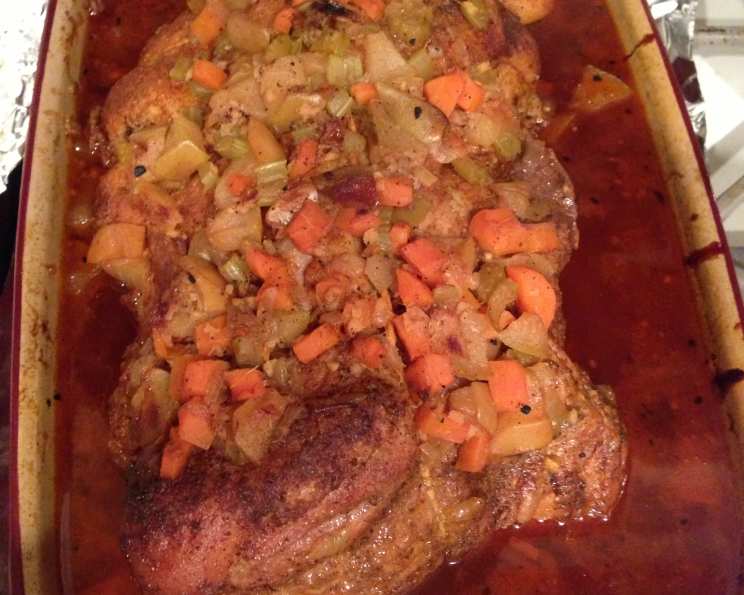
Braised Korean Pork: A Culinary Journey
The aroma of braised pork, infused with the sweet and spicy notes of Korean flavors, always transports me back to my grandmother’s kitchen. She wasn’t Korean, mind you, but a true culinary explorer. She loved adapting dishes from around the world, and this particular recipe was a regular feature at our family gatherings. The tender, fall-apart pork, rich with the taste of pears, garlic, and Korean red pepper, always disappeared in minutes, leaving us wanting more. This dish is more than just food; it’s a memory, a testament to the power of food to connect us to loved ones, no matter where they might be.
Recipe Overview
- Prep Time: 30 minutes
- Cook Time: 3 hours
- Total Time: 3 hours 30 minutes
- Servings: 15
- Yield: Varies depending on shoulder size
- Dietary Type: Not specified
Ingredients
- 1 (10 lb) pork shoulder
- 3 teaspoons vegetable oil
Sauce
- 2 pears, cored and diced
- 1 cup diced carrot
- 1 cup diced celery
- 1 cup diced onion
- 10 garlic cloves
- 2 tablespoons fresh ginger, finely chopped
- 1 quart apple juice
Korean Rub
- 1⁄4 cup salt
- 1⁄8 cup minced garlic
- 1⁄8 cup Korean red pepper (gochugaru)
- 1⁄8 cup paprika
- 1⁄8 cup curry powder
- 1⁄8 cup black pepper
Equipment Needed
- Small bowl
- Large, heavy-bottomed pot or Dutch oven
- Roasting pan
- Wooden spoon
- Aluminum foil
Instructions
-
Preheat your oven to 375°F (190°C). This initial temperature is crucial for even cooking.
-
In a small bowl, combine all the ingredients for the Korean Rub: salt, minced garlic, Korean red pepper, paprika, curry powder, and black pepper. Mix thoroughly until well combined. This spice rub is what gives the pork its signature Korean flavor, so don’t skimp on the quality of your ingredients.
-
Rinse the pork shoulder under cold water and pat it completely dry with paper towels. This step is vital for achieving a good sear.
-
Generously coat the entire surface of the pork shoulder with the Korean Rub. Make sure to press the rub into the meat, ensuring it adheres well. This creates a flavorful crust during the searing process.
-
In a large, heavy-bottomed pot or Dutch oven, heat the vegetable oil over medium-high heat. The pot should be large enough to accommodate the entire pork shoulder.
-
Carefully place the pork shoulder in the hot pot and sear it on all sides until a rich, golden-brown crust forms. This step develops deep, savory flavors that will infuse the entire dish. Don’t overcrowd the pot; sear in batches if necessary.
-
Remove the pork shoulder from the pot and transfer it to a roasting pan.
-
Now, it’s time to build the sauce. In the same pot where you seared the pork, add the diced pears, diced carrots, diced celery, diced onion, garlic cloves, and finely chopped ginger.
-
Cook the vegetables over medium heat, stirring occasionally, until they are tender, about eight to twelve minutes. This process softens the vegetables and releases their natural sweetness, which will contribute to the depth of flavor in the sauce.
-
Once the vegetables are tender, pour in the apple juice. Increase the heat to medium-high, stirring constantly and scraping the bottom and sides of the pot with a wooden spoon to deglaze. This deglazing process lifts up any browned bits from the bottom of the pot, adding even more flavor to the sauce.
-
Pour the sauce over the pork shoulder in the roasting pan, ensuring the pork is partially submerged.
-
Cover the roasting pan tightly with aluminum foil. This will help to trap moisture and keep the pork tender during the long braising process.
-
Bake in the preheated oven for three hours, or until the pork shoulder is incredibly tender and easily pulls apart with a fork. The internal temperature should reach around 200-205°F (93-96°C).
Expert Tips & Tricks
- For an even deeper flavor, marinate the pork with the Korean rub overnight in the refrigerator.
- If the sauce becomes too thick during braising, add a little more apple juice or water.
- If you want a slightly spicy kick, add a pinch of red pepper flakes to the sauce.
- To achieve the best sear, make sure the pork is completely dry before adding it to the hot oil.
- Don’t discard the braising liquid! Strain it and use it as a flavorful sauce to serve with the pork.
Serving & Storage Suggestions
Serve the braised Korean pork hot, shredded or pulled apart, with the reserved braising sauce spooned over the top. It pairs beautifully with steamed rice, kimchi, and a variety of Korean side dishes like pickled vegetables (banchan).
Leftovers can be stored in an airtight container in the refrigerator for up to 3-4 days. For longer storage, freeze the pork and sauce separately for up to 2 months. Reheat in the oven or microwave until heated through.
Nutritional Information
| Nutrient | Amount per Serving | % Daily Value |
|---|---|---|
| Calories | 792 kcal | N/A |
| Calories from Fat | 501 g | 63% |
| Total Fat | 55.8 g | 85% |
| Saturated Fat | 19.1 g | 95% |
| Cholesterol | 214.7 mg | 71% |
| Sodium | 2099.4 mg | 87% |
| Total Carbohydrate | 17.1 g | 5% |
| Dietary Fiber | 2.5 g | 10% |
| Sugars | 10.6 g | N/A |
| Protein | 52.9 g | 105% |
Note: Nutritional information is an estimate and can vary depending on specific ingredients and portion sizes.
Variations & Substitutions
- For a spicier version, increase the amount of Korean red pepper in the rub or add a tablespoon of gochujang (Korean chili paste) to the sauce.
- If you don’t have apple juice, you can substitute it with chicken broth or vegetable broth.
- For a richer sauce, add a splash of soy sauce or fish sauce to the braising liquid.
- Instead of a pork shoulder, you could use pork belly for an even more decadent dish. Just adjust the cooking time accordingly.
- To make a healthier version, trim excess fat from the pork shoulder before cooking.
FAQs (Frequently Asked Questions)
Q: Can I make this in a slow cooker?
A: Yes, you can adapt this recipe for a slow cooker. Sear the pork shoulder as directed, then transfer it to the slow cooker with the sauce ingredients. Cook on low for 6-8 hours, or until the pork is tender.
Q: What is Korean red pepper (gochugaru)?
A: Gochugaru is a Korean chili powder made from sun-dried red chili peppers. It has a slightly sweet and smoky flavor with a moderate level of heat. It is a key ingredient in many Korean dishes.
Q: Can I use a different cut of pork?
A: While pork shoulder is the preferred cut for braising due to its high fat content and ability to become incredibly tender, you could also use pork butt (Boston butt) with similar results.
Q: How do I know when the pork is done?
A: The pork is done when it is easily shredded with a fork and the internal temperature reaches 200-205°F (93-96°C).
Q: Can I make this dish ahead of time?
A: Absolutely! In fact, this dish often tastes even better the next day as the flavors meld together. Simply store the cooked pork and sauce separately in the refrigerator and reheat before serving.
Final Thoughts
Braised Korean Pork is a dish that’s as comforting as it is flavorful, perfect for a cozy weeknight dinner or a special gathering. Don’t be intimidated by the ingredient list; each element plays a crucial role in creating a harmonious blend of sweet, savory, and spicy notes. I encourage you to try this recipe and experience the magic of Korean cuisine. Don’t hesitate to experiment with variations and make it your own. And, of course, I’d love to hear your feedback and see your culinary creations! Consider pairing it with a crisp Korean beer (like Hite or Cass) or a refreshing glass of soju for the full experience.