
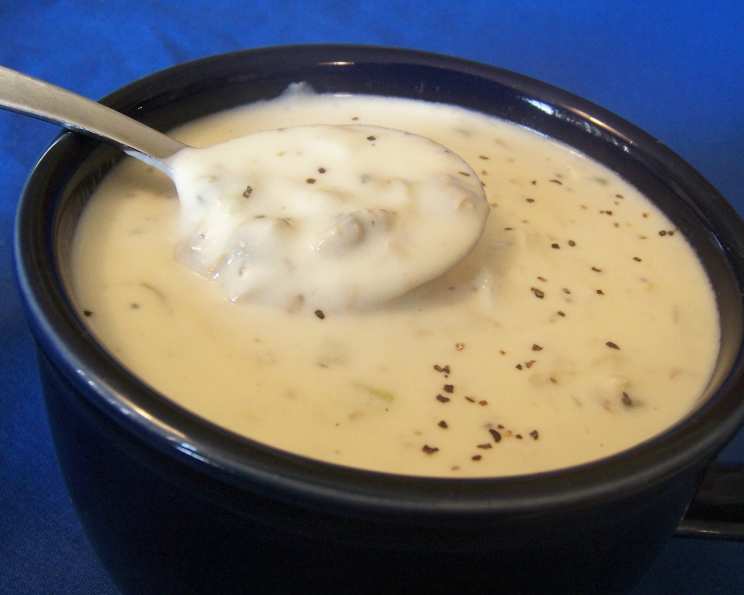
Bratton’s Clam Chowder: A Taste of New England Comfort
The first time I tasted Bratton’s Clam Chowder, I was curled up on a blustery autumn day at my Aunt Millie’s seaside cottage in Maine. The wind howled outside, rattling the windows, but inside, the air was thick with the savory aroma of the simmering chowder. One spoonful, and I was transported – the creamy broth, the tender clams, the perfectly balanced seasoning – it was the ultimate comfort food, a hug in a bowl that warmed me from the inside out. Aunt Millie guarded the recipe fiercely, claiming it was a family secret passed down through generations. Years later, I managed to coax it out of her, and now I’m thrilled to share this treasured dish with you.
Recipe Overview
- Prep Time: 15 minutes
- Cook Time: 30 minutes
- Total Time: 45 minutes
- Servings: 8
- Yield: About 10 cups
- Dietary Type: Not Gluten-Free (due to the flour), Not Dairy-Free
Ingredients
- 1 cup onion, chopped
- 1 cup celery, chopped
- 2 cups potatoes, peeled and cubed
- 2 (16 ounce) cans clams, undrained
- 3/4 cup butter
- 3/4 cup flour
- 1 quart half-and-half cream
- 1 1/2 tablespoons salt
- 1 teaspoon pepper
- 2 tablespoons vinegar
Equipment Needed
- Large pot or Dutch oven
- Small saucepan
- Wire whisk
- Measuring cups and spoons
Instructions
- Begin by draining the juice from the canned clams into a small saucepan. Be sure to reserve the clams themselves!
- Add the chopped onion, celery, and cubed potatoes to the saucepan with the clam juice. If needed, add enough water to the pan so that the vegetables are covered.
- Simmer the vegetables in the clam juice mixture over medium heat until they are tender. This usually takes about 15-20 minutes. You want the potatoes to be easily pierced with a fork.
- While the vegetables are simmering, prepare the creamy base. In a large pot or Dutch oven, melt the butter over medium heat.
- Once the butter is melted, add the flour and blend it into the melted butter with a wooden spoon or spatula.
- Cook, stirring constantly, for about 2-3 minutes to create a roux. This will thicken the chowder. Be careful not to burn the roux; it should be a light golden color.
- Slowly add the half-and-half cream to the roux, whisking constantly with a wire whisk to prevent lumps from forming.
- Continue stirring with the wire whisk until the cream sauce is smooth and thick. This may take about 5-7 minutes.
- Once the vegetables are tender, add the undrained vegetables (along with their cooking liquid) and the clams to the creamy sauce in the large pot.
- Gently stir to combine all the ingredients.
- Add the vinegar to the chowder and heat through. Do not boil the chowder, as this can cause the cream to curdle.
- Season the chowder with salt and pepper to taste. Start with the specified amounts and adjust as needed. Remember that the clams will add some saltiness, so taste before adding more.
- Serve hot and enjoy!
Expert Tips & Tricks
- Don’t overcook the clams: Clams can become tough and rubbery if they are overcooked. Add them towards the end and just heat them through.
- Use a heavy-bottomed pot: This will help prevent the chowder from scorching on the bottom.
- For a thicker chowder: Add a slurry of cornstarch and water (1 tablespoon cornstarch mixed with 2 tablespoons cold water) to the chowder while it is simmering.
- Make-ahead tip: The chowder can be made a day ahead of time. Store it in the refrigerator and reheat gently before serving. The flavors will meld together even more overnight!
- Ingredient Swap: Some people prefer to use whole milk or evaporated milk instead of half-and-half for a slightly lighter chowder.
- Dealing with Lumps: If lumps form in your cream sauce, try using an immersion blender to smooth it out.
Serving & Storage Suggestions
Serve Bratton’s Clam Chowder hot, garnished with a sprinkle of fresh parsley or oyster crackers. A crusty loaf of bread or some sourdough rolls are perfect for dipping into the creamy broth. For a more substantial meal, serve it with a side salad or a grilled cheese sandwich.
Leftover clam chowder can be stored in an airtight container in the refrigerator for up to 3 days. To reheat, gently warm the chowder over low heat on the stovetop, stirring occasionally. Avoid boiling, as this can cause the cream to separate. You can also reheat it in the microwave in 30-second intervals, stirring in between, until heated through.
Freezing clam chowder is not recommended, as the cream may separate and the texture may become grainy upon thawing. However, if you must freeze it, use a freezer-safe container and thaw it slowly in the refrigerator before reheating. Be aware that the texture may be slightly different after thawing.
Nutritional Information
| Nutrient | Amount per Serving | % Daily Value |
|---|---|---|
| Calories | 489 kcal | N/A |
| Calories from Fat | 292 kcal | N/A |
| Total Fat | 32.5 g | 49% |
| Saturated Fat | 19.9 g | 99% |
| Cholesterol | 124.2 mg | 41% |
| Sodium | 2197.5 mg | 91% |
| Total Carbohydrate | 27.1 g | 9% |
| Dietary Fiber | 1.8 g | 7% |
| Sugars | 1.6 g | 6% |
| Protein | 22.5 g | 45% |
Note: Nutritional information is an estimate and may vary based on specific ingredients and preparation methods.
Variations & Substitutions
- Spicy Chowder: Add a pinch of red pepper flakes or a dash of hot sauce to the chowder for a little kick.
- Smoked Paprika: Add 1/2 teaspoon of smoked paprika to the chowder for a smoky flavor.
- Bacon: Cook 4 slices of bacon until crispy, crumble them, and add them to the chowder.
- Vegetarian Option: While not traditional clam chowder, you can create a vegetarian version using vegetable broth and adding other vegetables such as corn, carrots, or green beans.
- Gluten-Free Chowder: Substitute the all-purpose flour with a gluten-free flour blend or use cornstarch as a thickener. Be sure to check all other ingredients to ensure they are gluten-free.
FAQs (Frequently Asked Questions)
Q: Can I use fresh clams instead of canned clams?
A: Yes, you can definitely use fresh clams! You’ll need about 2 pounds of fresh clams. Steam them open, remove the meat, and chop them before adding them to the chowder. Be sure to reserve the clam broth from steaming to use in the chowder.
Q: Can I make this chowder with milk instead of half-and-half?
A: Yes, you can use milk for a lighter chowder. However, the chowder will not be as rich and creamy. You can also use evaporated milk for a slightly richer flavor than regular milk.
Q: How do I prevent the cream from curdling?
A: To prevent the cream from curdling, avoid boiling the chowder and add the cream slowly, stirring constantly. You can also temper the cream by whisking a small amount of the hot chowder liquid into the cream before adding it to the pot.
Q: Can I add other vegetables to this chowder?
A: Absolutely! Corn, carrots, and green beans are all delicious additions to clam chowder. Just add them to the pot along with the potatoes and celery.
Q: What is the best way to reheat clam chowder?
A: The best way to reheat clam chowder is gently over low heat on the stovetop, stirring occasionally. Avoid boiling, as this can cause the cream to separate. You can also reheat it in the microwave in 30-second intervals, stirring in between, until heated through.
Final Thoughts
Bratton’s Clam Chowder is more than just a recipe; it’s a taste of tradition, a warm embrace on a cold day, and a reminder of simpler times. This recipe, passed down with love, is now yours to enjoy and share. I encourage you to try it, experiment with variations, and make it your own. Whether you’re a seasoned cook or a kitchen novice, this chowder is sure to impress. And I’d love to hear about your experience – share your photos, your feedback, and your own family stories connected to this comforting dish! Why not pair it with a crisp Sauvignon Blanc and a slice of warm bread for a truly delightful meal?