
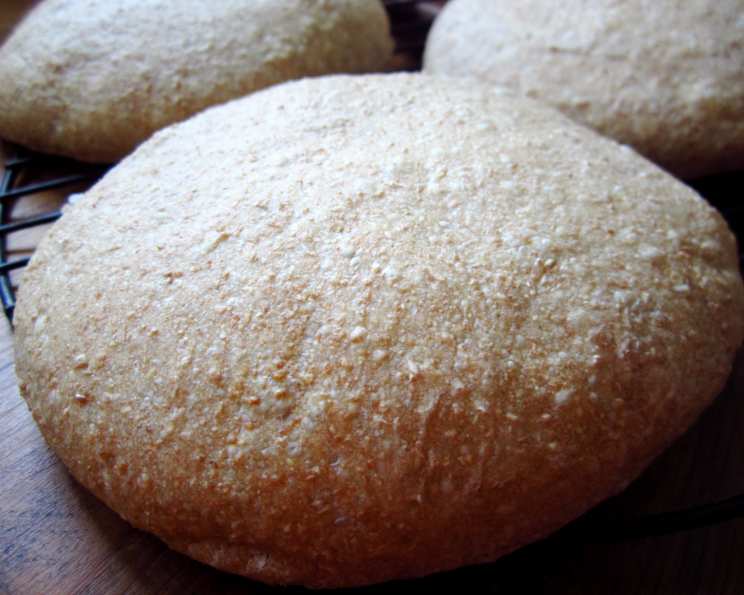
Bread Everyday! No Knead Boule
I remember the first time I truly understood the magic of bread. I was a young culinary student, intimidated by the seemingly endless possibilities of the kitchen, when I stumbled upon a no-knead recipe. The simplicity astounded me. The idea that something so rustic and comforting could be created with so little effort felt like a revelation. The warm, earthy aroma filling my tiny apartment as that first boule baked remains one of my most cherished culinary memories, a testament to the power of simple ingredients transformed by time and heat.
Recipe Overview
- Prep Time: 15 minutes
- Cook Time: 30 minutes
- Total Time: 5 hours 30 minutes (includes rising and refrigeration time)
- Servings: 6
- Yield: 4 1lb loaves
- Dietary Type: Vegetarian
Ingredients
- 3 cups lukewarm water (just above body temperature)
- 1 1/2 tablespoons granulated yeast
- 1 – 1 1/2 tablespoons coarse sea salt
- 3 cups unsifted whole wheat flour
- 3 cups unsifted unbleached all-purpose flour
- Cornmeal, for pizza peel or baking sheet
Equipment Needed
- Large mixing bowl or stand mixer
- Non-airtight container with lid
- Baking stone
- Broiler pan
- Pizza peel or flat metal baking sheet
- Wire rack
Instructions
-
(Mixing the Dough): In a large mixing bowl or the bowl of your stand mixer, combine the lukewarm water, salt, and yeast. Allow the yeast to bloom for a few minutes, until it becomes foamy. This ensures the yeast is active.
-
(Adding the Flour): Gradually add the whole wheat flour and all-purpose flour to the wet ingredients. Mix until just combined. The dough will be loose and shaggy. Avoid overmixing. You’re aiming for a just-combined texture, not a smooth, elastic dough.
-
(First Rise): Transfer the dough to a non-airtight container. This is crucial because the dough will produce gases as it rises. The container should be covered, but not sealed tightly, allowing these gases to escape. Let the dough rise at room temperature for approximately 2 hours, or until it starts to collapse slightly on itself. The exact time will depend on the temperature of your room.
-
(Refrigeration): Cover the container and refrigerate the dough for at least 3 hours, or even up to several days. This slow, cold fermentation develops a complex flavor in the bread. The longer it stays in the refrigerator, the more pronounced the “sourdough” taste will become.
-
(Preheating the Oven): When you’re ready to bake, preheat your oven to 450°F (232°C) with a baking stone placed on the center rack. Place an empty broiler pan on another rack below the baking stone. It’s essential to preheat the oven and baking stone for at least 40 minutes to ensure even baking and a crispy crust.
-
(Preparing the Dough): Generously sprinkle a pizza peel or flat metal baking sheet with cornmeal. This will prevent the dough from sticking and allow you to easily transfer it to the hot baking stone.
-
(Shaping the Boule): Lightly dust the refrigerated dough with flour. Gently pull out a portion of dough (about 1 lb, roughly the size of a grapefruit – if you’re using the proportions above, that’s about 1/4 of the dough). Do not knead the dough. Instead, gently tuck the rough edges underneath to form a ball, creating a smooth top surface.
-
(Second Rise): Place the shaped boule onto the prepared cornmeal-covered pizza peel or baking sheet. Let it rise for another 20 minutes.
-
(Scoring the Dough): Just before baking, use a sharp knife or lame to cut 2-3 slits across the top of the loaf. This allows the bread to expand properly during baking and prevents it from cracking unevenly. Make swift, decisive cuts.
-
(Baking): Using a “flicking” motion with your wrist, carefully slide the boule from the pizza peel onto the preheated baking stone. If you’re using a baking sheet, you might need a spatula to gently help it along.
-
(Creating Steam): Carefully pour 1 cup of warm water into the preheated broiler pan on the lower rack. This will create steam in the oven, which is essential for achieving a crispy, golden-brown crust. Quickly close the oven door to trap the steam.
-
(Baking Time): Bake for 30 minutes, or until the boule is nicely browned on the outside. Avoid opening the oven door during the first 20 minutes to maintain the steam and prevent the bread from collapsing.
-
(Cooling): Once baked, remove the boule from the oven and let it cool completely on a wire rack before slicing. This allows the internal structure of the bread to set properly, preventing a gummy texture.
Expert Tips & Tricks
- Achieving a Crispier Crust: For an extra-crispy crust, try spritzing the inside of the oven with water a couple of times during the first 10 minutes of baking, in addition to the water in the broiler pan.
- Adjusting for Altitude: If you live at a high altitude, you may need to reduce the amount of yeast slightly. Start with 1 tablespoon instead of 1 1/2 tablespoons.
- Experimenting with Flour: Feel free to experiment with different types of flour. You can substitute some of the all-purpose flour with rye flour or spelt flour for a unique flavor.
- Dough Consistency: The dough should be quite wet and sticky. Don’t be tempted to add more flour, as this will result in a denser bread. The high hydration is what gives the bread its open crumb and chewy texture.
Serving & Storage Suggestions
Serve the freshly baked boule warm, sliced, and enjoyed with butter, olive oil, or your favorite spreads. It’s also excellent for sandwiches, toast, or as a side to soups and stews.
Store leftover bread in an airtight container at room temperature for up to 2 days. For longer storage, wrap the bread tightly in plastic wrap and freeze it for up to 2 months. To reheat frozen bread, thaw it completely and then warm it in a 350°F (175°C) oven for 10-15 minutes, or until heated through.
Extra dough can be stored in the refrigerator for up to 10 days. The flavor will continue to develop and become more sour over time.
Nutritional Information
| Nutrient | Amount per Serving | % Daily Value |
|---|---|---|
| Calories | 460.8 kcal | N/A |
| Calories from Fat | 25 g | 5% |
| Total Fat | 2.8 g | 4% |
| Saturated Fat | 0.4 g | 2% |
| Cholesterol | 0 mg | 0% |
| Sodium | 1173.3 mg | 48% |
| Total Carbohydrate | 94.6 g | 31% |
| Dietary Fiber | 10.5 g | 42% |
| Sugars | 0.4 g | 1% |
| Protein | 18 g | 36% |
Variations & Substitutions
- Herb Infusion: Add 1-2 tablespoons of chopped fresh herbs, such as rosemary, thyme, or oregano, to the dough during the mixing process.
- Cheese Bread: Incorporate 1 cup of shredded cheese, such as cheddar, parmesan, or Gruyere, into the dough.
- Olive Bread: Add 1/2 cup of chopped olives to the dough for a Mediterranean-inspired flavor.
- Sweet Boule: Add 1/4 cup of sugar and 1 teaspoon of cinnamon to the dough for a sweeter variation. This makes excellent toast or French toast.
FAQs (Frequently Asked Questions)
Q: Can I use active dry yeast instead of instant yeast?
A: Yes, you can. If using active dry yeast, dissolve it in the lukewarm water with a pinch of sugar for 5-10 minutes before adding the other ingredients.
Q: My dough is very sticky. Is this normal?
A: Yes, the dough is meant to be very wet and sticky. Resist the urge to add more flour. This high hydration is what gives the bread its characteristic open crumb.
Q: What if I don’t have a baking stone?
A: If you don’t have a baking stone, you can use a heavy baking sheet. Preheat the baking sheet in the oven along with the broiler pan.
Q: Can I freeze the baked boule?
A: Yes, you can freeze the baked boule. Allow it to cool completely, then wrap it tightly in plastic wrap and freeze for up to 2 months.
Q: How do I know when the bread is done?
A: The bread is done when it is deeply golden brown and sounds hollow when tapped on the bottom. The internal temperature should reach 200-210°F (93-99°C).
Final Thoughts
This no-knead boule recipe is a fantastic way to enjoy freshly baked bread at home with minimal effort. It’s incredibly versatile, allowing for endless variations and flavor combinations. Don’t be intimidated by the long rising times; the hands-on work is minimal, and the result is well worth the wait. So, go ahead, give it a try! Share your creations and any variations you come up with. I encourage you to serve this loaf with a hearty bowl of French onion soup or a simple cheese board – the possibilities are endless! Enjoy!