
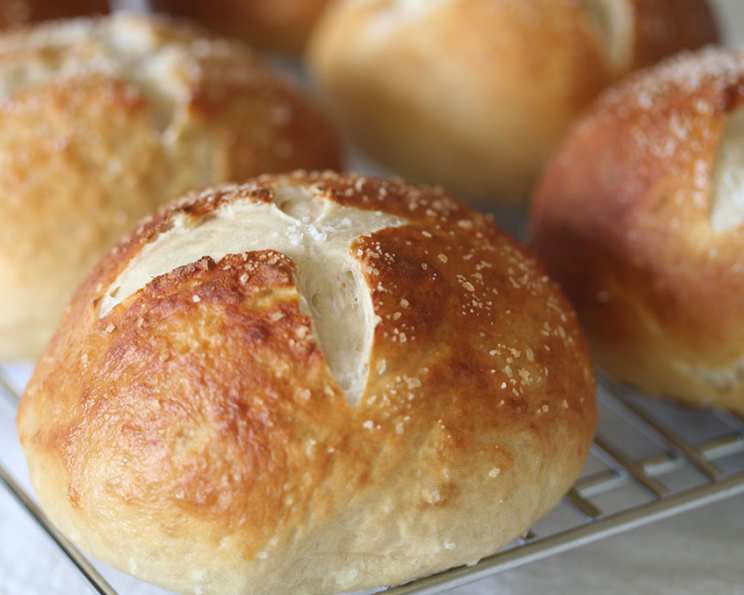
Mastering the Bretzel Roll: A Bavarian Baking Adventure
The aroma of freshly baked bread has always been my weakness. I remember, as a child, sneaking into my grandmother’s bakery before dawn, the warm air thick with the scent of yeast and malt. While her specialty was rye bread, I was always drawn to the trays of golden-brown pretzels, their salty crust begging to be devoured. These Bretzel Rolls, a delightful twist on the classic pretzel, bring back those cherished memories with every bite, offering a soft, chewy interior and that signature pretzel tang.
Recipe Overview
- Prep Time: 45 minutes
- Cook Time: 8-10 minutes
- Total Time: 1 hour 54 minutes
- Yields: 1 dozen bretzel rolls
- Serves: 12
- Dietary Type: Vegetarian
Ingredients
Dough:
- 1 ⅓ cups warm water
- 2 tablespoons warm milk
- 2 ½ teaspoons active dry yeast
- ⅓ cup light brown sugar
- 2 tablespoons butter, melted
- 4 cups all-purpose flour
- Kosher salt or pretzel salt
Parboiling Liquid:
- 2 quarts cold water
- ½ cup baking soda
Equipment Needed
- Small bowl (if using a bread machine) or standing electric mixer with a dough hook
- Measuring cups and spoons
- Lightly floured surface
- Plastic wrap
- Damp cloth
- Lightly oiled baking sheets
- Large stockpot
- Tongs or slotted spoon
- Cooling rack
Instructions
-
If using a bread machine, begin by mixing ⅓ cup of the warm water (105-115 degrees Fahrenheit) with the yeast in a small bowl. Alternatively, use the bowl of a standing electric mixer fitted with a dough hook. Let the mixture stand until foamy, usually about 5-10 minutes. This step activates the yeast, ensuring a good rise.
-
Add the remaining 1 cup of warm water, along with the warm milk, light brown sugar, and melted butter to the yeast mixture. Swirl to dissolve the sugar completely. If you are using a bread machine, add this liquid mixture to the machine at this point.
-
Add the flour to the liquid mixture. If using a standing mixer, mix on the dough cycle or at a low-medium speed. The dough should come together to form a nice, firm, pliable ball.
-
If using a bread machine, remove the dough once it forms a nice a firm, pliable dough ball. Add more flour, 1 tablespoon at a time, if necessary, until the dough is no longer sticky.
-
Turn the dough out onto a lightly floured table and knead it by hand for about 2 minutes. This helps to develop the gluten and create a smoother texture.
-
Roll the dough into a 2-foot long log. Using a sharp knife or dough scraper, cut the log into 12 even pieces. These will become your bretzel rolls.
-
Cover the dough pieces with plastic wrap and a damp cloth. Let them rest for 10 minutes. This allows the gluten to relax, making the rolls easier to shape.
-
Pat each dough piece into a round roll or shape it into a knot, if you desire a more traditional pretzel shape. Arrange the shaped rolls on a lightly floured surface, leaving about an inch of space between each roll.
-
Cover the shaped rolls with lightly oiled plastic wrap. This prevents them from drying out and allows them to rise properly. Let the pretzels rest for an additional 30 minutes in a warm place. This second rise is crucial for a light and airy texture.
-
Preheat your oven to 425°F (220°C). Lightly oil two baking sheets to prevent the rolls from sticking.
-
While the oven is preheating, prepare the parboiling liquid. In a large stockpot, bring the cold water to a rolling boil. Carefully add the baking soda. Be cautious, as the mixture may foam up quickly.
-
Drop two rolls into the boiling water at a time, and boil them for no more than 30 seconds per side, turning once. This crucial step gelatinizes the starches on the surface of the rolls, giving them their distinctive pretzel texture and color.
-
Carefully remove the rolls from the boiling water using tongs or a slotted spoon. Hold them above the pot for a moment to allow any excess water to drain off.
-
Immediately sprinkle the parboiled rolls lightly with kosher salt or pretzel salt. The salt adheres best when the rolls are still wet.
-
Repeat the parboiling and salting process with the remaining rolls.
-
Arrange the salted rolls on the oiled baking sheets, leaving some space between each roll.
-
Bake the rolls on the upper and middle racks of the oven for about 8-10 minutes, or until they are browned all over. To ensure even baking, shift the pans from top to bottom and back to front halfway through the baking time.
-
Let the baked rolls cool on the baking sheets for about 5 minutes, then transfer them to a wire rack to cool completely. This prevents them from becoming soggy on the bottom.
-
Serve the Bretzel Rolls warm or at room temperature. They are delicious on their own or as a base for sandwiches.
Expert Tips & Tricks
- Yeast Activation: Make sure your water is at the correct temperature (105-115°F). If it’s too hot, it will kill the yeast; if it’s too cold, the yeast won’t activate.
- Dough Consistency: The dough should be firm and pliable but not sticky. Add flour gradually, a tablespoon at a time, until you reach the right consistency.
- Parboiling: Don’t over-boil the rolls. Thirty seconds per side is enough to create the characteristic pretzel crust.
- Salt Adhesion: Sprinkle the salt on the rolls immediately after parboiling, while they are still wet. This will help the salt stick.
- Baking Evenly: Rotate the baking sheets halfway through the baking time to ensure even browning.
- Scoring the Rolls: Before baking, you can score the tops of the rolls with an “X” using a sharp knife or lame. This creates a beautiful pattern and helps the rolls expand evenly.
Serving & Storage Suggestions
Bretzel Rolls are best enjoyed fresh, warm from the oven. They are fantastic served with butter, cheese spreads, or alongside soups and stews. They make excellent sandwich rolls, pairing well with a variety of fillings, from classic deli meats to grilled vegetables.
To store leftover Bretzel Rolls, place them in an airtight container or a resealable plastic bag at room temperature. They will stay fresh for 1-2 days. For longer storage, you can freeze them for up to 2-3 months. To reheat, thaw the rolls completely and then warm them in a preheated oven at 350°F (175°C) for about 5-10 minutes, or until heated through. You can also slice them and toast them for a crispier texture.
Nutritional Information
| Nutrient | Amount per Serving | % Daily Value |
|---|---|---|
| Calories | 196.2 kcal | N/A |
| Total Fat | 2.5 g | 3% |
| Saturated Fat | 1.4 g | 6% |
| Cholesterol | 5.4 mg | 1% |
| Sodium | 26.6 mg | 1% |
| Total Carbohydrate | 38.2 g | 12% |
| Dietary Fiber | 1.4 g | 5% |
| Sugars | 6 g | N/A |
| Protein | 4.8 g | 9% |
Note: Nutritional information is an estimate and may vary based on specific ingredients and preparation methods.
Variations & Substitutions
- Whole Wheat Bretzel Rolls: Substitute up to half of the all-purpose flour with whole wheat flour for a nuttier flavor and added fiber.
- Spelt Flour: Spelt flour can also be used as a substitute for all-purpose flour, offering a slightly different flavor profile and texture.
- Vegan Bretzel Rolls: Replace the butter with a plant-based butter alternative or olive oil. Substitute the milk with a plant-based milk like almond or soy milk.
- Cheese Bretzel Rolls: Add shredded cheddar or Gruyere cheese to the dough for a cheesy twist.
- Everything Bagel Bretzel Rolls: After parboiling, sprinkle the rolls with everything bagel seasoning instead of just salt.
FAQs (Frequently Asked Questions)
Q: Why do I need to parboil the rolls?
A: Parboiling in a baking soda solution gelatinizes the starches on the surface, creating the characteristic chewy texture and deep brown color of pretzels. It’s essential for achieving the authentic Bretzel Roll experience.
Q: Can I use instant yeast instead of active dry yeast?
A: Yes, you can. If using instant yeast, you can skip the step of blooming it in warm water. Just add it directly to the flour and other dry ingredients.
Q: My rolls are not browning evenly. What can I do?
A: Ensure that your oven temperature is accurate. Rotate the baking sheets halfway through the baking time to promote even browning. If necessary, you can also broil the rolls for a minute or two at the end of baking, watching carefully to prevent burning.
Q: Can I freeze the dough instead of baking the rolls immediately?
A: Yes, you can freeze the dough after shaping it into rolls. Wrap each roll individually in plastic wrap and then place them in a freezer-safe bag. Thaw the dough completely before parboiling and baking.
Q: What can I serve with Bretzel Rolls?
A: Bretzel Rolls are incredibly versatile. They pair well with soups, stews, cheese boards, and charcuterie. They also make excellent sandwich rolls for both sweet and savory fillings.
Final Thoughts
Now that you’re armed with this detailed recipe, I encourage you to embark on your own Bretzel Roll baking adventure. Don’t be intimidated by the process – with a little patience and attention to detail, you’ll be rewarded with delicious, authentic Bavarian-style rolls. Feel free to experiment with different variations and fillings to create your own signature Bretzel Roll. And don’t hesitate to share your feedback and creations – I’d love to hear about your baking success! These are wonderful paired with a hearty German beer or a crisp apple cider. Happy baking!