
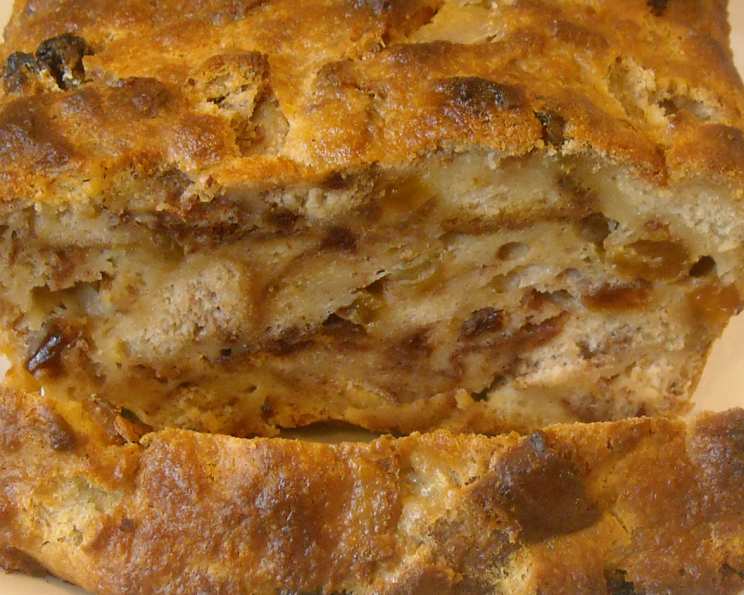
Brioche Bread Pudding: A Loaf of Comfort
The scent of baking bread pudding is a time machine for me, instantly transporting me back to my grandmother’s kitchen. She always made it on Sunday afternoons, the rich aroma of warm brioche mingling with vanilla and spices. I remember watching her carefully tear the golden bread, her hands dusted with flour, a serene smile on her face. It wasn’t just a dessert; it was an act of love, a sweet embrace that warmed us from the inside out. This loaf-style bread pudding is my attempt to recreate that magic, a slightly firmer, sliceable version perfect for sharing – or savoring all on your own.
Recipe Overview
- Prep Time: 20 minutes
- Cook Time: 35 minutes
- Total Time: 55 minutes
- Servings: 8
- Yield: 1 loaf
- Dietary Type: Not specified
Ingredients
- 300 g brioche bread
- ¼ liter milk
- 1 cup crème fraîche or 1 cup sour cream
- 2 eggs
- 120 g sugar
- 1 teaspoon vanilla extract
- 250 g golden raisins
- 100 g candied orange peel, finely chopped
Equipment Needed
- Large mixing bowl
- Wooden spoon
- Silicone loaf pan (or a standard loaf pan, greased)
Instructions
- In a large mixing bowl, combine the milk, crème fraîche (or sour cream), eggs, sugar, and vanilla extract. Whisk thoroughly until the sugar is completely dissolved and the mixture is well blended.
- Stir in the golden raisins and finely chopped candied orange peel. Ensure they are evenly distributed throughout the mixture.
- Tear the brioche bread into smallish hunks, roughly 1-inch pieces. It doesn’t need to be precise.
- Add the brioche pieces to the milk mixture. Gently mash the brioche down into the liquid, ensuring that all pieces are submerged. Don’t be afraid to really press down to help the bread absorb the liquid.
- Let the mixture stand for about ten minutes, allowing the brioche to soak up the liquid. This step is crucial for a moist and flavorful bread pudding.
- After ten minutes, smoosh the mixture around some more with a wooden spoon. The brioche should be quite soft and well-saturated with the liquid. It’s okay if some pieces break down entirely; this will contribute to the pudding’s texture. The more smooshed the better.
- Spoon the mixture into a loaf mold. If using a silicone pan, no greasing is required. If using a standard loaf pan, be sure to grease it well to prevent sticking.
- Bake in a preheated oven at 200 degrees Celsius (approximately 392 degrees Fahrenheit) for about 35 minutes, or until a knife inserted into the center comes out clean. The top should be golden brown and slightly firm to the touch.
- If using a silicone pan, let the bread pudding cool completely in the pan before attempting to unmold it. This will prevent it from breaking apart. For a standard loaf pan, let it cool for about 15 minutes before inverting it onto a serving platter.
Expert Tips & Tricks
- Brioche Bread is Key: Using high-quality brioche bread is essential for the best flavor and texture. Stale brioche works perfectly, as it will soak up the custard even better.
- Custard Consistency: Don’t be afraid to really “mash” the brioche into the custard. The more the bread breaks down, the richer and more pudding-like the texture will be.
- Temperature is Important: Make sure your oven is properly preheated to 200°C (392°F) for even baking. Oven temperatures can vary, so keep an eye on the bread pudding during the last 10 minutes of baking.
- Spice It Up: For an extra layer of flavor, consider adding a pinch of nutmeg or cinnamon to the custard mixture. A splash of rum or brandy can also add a delightful warmth.
- Make-Ahead Option: You can assemble the bread pudding ahead of time and store it in the refrigerator for up to 24 hours before baking. This allows the flavors to meld together even more.
- Preventing a Soggy Bottom: To ensure a crispy bottom, place a baking sheet on the rack below the loaf pan. This will help to deflect heat and prevent the bottom from becoming overly soggy.
- Doneness Check: Besides the knife test, the bread pudding should also be firm to the touch. If it jiggles excessively, it needs more time in the oven.
- Unmolding with Ease: To loosen the bread pudding for easy unmolding, run a thin knife around the edges of the pan after it has cooled slightly.
Serving & Storage Suggestions
This brioche bread pudding is delicious served warm or at room temperature. It pairs beautifully with a dollop of whipped cream, a scoop of vanilla ice cream, or a drizzle of caramel sauce. For a festive touch, dust the top with powdered sugar just before serving.
Leftovers can be stored in an airtight container in the refrigerator for up to 3 days. To reheat, simply microwave individual slices for 30-60 seconds, or warm them in a preheated oven at 175°C (350°F) for about 10-15 minutes.
While it’s best enjoyed fresh, you can freeze individual slices for up to 1 month. Thaw overnight in the refrigerator before reheating.
Nutritional Information
| Nutrient | Amount per Serving | % Daily Value |
|---|---|---|
| Calories | 335.8 kcal | N/A |
| Calories from Fat | N/A | N/A |
| Total Fat | 13.6 g | 20% |
| Saturated Fat | 8 g | 40% |
| Cholesterol | 98.2 mg | 32% |
| Sodium | 60.7 mg | 2% |
| Total Carbohydrate | 52.7 g | 17% |
| Dietary Fiber | 1.4 g | 5% |
| Sugars | 43.8 g | N/A |
| Protein | 4.3 g | 8% |
Note: Nutritional information is an estimate and may vary based on specific ingredients and portion sizes.
Variations & Substitutions
- Gluten-Free: Substitute the brioche bread with a gluten-free brioche or a similar gluten-free bread. Be sure to check the ingredients carefully to ensure they are certified gluten-free.
- Dairy-Free: Use non-dairy milk such as almond milk or oat milk in place of regular milk, and substitute the crème fraîche with a dairy-free sour cream alternative.
- Fruit Variations: Experiment with different dried fruits such as cranberries, apricots, or cherries. You can also add fresh berries to the mixture before baking.
- Nutty Twist: Add a handful of chopped nuts such as pecans, walnuts, or almonds to the mixture for added texture and flavor.
- Citrus Zest: Enhance the citrus flavor by adding the zest of an orange or lemon to the custard mixture.
- Chocolate Chip: Incorporate semi-sweet or dark chocolate chips for a decadent chocolate bread pudding.
- Spiced Apple: Create a fall-inspired bread pudding by adding diced apples, cinnamon, and nutmeg to the mixture.
- Savory Variation: For a savory twist, omit the sugar and vanilla extract and add herbs, cheese, and cooked bacon or sausage to the mixture.
FAQs (Frequently Asked Questions)
Q: Can I use a different type of bread instead of brioche?
A: While brioche provides the best flavor and texture, you can use other breads like challah or even stale croissants as a substitute. Just be sure the bread is rich and can absorb the custard well.
Q: Can I reduce the amount of sugar in the recipe?
A: Yes, you can reduce the sugar slightly, but keep in mind that it affects the overall sweetness and texture of the bread pudding. Start by reducing it by 10-20% and adjust to your preference.
Q: How do I prevent the top of the bread pudding from burning?
A: If the top is browning too quickly, loosely cover the loaf pan with aluminum foil during the last 10-15 minutes of baking.
Q: Can I add alcohol to the bread pudding?
A: Yes, a splash of rum, brandy, or bourbon can add a delightful flavor to the bread pudding. Add it to the milk mixture before combining with the bread.
Q: Why is my bread pudding soggy?
A: Soggy bread pudding can be caused by not letting the bread soak up the custard for long enough, or by not baking it long enough. Make sure to let the bread soak for at least 10 minutes and bake until a knife inserted into the center comes out clean. Also ensure oven temperature is correct and consistent.
Final Thoughts
This brioche bread pudding recipe is more than just a dessert; it’s an invitation to create a warm and comforting experience in your own kitchen. Whether you’re seeking a nostalgic treat or a delightful way to use up leftover brioche, this recipe is sure to please. I encourage you to try it, adapt it to your own tastes, and share it with those you love. Baking is an act of sharing, and I hope this recipe brings you as much joy as it has brought me over the years. Let me know how it turns out and what variations you try – happy baking!