
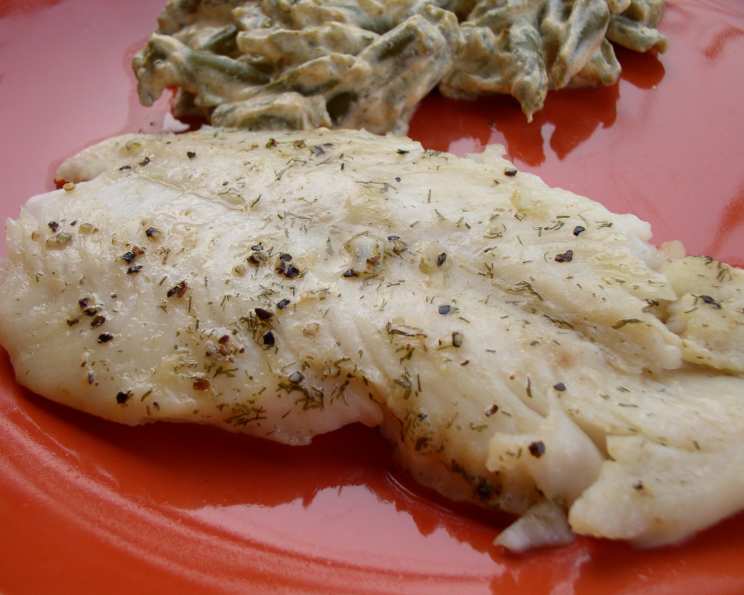
Broiled Fish with Dill Butter: A Symphony of Flavors in Minutes
The aroma still lingers in my memory: a delicate dance of fresh dill, melting butter, and the subtle, clean scent of the ocean carried on the wings of perfectly cooked fish. It was my grandmother’s signature dish, a simple yet elegant preparation that transformed an ordinary weeknight into something special. She’d always serve it with a bright green salad and crusty bread to soak up every last bit of that luscious dill butter. This recipe is more than just a meal; it’s a warm hug from the past, a reminder of her effortless grace in the kitchen, and a testament to the magic of simple, fresh ingredients.
Recipe Overview
- Prep Time: 5 minutes
- Cook Time: 10 minutes
- Total Time: 15 minutes
- Servings: 4
- Dietary Type: Pescatarian, Gluten-Free
Ingredients
- 8 tablespoons softened butter
- 3-5 drops lemon juice
- ⅛ teaspoon cayenne pepper
- 1 teaspoon finely chopped dill
- 1 ½ lbs firm white fish fillets (haddock, halibut, cod, etc.)
- Lemon juice (for sprinkling)
- Salt and pepper
Equipment Needed
- Broiler pan
- Plastic wrap or foil
Instructions
-
Prepare the dill butter: In a small bowl, thoroughly combine the softened butter, lemon juice, cayenne pepper, and finely chopped dill.
-
Shape the butter: Place the dill butter mixture onto a sheet of plastic wrap or foil. Roll it into a log shape, twisting the ends to seal. This helps with portioning later. Refrigerate for at least several hours to allow the butter to firm up (can be made ahead and frozen). This step is crucial for easy slicing and even melting over the fish.
-
Prepare for broiling: When ready to cook, preheat your broiler. Spray a broiler pan with vegetable oil, or coat it with butter to prevent sticking.
-
Prepare the fish: Rinse the fish fillets under cold water and pat them thoroughly dry with paper towels. This ensures a better sear under the broiler.
-
Season the fish: Season both sides of the fish fillets with salt and pepper.
-
Arrange on broiler pan: Place the seasoned fish fillets on the prepared broiler pan. Make sure they are evenly spaced to ensure even cooking.
-
Add lemon juice: Sprinkle the fish fillets with lemon juice. This brightens the flavor and adds a touch of acidity that complements the dill butter.
-
Top with dill butter: Cut the chilled dill butter into several generous pats and place them evenly over the fish fillets. The amount of butter will depend on the thickness of the fillets.
-
Broil the fish: Place the broiler pan under the preheated broiler. Broil on both sides until the fish is opaque and flakes easily with a fork. The total cooking time will depend on the thickness of the fish, but it usually takes about 10 minutes per inch of thickness. Keep a close eye on the fish to prevent burning.
-
Check for doneness: To check if the fish is done, gently insert a fork into the thickest part of the fillet. If the fish flakes easily, it’s ready. Be careful not to overcook the fish, as it will become dry and tough.
Expert Tips & Tricks
-
Don’t overcrowd the pan: Overcrowding the broiler pan will steam the fish rather than broiling it. Cook in batches if necessary.
-
Adjust the broiler rack: Position the broiler rack so that the top of the fish is about 4-6 inches from the broiler element. This will ensure even cooking and prevent burning.
-
Use a meat thermometer: For extra assurance, use a meat thermometer to check the internal temperature of the fish. It should reach 145°F (63°C).
-
Spice it up: If you like a little more heat, increase the amount of cayenne pepper in the dill butter.
-
Make ahead: The dill butter can be made ahead of time and stored in the refrigerator for up to a week or frozen for up to a month.
-
Fish Selection: The best fish to use for this recipe are firm, white-fleshed fish like haddock, halibut, or cod. However, you can also use other types of fish, such as salmon or tilapia. Adjust the cooking time accordingly.
Serving & Storage Suggestions
Serve the broiled fish immediately, while it’s hot and the dill butter is still melting. It pairs well with a variety of side dishes, such as roasted vegetables, steamed rice, or a simple green salad. Garnish with a sprig of fresh dill and a lemon wedge for an extra touch of freshness.
Leftovers can be stored in an airtight container in the refrigerator for up to 2 days. Reheat gently in a skillet over low heat or in the microwave. Freezing is not recommended, as the fish may become dry and the texture can change.
Nutritional Information
| Nutrient | Amount per Serving | % Daily Value |
|---|---|---|
| Calories | 400 kcal | 20% |
| Total Fat | 28g | 43% |
| Saturated Fat | 17g | 85% |
| Cholesterol | 180mg | 60% |
| Sodium | 300mg | 13% |
| Total Carbohydrate | 1g | 0% |
| Dietary Fiber | 0g | 0% |
| Sugars | 0g | 0% |
| Protein | 35g | 70% |
Note: Nutritional information is an estimate and may vary depending on the specific ingredients used.
Variations & Substitutions
-
Herb Variations: Experiment with different herbs in the butter. Parsley, chives, or tarragon would all be delicious.
-
Garlic Butter: Add a clove of minced garlic to the butter for a richer flavor.
-
Lemon-Herb Butter: Add lemon zest to the butter along with the juice for an extra citrusy kick.
-
Spicy Butter: Add a pinch of red pepper flakes to the butter for a touch of heat.
-
Dairy-Free: Use a high-quality plant-based butter alternative for a dairy-free version. Be sure to check the salt content, as some vegan butters are saltier than dairy butter.
FAQs (Frequently Asked Questions)
Q: Can I use frozen fish fillets?
A: Yes, but make sure to thaw them completely before cooking and pat them dry thoroughly to remove excess moisture.
Q: How do I know when the fish is done?
A: The fish is done when it’s opaque and flakes easily with a fork. The internal temperature should reach 145°F (63°C).
Q: Can I grill the fish instead of broiling it?
A: Yes, you can grill the fish. Preheat your grill to medium-high heat and grill for about 4-5 minutes per side, or until the fish is cooked through.
Q: Can I use a different type of fish?
A: Yes, you can use any firm white fish such as cod, haddock, or halibut. Salmon or tilapia also work well, but the cooking time may vary.
Q: What should I do if the butter starts to burn?
A: If the butter starts to burn, lower the broiler rack or reduce the broiler temperature. You can also tent the fish with foil to prevent it from burning.
Final Thoughts
This Broiled Fish with Dill Butter is a recipe that’s both simple enough for a weeknight meal and elegant enough for a special occasion. Its success lies in the quality of the ingredients, so be sure to use fresh dill and high-quality butter. Don’t be afraid to experiment with different herbs and spices to create your own signature version. I encourage you to try this recipe and share it with your loved ones. I hope it brings as much joy to your table as it has to mine. Enjoy!