
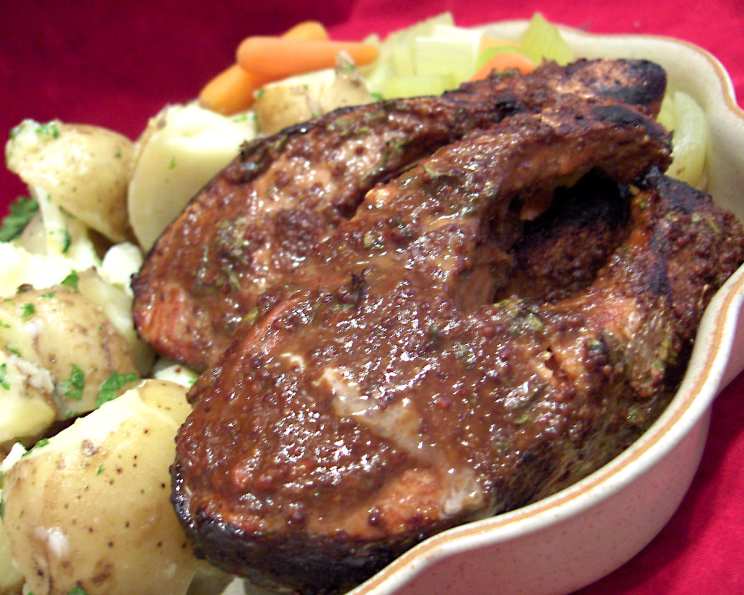
Broiled Salmon Steaks: A Simple Seafood Sensation
The memory is etched in my mind: a summer evening on the coast of Maine, the salty air thick with the scent of seaweed and grilling fish. My grandfather, a seasoned fisherman, would bring home the day’s catch – often beautiful, ruby-red salmon steaks. He’d simply brush them with a flavorful sauce and slide them under the broiler. The result? A perfectly cooked, flaky salmon with a slightly caramelized crust – a taste of summer I cherish to this day. Recreating this dish always brings me back to that simpler time, filled with laughter, family, and the unparalleled freshness of the sea.
Recipe Overview
- Prep Time: 5 minutes
- Cook Time: 10 minutes
- Total Time: 15 minutes
- Servings: 4
- Dietary Type: Gluten-Free, Dairy-Free (if Worcestershire sauce is gluten-free)
Ingredients
- 4 small salmon steaks (5 to 7 oz. each)
- 1/4 cup Worcestershire sauce
- 1 tablespoon Dijon mustard
- 1 dash Tabasco sauce
- 2 tablespoons minced parsley, for garnish
Equipment Needed
- Shallow dish
- Fork
- Broiler pan or baking sheet
- Aluminum foil
- Tongs
Instructions
-
Begin by preparing the salmon steaks. Rinse them under cold water and pat dry with paper towels. This step is crucial for achieving a good sear under the broiler.
-
Next, create the flavorful marinade. In a shallow dish, combine the Worcestershire sauce, Dijon mustard, and Tabasco sauce. Stir vigorously with a fork until all the ingredients are fully incorporated. Taste and adjust the Tabasco sauce amount to your preference, if you enjoy a bit more heat. A pinch of salt and pepper can also be added at this point.
-
Now, it’s time to marinate the salmon steaks. Set the salmon steaks in the shallow dish and turn them so that they are evenly coated with the mixture. Ensure that the marinade covers all surfaces of the fish.
-
Let the salmon steaks stand in the marinade for 15 minutes. This allows the flavors to penetrate the fish, resulting in a more delicious and aromatic final product. This marinating time can be extended to 30 minutes if you desire a stronger flavor, but avoid marinating for longer periods, as the acids in the marinade can start to break down the fish’s texture.
-
While the salmon marinates, prepare your broiler. Set the oven rack 3 to 4 inches below the element and preheat the broiler. This distance ensures that the salmon cooks quickly and evenly without burning.
-
Prepare your broiler pan. Line the broiler pan or baking sheet with a piece of aluminum foil. Lightly oil the foil to prevent the salmon from sticking. Use a high-heat oil like canola or grapeseed.
-
Carefully transfer the salmon to the prepared broiler pan. Using tongs, take the salmon steaks from the marinade, allowing any excess marinade to drip off. Arrange them on the foil with at least an inch of space between each steak. Reserve the remaining marinade; we’ll use it later.
-
Broil the salmon for the first phase. Broil the salmon until lightly browned, about 3 to 5 minutes. Keep a close eye on the salmon to prevent burning, as broilers can vary in intensity.
-
Turn the salmon and add more flavor. Take the pan from the oven, carefully turn the salmon steaks using tongs, and spoon on some of the reserved marinade. This step adds another layer of flavor and helps keep the salmon moist.
-
Continue broiling to perfection. Continue broiling until the salmon is just barely opaque through the thickest part. To check for doneness, gently cut into the thickest part of a steak with a knife. The salmon should flake easily and the center should no longer be translucent, approximately 3 to 5 minutes longer. Be careful not to overcook the salmon, as it will become dry.
-
Final touches and serving. Transfer the salmon steaks to individual plates, sprinkle with the minced parsley, and serve immediately.
Expert Tips & Tricks
- Don’t overcook: Salmon is best when cooked to medium. It should be opaque but still moist in the center. Overcooking results in dry, less flavorful fish.
- Use fresh salmon: The quality of the salmon greatly impacts the final dish. Look for firm, vibrant salmon with a fresh, clean smell.
- Broiler variation: Broiler strengths vary. Keep a close watch on the salmon and adjust cooking time accordingly.
- Flavor boost: A squeeze of fresh lemon juice after broiling brightens the flavors and adds a zesty touch.
- Marinade enhancement: For a richer flavor, add a clove of minced garlic or a teaspoon of brown sugar to the marinade.
Serving & Storage Suggestions
Serve your broiled salmon steaks immediately for the best flavor and texture. Garnish with fresh parsley and a lemon wedge. Excellent side dishes include roasted asparagus, steamed green beans, quinoa, or a simple salad.
Leftover salmon can be stored in an airtight container in the refrigerator for up to 2 days. To reheat, gently warm in a preheated oven at 275°F (135°C) or flake it into a salad or pasta dish. Avoid reheating in the microwave, as it can make the salmon dry. Do not leave cooked salmon at room temperature for more than 2 hours. Freezing is not recommended as it alters the texture.
Nutritional Information
| Nutrient | Amount per Serving | % Daily Value |
|---|---|---|
| Calories | 250 kcal | 13% |
| Total Fat | 15g | 23% |
| Saturated Fat | 3g | 15% |
| Cholesterol | 80mg | 27% |
| Sodium | 450mg | 19% |
| Total Carbohydrate | 3g | 1% |
| Dietary Fiber | 0g | 0% |
| Sugars | 2g | – |
| Protein | 25g | 50% |
Nutritional information is an estimate and may vary based on specific ingredients and portion sizes.
Variations & Substitutions
- Spice it up: Add a pinch of red pepper flakes to the marinade for extra heat.
- Herb variations: Substitute dill or thyme for parsley to create different flavor profiles.
- Citrus twist: Add lemon or orange zest to the marinade for a brighter, more aromatic flavor.
- Soy sauce alternative: Use tamari (gluten-free soy sauce) instead of Worcestershire sauce for a different umami flavor. Note that this will alter the flavor and sodium content.
- Maple glaze: For a sweeter option, replace the Worcestershire sauce with a maple-mustard glaze (equal parts maple syrup and Dijon mustard).
FAQs (Frequently Asked Questions)
Q: Can I use frozen salmon steaks for this recipe?
A: Yes, but make sure to thaw the salmon completely before marinating. Pat dry thoroughly to remove excess moisture.
Q: How do I prevent the salmon from sticking to the foil?
A: Ensure you lightly oil the foil before placing the salmon on it. High-heat oils like canola or grapeseed work best.
Q: Can I grill the salmon steaks instead of broiling?
A: Absolutely! Preheat your grill to medium-high heat and follow the same cooking times as the broiling instructions.
Q: What’s the best way to tell if the salmon is cooked through?
A: The salmon is done when it flakes easily with a fork and the center is no longer translucent. An internal temperature of 145°F (63°C) is ideal.
Q: Can I make the marinade ahead of time?
A: Yes, the marinade can be prepared up to 24 hours in advance and stored in the refrigerator.
Final Thoughts
Broiled salmon steaks are a quick, easy, and delicious way to enjoy the flavors of the sea. With just a few simple ingredients and minimal effort, you can create a restaurant-quality meal in the comfort of your own home. Don’t be afraid to experiment with different flavors and variations to find your perfect combination. I encourage you to try this recipe, share it with your loved ones, and let me know what you think! Pair it with a crisp white wine or a refreshing salad for a complete and satisfying meal. Happy cooking!