
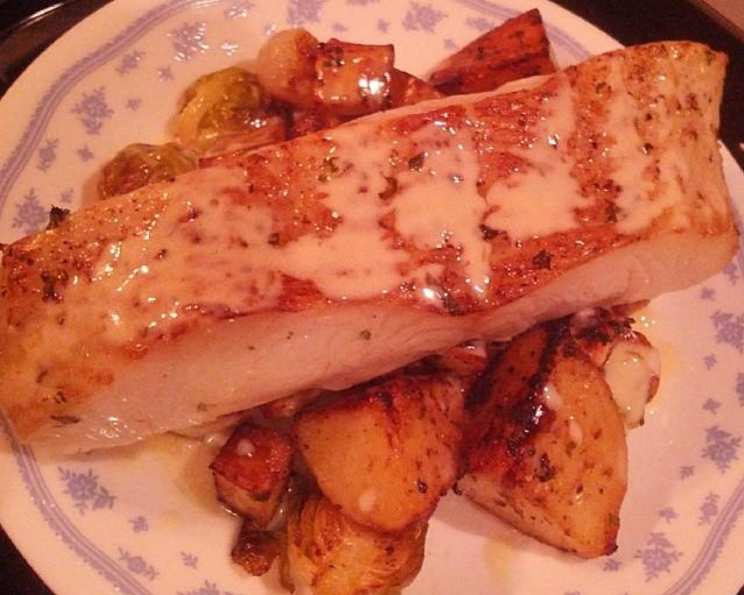
Broiled Turbot With Roasted Winter Vegetables: A Symphony of Flavors
There’s something truly magical about the first bite of perfectly cooked turbot. I remember the first time I ever tasted it, a small, unassuming bistro in Paris. The fish, simply broiled, melted in my mouth, its delicate flavor enhanced by the earthy sweetness of roasted root vegetables. That simple dish, elevated by the quality of the ingredients and the chef’s masterful touch, sparked a lifelong love affair with this exceptional fish. Now, years later, I’ve created my own version, a tribute to that memorable meal, showcasing the beauty of seasonal produce and the elegance of simple techniques.
Recipe Overview
- Prep Time: 30 minutes
- Cook Time: 50 minutes
- Total Time: 1 hour 20 minutes
- Servings: 2
- Yield: 2 servings
- Dietary Type: Pescatarian
Ingredients
- 1 lb turbot fillet, skinned and cut into two equal portions
- 2 Yukon Gold potatoes, scrubbed and cut into eighths
- 1 medium parsnip, peeled and diced to half-inch pieces
- 12 white pearl onions, peeled, whole
- 2 garlic cloves, peeled and halved
- 10 Brussels sprouts, halved, with stems and outer leaves off
For the marinade and dressing:
- 1 cup olive oil
- 1 lemon, juiced
- 1/3 cup white wine vinegar, tarragon infused or 1/3 cup apple cider vinegar
- 3 sprigs fresh curly-leaf parsley, finely chopped
For the beurre blanc:
- 1 cup prosecco or 1 cup sparkling wine
- 1/3 cup heavy cream
- 2 3/4 tablespoons unsalted butter, cold, diced
Equipment Needed
- Small saucepan
- Whisk
- Baking sheet
- Skillet or baking sheet lined with tin foil
Instructions
- Begin by preparing the beurre blanc. In a small saucepan, bring the prosecco (or sparkling wine) to a boil over medium-high heat.
- Reduce the heat to a simmer and continue cooking until the volume of the liquid is halved. This reduction intensifies the flavor and creates a foundation for the sauce.
- Slowly whisk in the heavy cream and bring the mixture back up to a simmer. Allow it to cook for 5-7 minutes, allowing the flavors to meld and the sauce to slightly thicken.
- Reduce the heat to low. Add the cold, diced butter, one cube at a time, whisking constantly until each cube is fully incorporated and the sauce is smooth and emulsified. It’s crucial to use cold butter and whisk continuously to prevent the sauce from breaking.
- Remove the beurre blanc from the heat and set it aside to cool and thicken further. The sauce will continue to thicken as it cools, achieving a beautiful, velvety consistency.
- Now, prepare the marinade and dressing. In a bowl, combine the juice of the lemon with the white wine vinegar (or apple cider vinegar).
- Slowly whisk in the olive oil until the dressing is well emulsified.
- Add the finely chopped parsley and season with salt and pepper to taste. This simple dressing will provide brightness and herbaceous notes to both the vegetables and the fish.
- Preheat your oven to 450°F (232°C).
- Toss the parsnips and potatoes in 1/4 of the prepared dressing.
- Spread the coated vegetables on a baking sheet, ensuring they are in a single layer for even roasting. Season with salt and pepper.
- Roast the parsnips and potatoes at 450°F (232°C) for 10 minutes.
- Remove the baking sheet from the oven and stir the vegetables.
- Toss the garlic and pearl onions in another 1/4 of the dressing.
- Add the coated garlic and pearl onions to the baking sheet with the potatoes and parsnips.
- Return the baking sheet to the oven and roast for another 10 minutes.
- Remove the baking sheet from the oven and stir the vegetables again.
- Toss the Brussels sprouts in another 1/4 of the dressing.
- Add the coated Brussels sprouts to the rest of the vegetables on the baking sheet.
- Return the baking sheet to the oven and roast for a final 20 minutes, stirring twice during the roasting process. This ensures that the Brussels sprouts cook evenly and develop a lovely caramelized exterior.
- Once the vegetables are tender and lightly browned, remove the baking sheet from the oven and set it aside.
- While the vegetables are roasting, prepare the turbot. Brush the turbot fillets with half of the remaining dressing.
- Allow the turbot to marinate for no more than 60 minutes. This short marinating time allows the flavors to penetrate the fish without overpowering its delicate taste.
- Once the vegetables have finished roasting, turn the oven to high broil.
- Brush the turbot fillets with the rest of the dressing and season the tops with salt and pepper.
- Place the turbot in a skillet or on a baking sheet that has been lined with tin foil. This prevents the fish from sticking and makes for easier cleanup.
- Broil the turbot 3-4 inches from the broiler for 3-6 minutes, depending on the thickness of the fillets, or until the tops are golden brown and bubbling. Keep a close eye on the fish, as it can easily burn under the broiler.
- Remove the turbot from the oven.
- Warm two plates briefly in the oven (optional).
- Place half of the roasted vegetables on each warmed plate.
- Drizzle the vegetables generously with the prepared beurre blanc.
- Place a turbot fillet on top of the vegetables on each plate.
- Drizzle the turbot again with the beurre blanc.
- Serve the dish immediately while the fish is hot, the vegetables are warm, and the beurre blanc is luscious.
Expert Tips & Tricks
- For an extra layer of flavor, consider adding a pinch of red pepper flakes to the dressing for a touch of heat.
- To prevent the beurre blanc from breaking, ensure the butter is very cold and whisk vigorously while adding it to the sauce.
- If you don’t have tarragon-infused vinegar, you can add a pinch of dried tarragon to the apple cider vinegar for a similar flavor profile.
- Don’t overcrowd the baking sheet when roasting the vegetables. Overcrowding will steam the vegetables rather than roasting them properly.
- Feel free to experiment with other winter vegetables such as celeriac, rutabaga, or carrots.
Serving & Storage Suggestions
Serve the broiled turbot with roasted winter vegetables immediately for the best flavor and texture. The warm vegetables and the delicate fish pair perfectly with the rich beurre blanc.
Leftovers can be stored in the refrigerator for up to 2 days. Reheat the vegetables in a skillet over medium heat or in the oven at 350°F (175°C). Reheat the turbot gently in a skillet with a small amount of butter or oil to prevent it from drying out. The beurre blanc can be reheated in a saucepan over low heat, whisking constantly to prevent it from separating. Freezing is not recommended as it will affect the texture of both the fish and the vegetables.
Nutritional Information
| Nutrient | Amount per Serving | % Daily Value |
|---|---|---|
| Calories | 815.9 kcal | N/A |
| Total Fat | 69.8 g | 107% |
| Saturated Fat | 17.2 g | 86% |
| Cholesterol | 48.15 mg | 16% |
| Sodium | 34.05 mg | 1% |
| Total Carbohydrate | 37.1 g | 12% |
| Dietary Fiber | 5.9 g | 24% |
| Sugars | 9.6 g | N/A |
| Protein | 5.25 g | 10% |
Nutritional information is an estimate and may vary based on specific ingredients and portion sizes.
Variations & Substitutions
- For a dairy-free version, you can substitute the heavy cream in the beurre blanc with coconut cream. The flavor will be slightly different, but still delicious. You can also use plant-based butter alternatives.
- If you can’t find turbot, you can substitute it with other white fish such as cod, halibut, or sea bass. Adjust the broiling time accordingly based on the thickness of the fillet.
- For a vegetarian option, replace the turbot with grilled halloumi cheese or roasted portobello mushrooms.
- In the summertime, swap out the winter vegetables for asparagus, zucchini, bell peppers, and cherry tomatoes.
FAQs (Frequently Asked Questions)
Q: Can I make the beurre blanc ahead of time?
A: Yes, you can make the beurre blanc up to a few hours in advance. Keep it warm in a double boiler or over very low heat, whisking occasionally, to prevent it from separating.
Q: How do I know when the turbot is cooked through?
A: The turbot is cooked when it is opaque and flakes easily with a fork. Be careful not to overcook it, as it can become dry.
Q: Can I use dried parsley instead of fresh parsley?
A: While fresh parsley is preferred for its flavor, you can use dried parsley in a pinch. Use about 1 teaspoon of dried parsley for every 3 sprigs of fresh parsley.
Q: What if my beurre blanc separates?
A: If your beurre blanc separates, try whisking in a tablespoon of cold water or a small ice cube. This can help to re-emulsify the sauce.
Q: Can I grill the turbot instead of broiling it?
A: Yes, you can grill the turbot. Preheat your grill to medium-high heat and grill the fillets for 3-4 minutes per side, or until cooked through.
Final Thoughts
This recipe for Broiled Turbot with Roasted Winter Vegetables is a celebration of simple elegance and seasonal flavors. It’s a dish that’s both impressive enough for a special occasion and easy enough for a weeknight meal. I encourage you to try it and experience the delicate flavor of the turbot paired with the earthy sweetness of roasted vegetables and the rich creaminess of the beurre blanc. Don’t hesitate to experiment with different vegetables or herbs to customize the dish to your liking. Share your creations and feedback – I can’t wait to see how you make it your own! And why not pair it with a crisp, dry white wine like a Sancerre or a Vermentino to elevate the dining experience even further?