
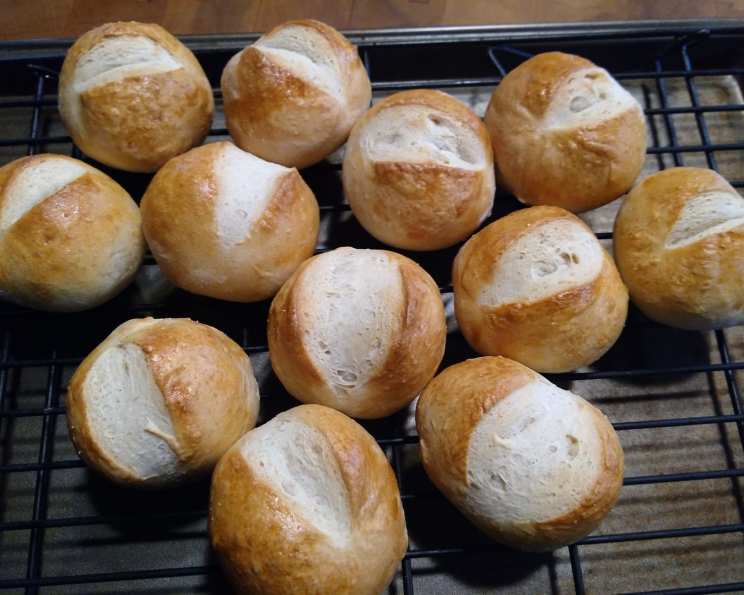
Brotchen: The Taste of a German Morning
The aroma alone transports me back to a small bakery in Bavaria. Sunlight streams through the window, illuminating rows of golden-brown rolls, their crusts crackling invitingly. It was 6 AM, and I was bleary-eyed but determined to secure a bag of these freshly baked Brotchen for breakfast. That first bite, the satisfying crunch giving way to a soft, chewy interior, is a culinary memory etched forever in my mind. These aren’t just rolls; they’re an experience.
Recipe Overview
- Prep Time: 45 minutes
- Cook Time: 15-20 minutes
- Total Time: 2 hours 15 minutes (includes rising time)
- Yields: 12 rolls
- Serves: 12
- Dietary Type: Vegetarian
Ingredients
- 2 ½ – 3 cups flour (all-purpose or bread flour)
- 2 ½ teaspoons dry active yeast
- 1 teaspoon sugar
- 1 teaspoon salt
- 1 teaspoon oil (vegetable or olive oil)
- 1 cup warm water (about 105-115°F or 40-46°C)
- 1 egg white
Equipment Needed
- Large Mixing Bowl
- Measuring cups and spoons
- Small bowl or container
- Clean kitchen towel or plastic wrap
- Greased and floured baking sheet
- Fork
- Pastry brush (optional)
Instructions
- Begin by preheating your oven to 450°F (232°C). Ensuring your oven is properly heated is crucial for achieving that characteristic crust.
- In a large bowl, pour in 2 ½ cups of flour. Create a well in the center of the flour. This well will be the perfect spot for our yeast mixture to bloom.
- In a separate small bowl or container, combine the dry active yeast, sugar, and 2 tablespoons of the warm water (taken from the 1 cup). The sugar feeds the yeast, encouraging its activation.
- Pour the yeast mixture into the well you created in the flour. Do not mix it with the flour at this point. This allows the yeast to activate undisturbed.
- Cover the bowl with a clean kitchen towel or plastic wrap and place it in a warm place for 15 minutes. This step is essential for allowing the yeast to rise and become bubbly, indicating it’s alive and ready to leaven the dough.
- After 15 minutes, add the remaining warm water and oil to the bowl. Beat the mixture until everything is well combined. Then, add the salt. Salt inhibits yeast activity, so it’s important to add it after the initial yeast bloom.
- Turn the dough out onto a lightly floured counter. Knead the dough until it becomes smooth and elastic. This typically takes about 5-7 minutes. If the dough is too sticky, gradually add the remaining ½ cup of flour, a tablespoon at a time, until it reaches a manageable consistency. Be careful not to add too much flour, as this can result in dry rolls.
- Place the dough back into the bowl, cover it, and let it rise in a warm place until it has doubled in size. This typically takes about 30-40 minutes, but the rising time can vary depending on the temperature of your environment.
- Once the dough has doubled, punch it down gently to release the air. Divide the dough into 12 equal parts.
- Shape each portion of dough into oval rolls. Place the rolls about 3 inches apart on a greased and floured cookie sheet. This spacing allows for proper expansion during the final rise.
- Cover the shaped rolls and let them rise again until they have doubled in size. This second rise is crucial for creating light and airy Brotchen.
- In a small bowl, beat the egg white with 1 teaspoon of water using a fork until frothy. This egg wash will give the rolls a beautiful golden-brown color and a slight sheen.
- Gently brush the egg white mixture onto the tops of the rolls.
- Bake in the preheated oven for 15-20 minutes, or until the rolls are golden brown. Keep a close eye on them, as baking times can vary depending on your oven.
- Remove the Brotchen from the oven and let them cool slightly on the baking sheet before transferring them to a wire rack to cool completely.
Expert Tips & Tricks
- Achieving the Crust: For an extra-crispy crust, try spraying the rolls with water before placing them in the oven and again halfway through baking. The steam helps create a harder crust.
- Yeast Activation: Ensure your water is warm, not hot, to avoid killing the yeast. If you’re unsure about the yeast’s freshness, proof it by adding it to the warm water and sugar. If it doesn’t bubble within 5-10 minutes, it may be dead and should be replaced.
- Kneading Technique: Proper kneading is key to developing the gluten, which gives the Brotchen their structure. If you have a stand mixer, you can use the dough hook attachment to knead the dough for you.
- Flavor Boost: Adding a pinch of caraway seeds to the dough can impart a traditional German flavor.
Serving & Storage Suggestions
Brotchen are best served warm, ideally fresh from the oven. They’re delicious on their own or with butter, jam, cheese, or cold cuts. They also make excellent sandwich rolls.
To store leftover Brotchen, place them in an airtight container at room temperature. They will stay fresh for 1-2 days. For longer storage, freeze them in a freezer-safe bag. To reheat, thaw completely and then warm them in a 350°F (175°C) oven for 5-10 minutes, or until heated through. You can also revive slightly stale rolls by briefly wetting them and then baking them in a hot oven for a few minutes.
Nutritional Information
| Nutrient | Amount per Serving | % Daily Value |
|---|---|---|
| Calories | 103.6 kcal | N/A |
| Calories from Fat | 6 g | N/A |
| Total Fat | 0.7 g | 1% |
| Saturated Fat | 0.1 g | 0% |
| Cholesterol | 0 mg | 0% |
| Sodium | 199.9 mg | 8% |
| Total Carbohydrate | 20.6 g | 6% |
| Dietary Fiber | 0.9 g | 3% |
| Sugars | 0.4 g | 1% |
| Protein | 3.3 g | 6% |
Note: Nutritional information is an estimate and can vary based on specific ingredients and portion sizes.
Variations & Substitutions
- Whole Wheat Brotchen: Substitute up to half of the all-purpose flour with whole wheat flour for a nuttier flavor and added fiber.
- Seeded Brotchen: Sprinkle the tops of the rolls with sesame seeds, poppy seeds, or sunflower seeds before baking for added texture and flavor.
- Gluten-Free Brotchen: Use a high-quality gluten-free flour blend designed for bread baking. You may need to adjust the amount of liquid depending on the blend you use.
- Lye Rolls (Laugenbrotchen): For a truly authentic German experience, dip the rolls in a lye solution before baking. This is an advanced technique that requires caution, as lye is caustic. (Find reliable resources online for proper lye solution handling.) This creates a dark, shiny, and intensely flavorful crust.
FAQs (Frequently Asked Questions)
Q: Can I use instant yeast instead of active dry yeast?
A: Yes, you can. If using instant yeast, you can skip the initial proofing step and add it directly to the flour.
Q: Why are my Brotchen flat and dense?
A: This could be due to several factors, including using expired yeast, not kneading the dough enough, or not allowing the dough to rise properly. Make sure your yeast is fresh, knead the dough until it’s smooth and elastic, and give it enough time to double in size during both rises.
Q: Can I make the dough ahead of time and bake the Brotchen later?
A: Yes, you can. After the first rise, punch down the dough, shape it into rolls, and place them on a baking sheet. Cover them tightly with plastic wrap and refrigerate for up to 24 hours. When ready to bake, let them sit at room temperature for about 30 minutes before brushing with egg wash and baking.
Q: How do I get the Brotchen to have a crackly crust?
A: In addition to the steam trick mentioned above, make sure your oven is properly preheated to a high temperature (450°F/232°C). This high heat is essential for achieving that characteristic crust.
Q: Can I freeze the baked Brotchen?
A: Yes, you can freeze baked Brotchen. Let them cool completely, then wrap them individually or in small groups in plastic wrap and place them in a freezer-safe bag. They can be frozen for up to 2-3 months. Thaw them completely before reheating.
Final Thoughts
These Brotchen are more than just a recipe; they’re a journey back to simpler times, to the warmth of a small-town bakery, and the comforting aroma of freshly baked bread. I encourage you to give this recipe a try and experience the joy of creating your own little piece of Germany. Don’t be afraid to experiment with variations and make them your own. And if you happen to have a particularly delicious batch, pair them with some Obatzda and a cold German beer for the complete Bavarian experience!