
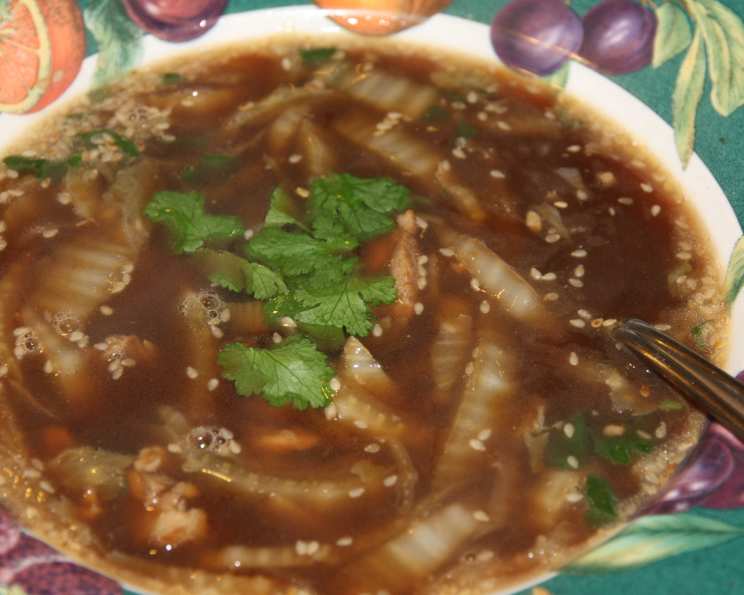
Brothy Duck Soup: A Culinary Embrace
The aroma of duck stock simmering with star anise instantly transports me back to a small, bustling kitchen in Hong Kong. I remember watching, mesmerized, as my grandmother meticulously prepared a nourishing duck broth, the centerpiece of countless family meals. The subtle sweetness of the duck, infused with the warmth of spices and fresh herbs, was more than just a soup; it was a symbol of comfort, connection, and love – a tradition I’m thrilled to share with you.
Recipe Overview
- Prep Time: 10 minutes
- Cook Time: 25 minutes
- Total Time: 35 minutes
- Servings: 4
- Dietary Type: N/A (Can be modified for gluten-free)
Ingredients
- 850 ml well-flavored duck stock (or chicken stock)
- 1 tablespoon rice wine
- 1 tablespoon light soy sauce
- 1 star anise
- 125 g boneless duck breasts, finely diced
- 225 g Chinese cabbage, finely shredded
- 2 cloves garlic, crushed
- 1 tablespoon sesame seeds
- 1 teaspoon sesame oil
- 1 tablespoon chopped fresh parsley
Equipment Needed
- Large saucepan
- Warmed bowls for serving
Instructions
- In a large saucepan, combine the duck stock (or chicken stock), rice wine, light soy sauce, and star anise.
- Bring the mixture to a boil over medium-high heat.
- Add the finely diced duck, shredded Chinese cabbage, and crushed garlic to the boiling broth, stirring thoroughly to combine all ingredients.
- Reduce the heat to low, allowing the soup to simmer gently for 25 minutes, or until the duck is tender and fully cooked. Ensure the duck is cooked through; internal temperature should reach 165°F (74°C).
- Remove the star anise from the soup using a slotted spoon, discarding it.
- Stir in the sesame seeds, sesame oil, and chopped fresh parsley.
- Serve the soup immediately in warmed bowls to retain heat and enhance the dining experience.
Expert Tips & Tricks
- Duck Stock Enhancement: If you’re using store-bought duck stock, consider enriching its flavor by simmering it with a few duck bones or trimmings for an hour beforehand. This will intensify the duck flavor profile.
- Cabbage Preparation: Ensure the Chinese cabbage is finely shredded for even cooking and a more delicate texture in the soup.
- Garlic Infusion: To avoid an overpowering garlic flavor, gently sauté the crushed garlic in a teaspoon of sesame oil before adding it to the soup. This mellows the garlic while still providing its aromatic essence.
- Sesame Oil Timing: Adding the sesame oil at the very end preserves its delicate flavor. Overheating it can make it taste bitter.
- Protein Boost: Add a handful of tofu cubes or cooked edamame for added protein and texture.
- Spice Level: For a touch of heat, add a pinch of red pepper flakes or a small, thinly sliced chili pepper to the soup during the simmering process.
- Herbal Infusion: Experiment with different herbs like cilantro, scallions, or Thai basil to add unique flavor dimensions to the soup.
- Gluten-Free Modification: To ensure the soup is gluten-free, use tamari instead of light soy sauce, as some soy sauces contain wheat.
Serving & Storage Suggestions
Serve this brothy duck soup hot in warmed bowls. Garnish with extra chopped parsley and a sprinkle of sesame seeds for an appealing presentation. A side of steamed rice or crusty bread complements the soup beautifully, allowing you to soak up the flavorful broth.
Storage: Leftover soup can be stored in an airtight container in the refrigerator for up to 3 days. For longer storage, freeze the soup in individual portions for up to 2 months.
Reheating: Reheat the soup gently over medium heat on the stovetop until heated through. Avoid boiling, as this can affect the texture of the cabbage. If frozen, thaw the soup in the refrigerator overnight before reheating.
Nutritional Information
| Nutrient | Amount per Serving | % Daily Value |
|---|---|---|
| Calories | 105 kcal | 5% |
| Total Fat | 5.8 g | 8% |
| Saturated Fat | 1.3 g | 6% |
| Cholesterol | 42.5 mg | 14% |
| Sodium | 283.8 mg | 11% |
| Total Carbohydrate | 3.3 g | 1% |
| Dietary Fiber | 1 g | 4% |
| Sugars | 0.9 g | 3% |
| Protein | 9.3 g | 18% |
Nutritional information is an estimate and may vary based on specific ingredients and preparation methods.
Variations & Substitutions
- Vegetarian Option: Replace the duck stock with vegetable broth and the duck breast with shiitake mushrooms for a flavorful vegetarian version.
- Spicy Duck Soup: Add a tablespoon of chili garlic sauce or a finely chopped red chili pepper to the soup for a spicy kick.
- Winter Vegetable Variation: Incorporate winter vegetables like carrots, parsnips, and turnips for a heartier, more seasonal soup.
- Noodle Soup: Add cooked rice noodles or glass noodles to the soup for a more substantial meal.
- Coconut Milk Broth: For a richer, creamier broth, substitute half of the duck stock with coconut milk.
FAQs (Frequently Asked Questions)
Q: Can I use chicken thighs instead of duck breast?
A: Yes, chicken thighs are a suitable substitute for duck breast. Just ensure they are boneless and skinless. You may need to adjust the cooking time slightly to ensure the chicken is cooked through.
Q: Is it necessary to use duck stock?
A: While duck stock adds a distinct richness to the soup, chicken stock works perfectly well as a substitute. The overall flavor will be slightly different but still delicious.
Q: Can I make this soup ahead of time?
A: Yes, you can make the soup a day or two in advance. The flavors will meld together even more over time. Store it in the refrigerator in an airtight container. Add the parsley and sesame seeds just before serving for the freshest flavor.
Q: Can I add other vegetables to the soup?
A: Absolutely! Feel free to add other vegetables like sliced mushrooms, baby bok choy, or water chestnuts. Add them along with the Chinese cabbage for even cooking.
Q: How do I prevent the Chinese cabbage from becoming too mushy?
A: To prevent overcooking the cabbage, add it to the soup during the last 10-15 minutes of simmering. This will ensure it remains slightly crisp-tender.
Final Thoughts
This Brothy Duck Soup is more than just a recipe; it’s an invitation to explore the depth and complexity of Asian-inspired flavors. I encourage you to gather your ingredients, embrace the process, and create a comforting and nourishing meal for yourself and your loved ones. Don’t be afraid to experiment with variations and substitutions to personalize the soup to your liking. And, most importantly, savor every spoonful! This soup pairs beautifully with a light-bodied white wine like Pinot Grigio or a crisp Asian beer. Let me know what you think in the comments below!