
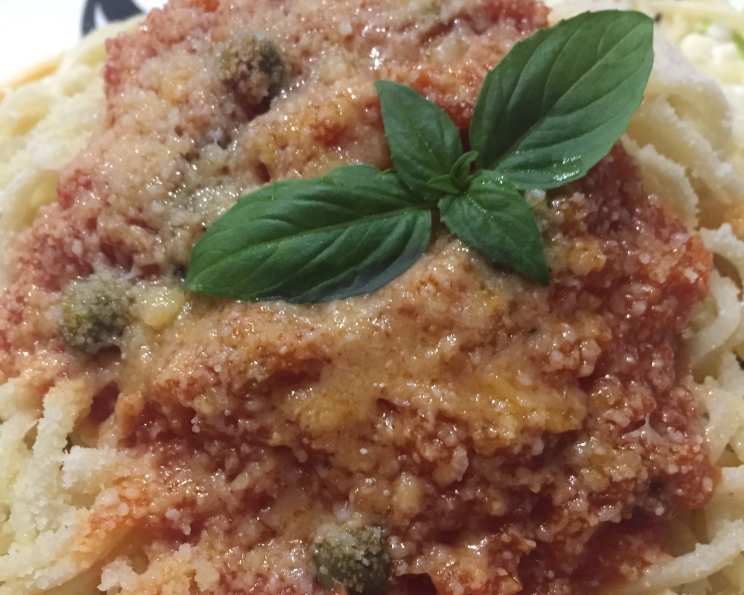
Bruschetta Pasta: A Symphony of Summer Flavors
I can still picture my grandmother’s garden, bursting with the vibrant hues of summer. The air was thick with the scent of ripe tomatoes and fragrant basil. Every year, she would make a simple bruschetta, the taste of which still transports me back to those sun-drenched afternoons. This pasta dish, inspired by that memory, captures the essence of her garden in a comforting and satisfying meal. It’s a celebration of fresh, simple ingredients transformed into something truly special.
Recipe Overview
- Prep Time: 15 minutes
- Cook Time: 8 minutes
- Total Time: 23 minutes
- Servings: 4
- Dietary Type: Vegetarian
Ingredients
- 1 lb spaghetti
- 3 large tomatoes
- 1 cup packed fresh basil (or ½ teaspoon dried basil)
- ⅓ cup romano cheese (or ⅓ cup parmesan cheese)
- ⅓ cup finely chopped red onion
- ¼ cup capers, rinsed
- 2 tablespoons extra virgin olive oil
- 1 tablespoon wine vinegar
- 2 cloves garlic, smashed
- ¼ teaspoon salt
- ¼ teaspoon pepper
Equipment Needed
- Large pot
- Colander
- Knife
- Cutting board
- Large serving bowl
Instructions
- Bring a large pot of salted water to a rolling boil. Once boiling, add the spaghetti and cook until al dente, about 8 minutes. “Al dente” means the pasta should be firm to the bite.
- Before draining the pasta, reserve ⅓ cup of the cooking liquid. This starchy water will help create a lovely sauce. Drain the pasta using a colander and immediately return it to the pot.
- While the pasta is cooking, prepare the bruschetta topping. Finely chop the tomatoes. The finer the chop, the better the flavors will meld together.
- Chop the fresh basil finely. If using dried basil, set it aside to add later.
- Add the chopped tomatoes and basil (fresh or dried) to the pot with the drained pasta.
- Pour in the reserved pasta cooking liquid. This liquid will help emulsify the sauce and bind everything together.
- Add the cheese (Romano or Parmesan), finely chopped red onion, rinsed capers, extra virgin olive oil, wine vinegar, smashed garlic, salt, and pepper to the pasta.
- Toss everything together thoroughly to ensure the pasta is evenly coated with the bruschetta mixture. Make sure the heat from the pasta helps the garlic and basil release their flavors.
Expert Tips & Tricks
- Quality Ingredients Matter: The success of this dish hinges on the quality of your ingredients. Use the freshest, ripest tomatoes you can find for the best flavor.
- Cheese Finesse: Don’t have Romano or Parmesan cheese? Try Asiago for a slightly different, yet equally delicious, twist. Or, for a vegan alternative, nutritional yeast can provide a cheesy flavor.
- Garlic Infusion: Smashing the garlic instead of mincing it allows for a more subtle garlic flavor. If you prefer a stronger garlic taste, you can mince it or even grate it. Remember to remove the smashed garlic cloves before serving, as they’ve already imparted their flavor.
- Pasta Water is Key: Don’t skip reserving the pasta water! This starchy liquid is crucial for creating a creamy, emulsified sauce that clings beautifully to the pasta.
- Make it Ahead: The bruschetta topping can be made a few hours ahead of time. Just store it in the refrigerator and add it to the pasta right before serving. This allows the flavors to meld together even more.
- Balancing Act: Taste and adjust the seasoning as needed. Depending on the sweetness of your tomatoes, you might want to add a touch more wine vinegar to balance the flavors.
- Preventing Soggy Tomatoes: If your tomatoes are particularly watery, you can drain some of the excess liquid before adding them to the pasta. This will prevent the sauce from becoming too thin.
Serving & Storage Suggestions
Serve the Bruschetta Pasta immediately while it’s warm and the flavors are at their peak. Garnish with a few extra fresh basil leaves and a sprinkle of cheese for an extra touch of elegance.
Leftovers can be stored in an airtight container in the refrigerator for up to 3 days. To reheat, gently warm the pasta in a skillet over low heat, adding a splash of water or olive oil if needed to prevent it from drying out. Avoid microwaving, as the pasta can become mushy. This dish is best enjoyed fresh, but leftovers can be a quick and tasty lunch option.
Nutritional Information
| Nutrient | Amount per Serving | % Daily Value |
|---|---|---|
| Calories | 519.6 kcal | N/A |
| Calories from Fat | N/A | 15% |
| Total Fat | 8.9 g | 13% |
| Saturated Fat | 1.3 g | 6% |
| Cholesterol | 0 mg | 0% |
| Sodium | 415.3 mg | 17% |
| Total Carbohydrate | 93 g | 30% |
| Dietary Fiber | 6 g | 24% |
| Sugars | 7.3 g | N/A |
| Protein | 16.9 g | 33% |
Note: Nutritional information is an estimate and may vary based on specific ingredients and portion sizes.
Variations & Substitutions
- Gluten-Free Option: Use your favorite gluten-free spaghetti for a gluten-free version of this dish.
- Vegan Adaptation: Omit the cheese entirely or substitute with a plant-based parmesan alternative. Nutritional yeast can also add a cheesy flavor.
- Spicy Kick: Add a pinch of red pepper flakes to the bruschetta mixture for a touch of heat.
- Seasonal Twist: In the winter, use roasted tomatoes instead of fresh for a deeper, more concentrated flavor. You could even add roasted garlic cloves for a sweeter, mellower taste.
- Protein Boost: Add grilled chicken, shrimp, or white beans for a heartier meal.
- Herb Variations: Experiment with different herbs like oregano or thyme in addition to or instead of basil.
FAQs (Frequently Asked Questions)
Q: Can I use canned tomatoes instead of fresh tomatoes?
A: While fresh tomatoes are ideal, you can use high-quality canned diced tomatoes in a pinch. Drain them well before adding them to the pasta.
Q: Can I make this dish ahead of time?
A: The bruschetta topping can be made a few hours ahead of time, but it’s best to cook the pasta right before serving to prevent it from becoming soggy.
Q: What kind of wine vinegar should I use?
A: Red wine vinegar is traditionally used in bruschetta, but white wine vinegar will also work well.
Q: Can I use dried basil instead of fresh basil?
A: Yes, but fresh basil will provide a much more vibrant flavor. If using dried basil, use about half the amount (½ teaspoon).
Q: Can I freeze this pasta dish?
A: Freezing is not recommended, as the tomatoes can become watery and the pasta texture may change. It’s best enjoyed fresh.
Final Thoughts
This Bruschetta Pasta is more than just a recipe; it’s a celebration of simple, fresh flavors. It’s a dish that evokes memories of sun-drenched gardens and the warmth of family gatherings. I encourage you to try this recipe and share the experience with your loved ones. Experiment with different variations and make it your own. Pair it with a crisp glass of white wine and a simple salad for a complete and satisfying meal. Don’t be afraid to share your creations and feedback – cooking is a journey best traveled together. Buon appetito!