
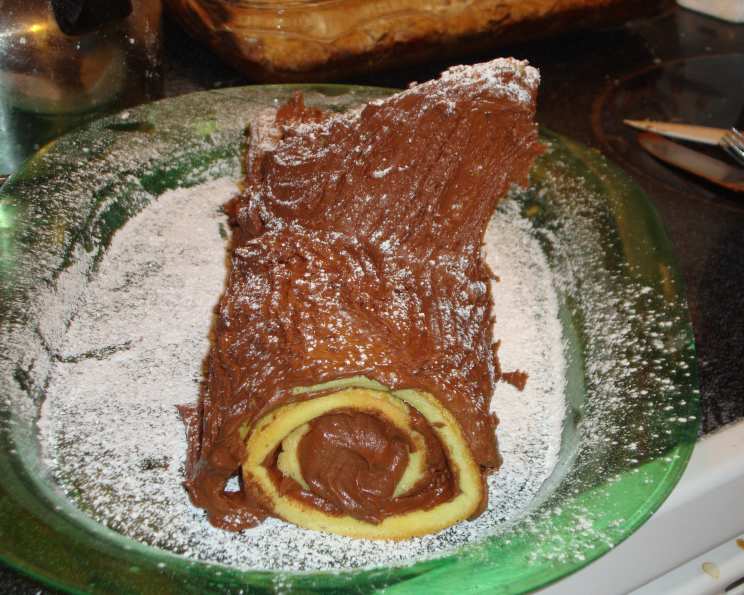
The Enchanting Bûche de Noël: A Culinary Christmas Tradition
The scent of warm spices and melting chocolate always brings me back to Christmas Eve at my grandmother’s house. Her Bûche de Noël, or Yule Log cake, wasn’t just dessert; it was the centerpiece of our holiday celebration. I remember being mesmerized by its bark-like frosting, the dusting of powdered sugar that looked like freshly fallen snow, and the tiny meringue mushrooms nestled among the chocolate “branches.” More than the presents under the tree, that cake represented the warmth, love, and togetherness that defined our family’s Christmas, a sweet edible memory I cherish to this day. Now, I’m excited to share that same magic with you through this time-honored recipe.
Recipe Overview
- Prep Time: 30 minutes
- Cook Time: 10 minutes
- Total Time: Several Hours (includes chilling time)
- Servings: 6
- Yield: 1 Yule Log Cake
- Dietary Type: Not specified (contains dairy and eggs)
Ingredients
For the Yule Log Cake:
- 4 eggs (these have to be at room temperature)
- 2/3 cup sugar
- 1 teaspoon vanilla
- 1 cup cake flour (sifted before measuring)
For the Chocolate Buttercream Frosting:
- 1/2 cup butter, softened (you can use margarine but the flavor will not be the same)
- 2 2/3 cups confectioners’ sugar, sifted
- 1/3 cup half-and-half cream (can use unwhipped whipping cream in place of half and half) or 1/3 cup milk (can use unwhipped whipping cream in place of half and half)
- 2 teaspoons vanilla
- 1/2 cup unsweetened cocoa powder, sifted
Equipment Needed
- 10 X 15 inch jelly roll pan
- Parchment paper
- Mixer (hand mixer or stand mixer)
- Sturdy deep mixing bowl
- Spatula
- Clean dishtowel
- Serving dish
- Plastic wrap
- Fork
Instructions
-
Begin by preparing your jelly roll pan. Butter the entire inside surface of a 10 x 15 inch jelly roll pan thoroughly. Then, line the pan with parchment paper. This ensures the cake doesn’t stick and can be easily removed after baking. Finally, butter the parchment paper as well. This extra layer of protection prevents any sticking whatsoever.
-
Preheat your oven to 370°F (190°C). It’s crucial to have the oven properly preheated before the cake batter is ready to go in, as the cake needs that initial burst of heat to rise correctly.
-
In a mixer (either a hand mixer or a stand mixer will work), beat the eggs until they are very thick and light colored. This process takes approximately 7 minutes. The goal is to incorporate as much air as possible into the eggs, which will result in a light and airy cake.
-
Continue beating the eggs while gradually adding the sugar, 1 tablespoon at a time. Allow each spoonful to fully mix in before adding the next. This gradual addition of sugar helps to stabilize the egg foam and prevent it from collapsing.
-
Once all the sugar is incorporated, beat in the vanilla. The vanilla extract adds a delightful aroma and enhances the overall flavor of the cake.
-
Stop the mixer and sift 1/2 cup of the cake flour on top of the batter. Sifting is essential as it removes any lumps in the flour and aerates it, resulting in a smoother batter.
-
Using a spatula, gently stir the flour into the batter. Be careful not to overmix, as this can develop the gluten in the flour and result in a tough cake.
-
Sift the final 1/2 cup of flour on top of the batter. Again, sifting ensures that the flour is evenly distributed and lump-free.
-
Very gently fold this flour into the batter. The key here is to stop as soon as all the flour is just integrated into the batter. Overmixing at this stage will deflate the air that has been incorporated into the eggs, resulting in a dense and heavy cake. The goal is to achieve a light and airy texture.
-
Pour the batter into the prepared pan and spread it evenly. Ensure that the batter reaches all corners of the pan to ensure even baking.
-
Bake for just 10 minutes. Keep a close eye on the cake, as it can overbake easily. Overbaking will make the cake too stiff to roll without breaking, which is something we want to avoid.
-
As soon as you take the cake out of the oven, immediately turn the cake out onto a clean dishtowel. The speed is important here to prevent the cake from sticking to the pan and cooling completely.
-
Remove the parchment paper from the bottom of the cake.
-
Allow the cake to cool for a couple of minutes. This brief cooling period will make the cake more pliable and easier to roll.
-
While the cake is still warm, roll the cake up from one of its short ends with the dishtowel inside. This step is crucial as it trains the cake to hold its rolled shape. The dishtowel prevents the layers from sticking together during cooling.
-
Allow the cake to cool completely in this rolled position. This step is essential to prevent the cake from cracking when you roll it up with the filling later.
-
Once the cake is completely cool, gently unroll the cake.
-
Spread about 1/2 of the chocolate buttercream frosting evenly on top of the unrolled cake. Leave a small border at the edges to prevent the frosting from squeezing out when you roll it back up.
-
Carefully roll the cake back up without the dishtowel.
-
Neatly place the rolled cake on your serving dish.
-
To make the Chocolate Buttercream Frosting: In a small bowl, cream the butter until it is light and fluffy.
-
Blend in the cocoa powder, adding the amount desired for a light, medium, or dark chocolate flavor. You can adjust the amount of cocoa powder to suit your personal preferences.
-
Add the vanilla, then alternately add the confectioners’ sugar and the cream. This gradual addition of the sugar and liquid helps to create a smooth and stable buttercream.
-
Beat with an electric mixer until the desired texture is achieved. You may need to adjust the amount of cream or confectioners’ sugar to reach the perfect consistency.
-
Optional: To enhance the yule log effect, cut off the ends of the cake at an angle. Use these to create stubs on the log, resembling cut-off branches. Attach these “branches” to the sides of the log using some of the buttercream frosting.
-
Frost the outside of the log with the remaining chocolate buttercream.
-
Using a fork, trace irregular lines in the frosting to give it a woody effect. This simple technique adds a touch of realism to the Yule Log Cake.
-
Cover the cake carefully with plastic wrap and allow it to “age” in the refrigerator for several hours, or preferably overnight. This chilling period allows the flavors to meld together and the frosting to firm up.
Expert Tips & Tricks
- Room Temperature Eggs are Key: Ensure your eggs are at room temperature. This helps them whip up to their fullest volume, creating a lighter, airier cake. If you forgot to take them out, submerge them in warm water for a few minutes.
- Don’t Overbake! A dry cake will crack when you roll it. Err on the side of underbaking. A toothpick inserted in the center should come out mostly clean with a few moist crumbs attached.
- Warm Roll: Rolling the cake while it’s still warm is crucial. As it cools, it sets in the rolled shape, preventing cracks later.
- Chill Out: Chilling the frosted cake is essential for the buttercream to firm up and the flavors to meld. This also makes it easier to slice.
Serving & Storage Suggestions
Serve the Bûche de Noël chilled. For an extra touch, dust it with powdered sugar just before serving to resemble snow. You can also add fresh berries, meringue mushrooms, or chocolate shavings for decoration.
Store leftover Yule Log Cake in the refrigerator, tightly wrapped in plastic wrap, for up to 3 days. It can also be frozen for up to 2 months. Thaw overnight in the refrigerator before serving. The texture of the buttercream may change slightly after freezing.
Nutritional Information
| Nutrient | Amount per Serving | % Daily Value |
|---|---|---|
| Calories | 599.3 kcal | N/A |
| Calories from Fat | 191 g | 32% |
| Total Fat | 21.2 g | 32% |
| Saturated Fat | 12.3 g | 61% |
| Cholesterol | 169.6 mg | 56% |
| Sodium | 191.3 mg | 7% |
| Total Carbohydrate | 98.5 g | 32% |
| Dietary Fiber | 2.8 g | 11% |
| Sugars | 75 g | 299% |
| Protein | 8 g | 16% |
Variations & Substitutions
- Chocolate Cake: Replace some of the cake flour with cocoa powder for a chocolate sponge cake.
- Espresso Buttercream: Add a teaspoon or two of espresso powder to the buttercream for a mocha flavor.
- Fruit Filling: Instead of buttercream, use a fruit jam or preserve for the filling.
- Gluten-Free: Substitute the cake flour with a gluten-free all-purpose flour blend. Ensure that the blend contains xanthan gum or another binding agent.
FAQs (Frequently Asked Questions)
Q: Why are my eggs not getting thick enough?
A: Ensure your eggs are at room temperature and that your bowl is clean and grease-free. Even a tiny bit of grease can prevent the eggs from whipping up properly.
Q: My cake cracked when I rolled it. What did I do wrong?
A: Overbaking is the most common cause of cracking. The cake should be moist and pliable. Also, make sure you’re rolling it while it’s still warm.
Q: Can I make the buttercream frosting ahead of time?
A: Yes, you can make the buttercream frosting up to 3 days in advance. Store it in an airtight container in the refrigerator. Before using, let it come to room temperature and re-whip it to restore its fluffy texture.
Q: How do I make meringue mushrooms?
A: You can find meringue mushroom recipes online. They are made from meringue that is piped into mushroom shapes and baked at a low temperature.
Q: Can I use a different type of extract instead of vanilla?
A: Absolutely! Almond extract, peppermint extract, or even a touch of rum extract can add a unique twist to the flavor.
Final Thoughts
This Bûche de Noël is more than just a cake; it’s a piece of holiday history, a symbol of warmth and celebration. While it may seem a bit daunting at first, each step is quite manageable, and the result is well worth the effort. I encourage you to try this recipe and create your own cherished Christmas memories. Don’t hesitate to experiment with variations to suit your personal tastes. And, most importantly, have fun with it! Share your creations with friends and family, and let the magic of the season fill your kitchen. Happy baking!