
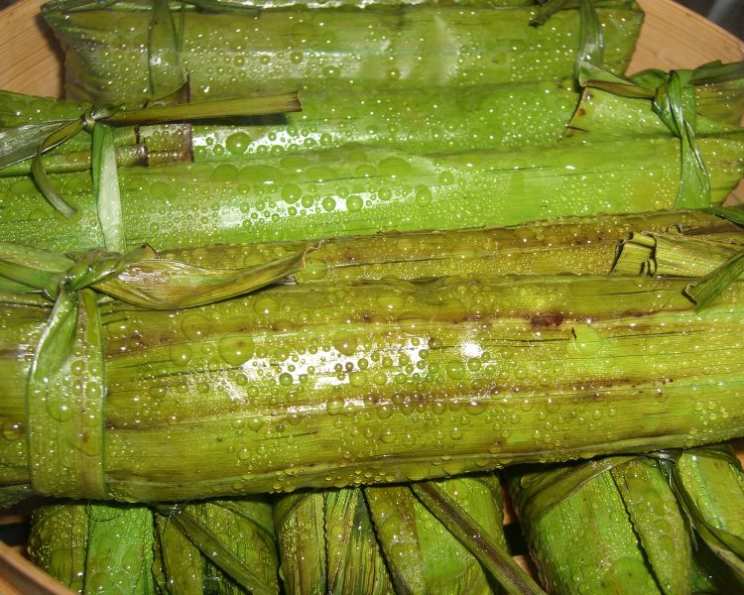
Budbud Pilit: A Taste of Home
The scent of banana leaves, warmed and softened by the steam, always transports me back to my Lola’s kitchen. I remember sitting cross-legged on the cool tile floor, watching her nimble fingers wrap small portions of sweetened rice in the fragrant leaves, her movements a dance honed by years of practice. Budbud Pilit, for me, is more than just a snack; it’s a warm embrace, a taste of heritage, and a reminder of the love that flavors every bite. It’s a simple dish, but each element plays a crucial role in creating a symphony of textures and flavors.
Recipe Overview
- Prep Time: 20 minutes
- Cook Time: 1 hour
- Total Time: 1 hour 20 minutes
- Servings: 20
- Yield: 10 pairs of budbud
- Dietary Type: Vegetarian, Gluten-Free
Ingredients
- 3 cups glutinous rice (also known as malagkit)
- 5 cups coconut milk, first extract
- ½ cup sugar
- 1 teaspoon salt
- Banana leaves
Equipment Needed
- Large bowl
- Wok or large, heavy-bottomed pot
- Steamer
- Scissors or knife
Instructions
- Begin by thoroughly washing the glutinous rice under cold, running water until the water runs clear. This step is crucial for removing excess starch and preventing the budbud from becoming overly sticky. Drain the rice completely.
- In a wok or large, heavy-bottomed pot, combine the drained glutinous rice, coconut milk, sugar, and salt.
- Cook the mixture over medium heat, stirring constantly to prevent scorching. This part requires patience, as the mixture will initially be quite liquid.
- As the rice cooks, the coconut milk will gradually be absorbed. Continue stirring until the mixture is almost dry. You’ll know it’s ready when the rice is thick and sticky, and the liquid has mostly evaporated. Be especially vigilant during this stage to prevent the mixture from sticking to the bottom of the wok.
- Once the mixture is nearly dry, reduce the heat to low. Cover the mixture with banana leaves for about 5 minutes. This allows the rice to further steam and absorb the fragrant essence of the leaves. This step also ensures that the rice is cooked through.
- While the rice is steaming, prepare the banana leaves for wrapping. Gently pass the banana leaves over an open flame or briefly blanch them in hot water to make them pliable and prevent them from tearing. This process is called “wilting” the leaves.
- Wrap approximately 2 tablespoons of the cooked malagkit mixture in a piece of the wilted banana leaf. Shape it into a small, elongated packet. Fold the sides of the leaf inward and then fold the ends over to create a secure wrapping.
- Tie the wrapped budbud in pairs using strips of banana leaf or kitchen twine. This makes them easier to handle and ensures they cook evenly.
- Steam the wrapped budbud in a large pot for about 30 minutes. Ensure there is enough water in the steamer to last for the entire cooking time. The budbud are done when the banana leaves have deepened in color and the rice inside is cooked through.
- Carefully remove the steamed budbud from the pot and let them cool slightly before serving.
Expert Tips & Tricks
- Coconut Milk Quality: Using fresh, first-extract coconut milk is essential for the best flavor and texture. If using canned coconut milk, opt for full-fat, unsweetened varieties.
- Preventing Sticking: Constant stirring is key to preventing the rice from sticking and burning. If you notice the rice sticking despite your best efforts, reduce the heat even further.
- Banana Leaf Preparation: Don’t skip the wilting step! This prevents the banana leaves from tearing and makes them easier to work with. You can also briefly microwave the leaves if you don’t have access to an open flame.
- Adjusting Sweetness: Feel free to adjust the amount of sugar to your preference. Start with ½ cup and add more to taste. You can also use other sweeteners like brown sugar or muscovado for a richer flavor.
- Flavor Infusion: For an extra layer of flavor, try adding a pandan leaf (screwpine leaf) to the rice mixture while cooking. This will impart a subtle, floral aroma.
Serving & Storage Suggestions
Budbud Pilit is traditionally served warm, often with a cup of hot chocolate or ripe mangoes. The contrast between the sweet, sticky rice and the rich chocolate or tart mangoes is simply divine. Leftover budbud can be stored at room temperature for up to 2 days, or in the refrigerator for up to 5 days. To reheat, simply steam them again for a few minutes until warmed through. You can also microwave them, but be sure to wrap them in a damp paper towel to prevent them from drying out. For longer storage, you can freeze the budbud for up to 2 months. Thaw them overnight in the refrigerator before reheating.
Nutritional Information
| Nutrient | Amount per Serving | % Daily Value |
|---|---|---|
| Calories | 180 kcal | 9% |
| Total Fat | 8g | 12% |
| Saturated Fat | 7g | 35% |
| Cholesterol | 0mg | 0% |
| Sodium | 60mg | 3% |
| Total Carbohydrate | 25g | 8% |
| Dietary Fiber | 1g | 4% |
| Sugars | 8g | |
| Protein | 2g | 4% |
Note: Nutritional information is an estimate and may vary based on specific ingredients and cooking methods.
Variations & Substitutions
- Ube Budbud: Add ube extract or ube halaya (purple yam jam) to the rice mixture for a vibrant purple hue and a distinctive ube flavor.
- Chocolate Budbud: Mix cocoa powder or melted chocolate into the rice mixture for a chocolatey twist.
- Gluten-Free Option: Since glutinous rice is naturally gluten-free, this recipe is already a great option for those with gluten sensitivities. Just be sure to use pure, uncontaminated glutinous rice.
- Vegan Option: This recipe is naturally vegan as written.
- Savory Budbud: Omit the sugar and add cooked meat (such as shredded chicken or pork), vegetables, and spices for a savory version of budbud.
- Different Wrappings: While banana leaves are traditional, you can also use parchment paper or aluminum foil if banana leaves are unavailable. However, the flavor will be slightly different.
FAQs (Frequently Asked Questions)
Q: What is glutinous rice?
A: Glutinous rice, also known as sweet rice or sticky rice, is a type of rice that becomes sticky when cooked due to its high starch content. Despite its name, it does not contain gluten.
Q: Can I use regular rice instead of glutinous rice?
A: No, you cannot use regular rice for this recipe. Glutinous rice is essential for the sticky texture that is characteristic of budbud pilit.
Q: How do I know when the budbud are cooked through?
A: The budbud are done when the banana leaves have deepened in color and the rice inside is tender and cooked through. You can test one by unwrapping it and checking the texture of the rice.
Q: Can I make this recipe ahead of time?
A: Yes, you can make the budbud ahead of time and store them in the refrigerator or freezer. Reheat them before serving.
Q: Where can I find banana leaves?
A: You can find banana leaves at most Asian grocery stores. They are often sold frozen, so be sure to thaw them completely before using.
Final Thoughts
Budbud Pilit is more than just a recipe; it’s a journey back to simpler times, a taste of home, and a testament to the power of food to connect us to our roots. I encourage you to try this recipe and experience the warmth and comfort of this beloved Filipino delicacy. Don’t be afraid to experiment with different variations and flavors to create your own unique version. And most importantly, share your creations with loved ones and spread the joy of Filipino cuisine! Perhaps, enjoy it with a cup of traditional tsokolate (hot chocolate) or a side of ripe mangoes for the ultimate experience.