
Bulgarian Rock: A Sweet Taste of Nostalgia
I remember vividly the first time I tasted Bulgarian Rock. It wasn’t in Bulgaria, oddly enough, but at my Aunt Maria’s house during a summer visit to Australia. She’d pull out this unassuming tin, filled with jagged, pale blue shards. It was a complete mystery, this brittle candy. One bite, and I was hooked. The intense sweetness, the satisfying crunch, the subtle almond aroma—it was unlike anything I’d ever experienced. Even the slight jaw ache that followed only added to the charm of this uniquely textured treat. Aunt Maria guarded her recipe closely back then, but now I can finally share with you my take on this beloved classic.
Recipe Overview
- Prep Time: 20 minutes
- Cook Time: 20-25 minutes
- Total Time: 45 minutes
- Servings: Varies
- Yield: Approximately 1 large slab
- Dietary Type: Not suitable for vegans or those with egg allergies
Ingredients
- 3 1/2 cups sugar
- 450 g liquid glucose
- 1 1/4 cups water
- 1 egg white
- 1/2 teaspoon vanilla essence
- 1/2 teaspoon almond essence
- 3/4 cup blanched almonds, chopped
- 1 drop blue food coloring
Equipment Needed
- Saucepan
- Candy thermometer (optional, but recommended)
- Electric mixer or whisk
- Well-greased 25cm (10 inch) tin or baking sheet
- Heatproof spatula
Instructions
-
In a saucepan, combine the sugar, liquid glucose, and water. Place over medium heat.
-
Stir the mixture constantly until the sugar and glucose are completely dissolved. This is crucial to prevent crystallization later.
-
Once dissolved, bring the mixture to a boil. If you have a candy thermometer, clip it to the side of the pan, ensuring it doesn’t touch the bottom.
-
Boil the syrup until it reaches the “hard ball” stage. If you don’t have a thermometer, test the mixture by dropping a small amount into a glass of cold water. It should form a hard, pliable ball that can be flattened between your fingers. This typically takes about 15-20 minutes.
-
Remove the saucepan from the heat immediately once it reaches the hard ball stage (around 250-265°F or 121-129°C).
-
While the syrup is cooking, beat the egg white in a clean, dry bowl until stiff peaks form.
-
Once the syrup is removed from the heat, let it cool for just a minute or two, then slowly pour it over the beaten egg white, while continuously beating with an electric mixer (or whisking vigorously) until the mixture turns white and starts to thicken. Be careful, as the syrup is very hot.
-
Add the vanilla essence, almond essence, and blue food coloring to the mixture. Be extremely cautious with the food coloring. One drop is usually enough to achieve the pale blue hue characteristic of Bulgarian Rock. Add more gradually if desired, but remember, a little goes a long way!
-
Fold in the chopped blanched almonds until they are evenly distributed throughout the mixture.
-
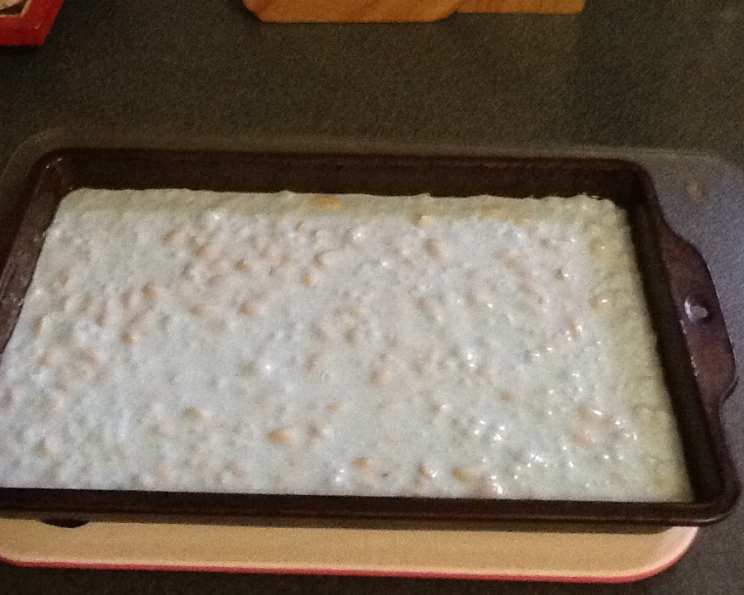
Working quickly, pour the mixture into a well-greased 25cm (10 inch) tin or baking sheet. Spread it out evenly with a heatproof spatula.
-
Allow the Bulgarian Rock to cool completely at room temperature. This may take several hours.
-
Once completely cold and hardened, chop the candy into pieces with a sharp knife or cleaver. Alternatively, you can cover it with plastic wrap and break it into irregular shards using a hammer (be careful not to damage your work surface!). This is the more traditional method and gives the candy its characteristic “rocky” appearance.
Expert Tips & Tricks
- The Hard Ball Stage: Achieving the correct “hard ball” stage is key to the right texture. If you undercook the syrup, the candy will be too soft and sticky. If you overcook it, it will be too brittle and prone to shattering. A candy thermometer is your best friend here.
- Preventing Crystallization: Stirring constantly at the beginning prevents sugar crystals from forming and ruining the texture.
- Working Quickly: Once you add the egg white, essences, and almonds, you need to work quickly because the mixture will start to set.
- Greasing the Tin: Make sure to grease the tin very well to prevent the candy from sticking. You can also line it with parchment paper for easier removal.
- Food Coloring Control: As the recipe mentions, go easy on the blue food coloring. Start with a tiny drop and add more incrementally. Remember, you can always add more, but you can’t take it away!
- For a smoother cut, try warming the knife blade under hot water and drying it before each cut. This can help prevent the candy from shattering.
Serving & Storage Suggestions
Serve Bulgarian Rock as a sweet treat on its own. It’s a perfect accompaniment to coffee or tea. It also makes a lovely homemade gift.
Store the Bulgarian Rock in an airtight container at room temperature. It should last for several weeks, though it’s unlikely to stay around that long! Avoid storing it in the refrigerator, as the moisture can make it sticky. Freezing is not recommended, as it can alter the texture.
Nutritional Information
Please note that the following values are approximate and will vary based on specific ingredients and portion sizes.
| Nutrient | Amount per Serving | % Daily Value |
|---|---|---|
| Calories | 350 kcal | 18% |
| Total Fat | 5g | 8% |
| Saturated Fat | 0.5g | 3% |
| Cholesterol | 5mg | 2% |
| Sodium | 10mg | 0% |
| Total Carbohydrate | 75g | 25% |
| Dietary Fiber | 1g | 4% |
| Sugars | 70g | N/A |
| Protein | 2g | 4% |
Variations & Substitutions
- Nut Variations: Experiment with different nuts! Walnuts, pecans, or macadamia nuts would all be delicious substitutes for the almonds. You can also use a mix of nuts.
- Flavor Variations: Instead of vanilla and almond essence, try other flavorings like lemon, orange, or peppermint extract. A dash of rosewater can also add a unique floral note.
- Color Variations: While the pale blue color is traditional, feel free to experiment with other food colorings. Pink, green, or even a marbled effect could be fun.
- Spice it Up: Add a pinch of ground cinnamon, cardamom, or ginger to the syrup for a warm, spicy twist.
FAQs (Frequently Asked Questions)
Q: What is liquid glucose, and can I substitute it?
A: Liquid glucose is a type of sugar syrup that helps prevent crystallization and gives the candy a smooth texture. It is also known as corn syrup. While it’s best to use liquid glucose for authentic results, you can try substituting it with honey or golden syrup, although the flavor and texture will be slightly different.
Q: How do I know when the syrup has reached the hard ball stage without a thermometer?
A: The cold water test is the classic way to determine the hard ball stage. Drop a small amount of the boiling syrup into a glass of ice-cold water. If it forms a firm ball that can be easily shaped but doesn’t dissolve in the water, it’s ready.
Q: My Bulgarian Rock turned out too sticky. What did I do wrong?
A: Most likely, the syrup wasn’t cooked to a high enough temperature. It’s important to reach the hard ball stage for the candy to set properly.
Q: Can I make this recipe without nuts?
A: Yes, you can simply omit the nuts if you prefer. The recipe will still work, but the texture will be slightly different.
Q: Why do I have to beat the mixture until it turns white?
A: Beating the hot syrup into the egg white incorporates air into the mixture, which helps to lighten the color and create a lighter, more brittle texture.
Final Thoughts
Bulgarian Rock may seem intimidating at first, but with a little patience and attention to detail, you can easily recreate this unique and delicious treat in your own kitchen. Don’t be afraid to experiment with different flavors and nuts to create your own signature version. Once you taste that first crunchy, sweet bite, you’ll understand why this candy has been a cherished favorite for generations. So, gather your ingredients, put on your apron, and get ready to rock (pun intended!). Share your creations with friends and family, and let the sweet memories begin!