
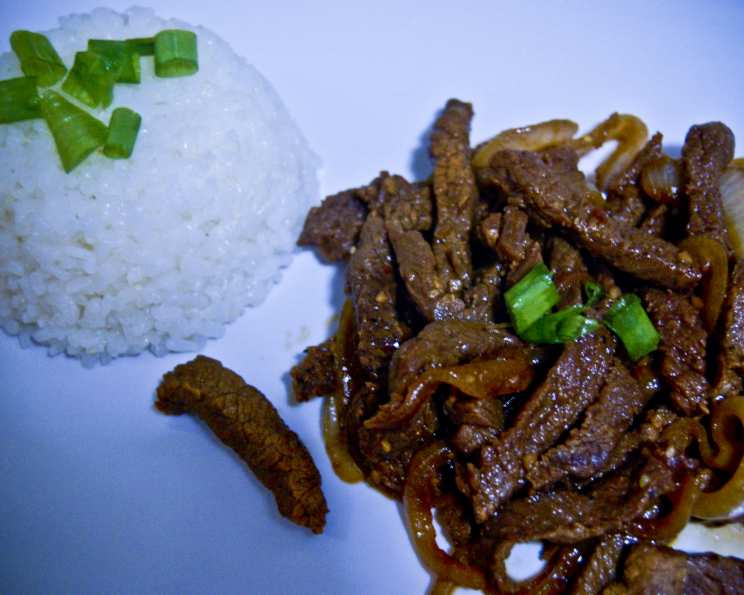
Bulgogi: Korean BBQ at Home
The first time I tasted bulgogi, I was a wide-eyed culinary student on a backpacking trip through Seoul. The sweet, savory aroma drifted from a tiny family-run restaurant, beckoning me inside. As the thinly sliced, marinated beef sizzled on the tabletop grill, I knew I was experiencing something special. The combination of textures – tender beef, crisp lettuce wraps, and the spicy tang of kimchi – created a symphony of flavors that I’ve been chasing ever since. Bulgogi isn’t just a meal; it’s an experience meant to be shared and enjoyed.
Recipe Overview
- Prep Time: 1 hour 10 minutes (including 1 hour marinating)
- Cook Time: 2-3 minutes per batch
- Total Time: 1 hour 12 minutes
- Servings: 4-6
- Yield: Varies depending on appetite
- Dietary Type: Generally Gluten-Free (check soy sauce), Dairy-Free
Ingredients
- 1 1⁄2 lbs boneless rib eye steaks, cut into very thin slices 5-6″ long x 2″ wide (I use Black Angus)
- 4 teaspoons sugar
- 1⁄4 cup soy sauce
- 3 cloves garlic, crushed/chopped fine
- 3 scallions, cut into 1-inch pieces
- 1⁄4 teaspoon pepper
- 1 teaspoon Korean sesame oil
Equipment Needed
- Large bowl
- Heavy skillet or grill
- Tongs
- Cutting board
- Sharp knife
Instructions
- In a large bowl, combine the thinly sliced beef and sugar. Gently mix the beef and sugar together, ensuring that all the beef is coated. Let it rest for 2 minutes. This allows the sugar to begin tenderizing the beef.
- Add the remaining ingredients to the bowl: soy sauce, crushed or chopped garlic, scallions, pepper, and Korean sesame oil.
- Toss all the ingredients together very well to ensure the beef is fully coated in the marinade.
- Let the beef stand for 1 hour at room temperature, or, for a deeper flavor, marinate it overnight in the refrigerator. The longer the beef marinates, the better the flavor will be!
- When you’re ready to cook, preheat a large, heavy skillet over moderate heat for 2 minutes. Make sure the skillet is hot before adding the beef.
- Add the marinated beef to the hot skillet, a few slices at a time, being careful not to overcrowd the pan. Overcrowding will steam the beef instead of searing it.
- Sear the beef for 2-3 minutes at most, without adding any oil to the skillet. The marinade will prevent the beef from sticking. The beef is done when it is nicely browned and cooked through.
- Alternatively, you can grill the beef using a very hot gas or electric broiler. Watch the beef closely, as it cooks quickly under the broiler.
- Serve immediately with white sticky rice and an assortment of Korean side dishes (banchan).
Expert Tips & Tricks
- Achieving Thinly Sliced Beef: The key to great bulgogi is thinly sliced beef. If you’re not confident in your knife skills, ask your butcher to slice the ribeye for you. You can also partially freeze the ribeye for about 30 minutes before slicing; this makes it easier to cut into thin, even pieces.
- Marinating for Maximum Flavor: While an hour of marinating is sufficient, letting the beef sit in the marinade overnight in the refrigerator will yield a much more flavorful and tender result. The marinade will penetrate deeper into the meat, creating a richer, more complex taste.
- Don’t Overcrowd the Pan: When cooking the beef, make sure not to overcrowd the skillet. Cooking the beef in batches ensures that each piece gets properly seared, resulting in a more delicious and evenly cooked dish.
- Sesame Oil Quality: The flavor of Korean sesame oil can vary widely. Opt for a high-quality, toasted sesame oil for the best flavor.
- Broiler Technique: When using a broiler, keep a close eye on the beef, as it can burn easily. Position the rack so that the beef is close enough to the heat source to sear quickly, but not so close that it chars.
Serving & Storage Suggestions
Bulgogi is best served immediately while it’s hot and juicy. Traditionally, it’s served with white sticky rice, a variety of Korean side dishes (banchan) such as kimchi, pickled vegetables, and seasoned spinach. Lettuce leaves are also often provided for wrapping the bulgogi with rice and banchan, creating delicious little lettuce wraps.
Leftover bulgogi can be stored in an airtight container in the refrigerator for up to 3 days. To reheat, you can gently warm it in a skillet over medium heat or microwave it in short intervals to prevent it from drying out.
Nutritional Information
| Nutrient | Amount per Serving | % Daily Value |
|---|---|---|
| Calories | 510.4 kcal | N/A |
| Calories from Fat | 348 g | 68% |
| Total Fat | 38.7 g | 59% |
| Saturated Fat | 15.5 g | 77% |
| Cholesterol | 115.7 mg | 38% |
| Sodium | 1103 mg | 45% |
| Total Carbohydrate | 6.9 g | 2% |
| Dietary Fiber | 0.5 g | 2% |
| Sugars | 4.8 g | N/A |
| Protein | 32 g | 64% |
Note: Nutritional information is an estimate and may vary based on specific ingredients and preparation methods.
Variations & Substitutions
- Gluten-Free Bulgogi: To make this recipe gluten-free, substitute the regular soy sauce with tamari, which is a gluten-free soy sauce alternative.
- Spicy Bulgogi: Add a tablespoon of gochujang (Korean chili paste) to the marinade for a spicy kick.
- Vegetable Additions: Feel free to add sliced onions, mushrooms, or bell peppers to the marinade along with the beef. These vegetables will add extra flavor and texture to the dish.
- Pork Bulgogi (Dweji Bulgogi): While traditionally made with beef, you can also use thinly sliced pork shoulder or loin to make Dweji Bulgogi, which is equally delicious.
FAQs (Frequently Asked Questions)
Q: Can I use a different cut of beef?
A: While rib eye is the traditional choice due to its tenderness and marbling, you can also use sirloin or flank steak. Just ensure the beef is sliced very thinly against the grain.
Q: Can I marinate the beef for longer than overnight?
A: While overnight marinating is ideal, marinating for longer than 24 hours is not recommended, as the marinade can start to break down the beef too much, resulting in a mushy texture.
Q: What if I don’t have Korean sesame oil?
A: Korean sesame oil has a distinctive, toasted flavor. If you can’t find it, you can use regular sesame oil, but the flavor won’t be quite the same. Consider adding a pinch of toasted sesame seeds for extra flavor.
Q: Can I freeze bulgogi?
A: Yes, you can freeze marinated bulgogi. Place it in a freezer-safe bag or container, and it can be stored for up to 2-3 months. Thaw it completely in the refrigerator before cooking.
Q: What are some good side dishes to serve with bulgogi?
A: Kimchi is a must-have! Other great options include seasoned spinach (sigeumchi namul), pickled radish, cucumber kimchi (oi kimchi), and bean sprout salad (kongnamul muchim).
Final Thoughts
Bulgogi is more than just a recipe; it’s a culinary adventure that transports you to the vibrant streets of Seoul. This recipe brings the authentic flavors of Korean BBQ into your home, allowing you to create a memorable dining experience with family and friends. Don’t be afraid to experiment with variations and side dishes to create your own personalized bulgogi feast. Gather your ingredients, fire up the skillet (or broiler), and get ready to savor the deliciousness of this iconic Korean dish! I’d love to hear your feedback and see your creations – share your bulgogi stories and photos! Consider pairing your bulgogi with a crisp Korean beer or a chilled glass of plum wine for the perfect complement. Enjoy!