
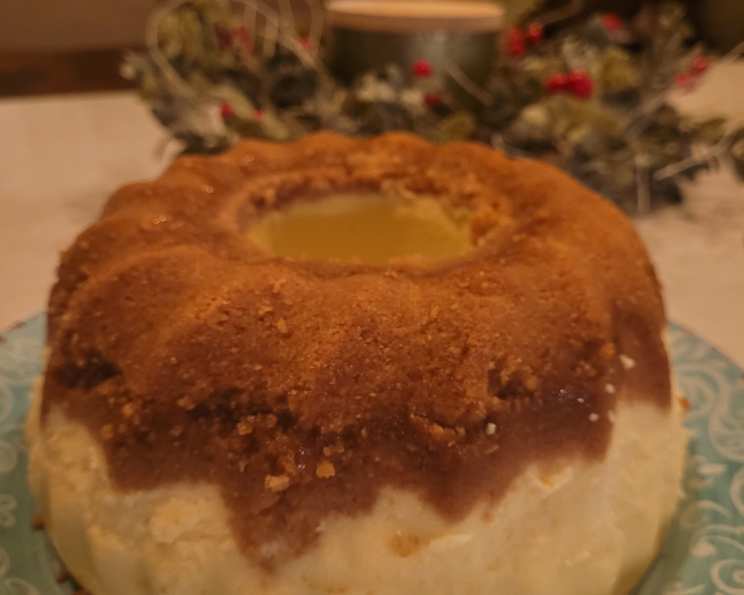
Bundt-pan Cheesecake: A Family Treasure
I remember the scent of this cheesecake wafting from Mrs. Henderson’s kitchen every Sunday. She was a kind, matronly woman with a twinkle in her eye and flour dusting her apron. More than just a dessert, this Bundt-pan cheesecake represents warmth, friendship, and the simple joy of sharing good food with loved ones. This recipe isn’t just something I pulled from a magazine; it’s a tangible connection to a cherished memory, and I’m thrilled to share it with you.
Recipe Overview
- Prep Time: 30 minutes
- Cook Time: 65-75 minutes
- Total Time: 3 hours (including chilling)
- Servings: 8-10
- Yield: 1 Bundt Cheesecake
- Dietary Type: Not Gluten-Free
Ingredients
For the Crust:
- 1 cup graham cracker crumbs
- 1/4 cup butter, melted
- 2 tablespoons sugar
For the Filling:
- 5 (8 ounce) packages cream cheese
- 1 3/4 cups sugar
- 3 tablespoons flour
- 1 teaspoon lemon zest
- 1 teaspoon vanilla extract
- 6 eggs
- 1/4 cup whipping cream
Equipment Needed
- 12-cup molded Bundt pan
- Large mixing bowl
- Electric mixer (stand or hand-held)
- Rubber spatula
- Measuring cups and spoons
- Zester (for lemon zest)
Instructions
-
Prepare the Crust: In a medium bowl, combine the graham cracker crumbs, melted butter, and sugar. Mix well until all the crumbs are moistened.
-
Press the Crust: Press the graham cracker mixture firmly and evenly into the bottom of a 12-cup molded Bundt pan. Ensure the crust is compact for a clean release later.
-
Prepare the Filling: In a large bowl, combine the cream cheese, sugar, and flour.
-
Mix the Filling: Using an electric mixer, beat the cream cheese mixture until light and fluffy. This step is crucial for a smooth and creamy cheesecake. Be sure to scrape the bowl occasionally to ensure everything is evenly incorporated.
-
Add Flavorings: Add the lemon zest and vanilla extract to the filling. Mix well to distribute the flavors.
-
Incorporate the Eggs: Add the eggs one at a time, mixing for about 2 minutes on medium speed after each addition. Again, scrape the bowl periodically to ensure even mixing. Be careful not to overmix at this stage, as it can introduce too much air and cause the cheesecake to crack.
-
Add Cream: Add the whipping cream and mix well, scraping the sides of the bowl as needed. This helps create a richer, smoother texture.
-
Pour into the Crust: Carefully spoon the cream cheese filling into the prepared Bundt pan over the graham cracker crust.
-
Bake: Bake in a preheated oven at 300 degrees Fahrenheit for 65 to 75 minutes, or until the cheesecake is set. The center should have a slight wobble, but the edges should be firm.
-
Cool: Turn off the oven and let the cheesecake cool in the upright position inside the oven for 30 minutes. This helps prevent cracking.
-
Refrigerate: After the initial cooling period, remove the cheesecake from the oven and refrigerate it for at least 2 hours, or preferably overnight. This allows the cheesecake to fully set and develop its flavor.
-
Invert: To remove the cheesecake from the Bundt pan, gently loosen the edges with a thin knife or spatula. Invert the pan onto a serving plate. If the cheesecake doesn’t release easily, try gently tapping the pan.
Expert Tips & Tricks
-
Prevent Cracking: The key to preventing cracks in your cheesecake is low and slow baking. The lower temperature ensures the cheesecake cooks evenly and doesn’t rise too quickly. Also, avoid opening the oven door frequently during baking.
-
Water Bath (Optional): For an even creamier texture, consider baking the cheesecake in a water bath. Wrap the bottom of the Bundt pan tightly in aluminum foil (to prevent water from seeping in) and place it in a larger baking pan. Fill the outer pan with hot water, reaching about halfway up the sides of the Bundt pan.
-
Room Temperature Ingredients: Make sure your cream cheese and eggs are at room temperature before you start mixing. This will help them incorporate more smoothly and prevent lumps in your filling.
-
Crust Variations: You can experiment with different types of cookies for the crust. Try using chocolate wafers or gingersnaps for a different flavor profile.
Serving & Storage Suggestions
Serve the Bundt-pan cheesecake chilled, either plain or with your favorite toppings. Fresh berries, a drizzle of chocolate sauce, or a dollop of whipped cream all complement the creamy cheesecake beautifully.
To store leftovers, cover the cheesecake tightly with plastic wrap or transfer it to an airtight container. It will keep in the refrigerator for up to 5 days. You can also freeze the cheesecake for longer storage (up to 2 months). Thaw it in the refrigerator overnight before serving.
Nutritional Information
| Nutrient | Amount per Serving | % Daily Value |
|---|---|---|
| Calories | 854 kcal | N/A |
| Calories from Fat | 556 kcal | N/A |
| Total Fat | 61.8 g | 95% |
| Saturated Fat | 34.1 g | 170% |
| Cholesterol | 321.1 mg | 107% |
| Sodium | 613.2 mg | 25% |
| Total Carbohydrate | 63.6 g | 21% |
| Dietary Fiber | 0.4 g | 1% |
| Sugars | 54.9 g | N/A |
| Protein | 14.4 g | 28% |
Note: Nutritional information is an estimate and may vary based on specific ingredients used.
Variations & Substitutions
-
Gluten-Free Crust: Substitute the graham cracker crumbs with gluten-free graham-style crumbs or a mixture of almond flour and oats.
-
Flavor Variations: Experiment with different extracts or flavorings. Almond extract, coconut extract, or even a hint of citrus (orange or lime) can add a unique twist.
-
Berry Swirl: Before baking, swirl in some berry preserves or a homemade berry sauce for a beautiful and flavorful variation.
-
Chocolate Cheesecake: Add melted dark chocolate or cocoa powder to the cream cheese filling for a decadent chocolate cheesecake.
FAQs (Frequently Asked Questions)
Q: Why is my cheesecake cracking?
A: Cheesecake cracks are often caused by baking at too high a temperature or cooling too quickly. Using a low oven temperature, a water bath, and allowing the cheesecake to cool gradually can help prevent cracking.
Q: Can I use low-fat cream cheese?
A: While you can use low-fat cream cheese, the texture and flavor of the cheesecake will be different. Full-fat cream cheese is recommended for the best results.
Q: How do I know when the cheesecake is done?
A: The cheesecake is done when the edges are set but the center still has a slight wobble. It will continue to set as it cools.
Q: Can I freeze the cheesecake?
A: Yes, you can freeze the cheesecake. Wrap it tightly in plastic wrap and then in foil. Thaw it in the refrigerator overnight before serving.
Q: My crust is soggy. What did I do wrong?
A: A soggy crust can be caused by not pressing the crust mixture firmly enough into the Bundt pan or by adding too much melted butter. Ensure the crust is compact and the butter is evenly distributed.
Final Thoughts
This Bundt-pan cheesecake is more than just a dessert; it’s a slice of tradition and a testament to the power of simple ingredients. It’s a recipe that has been passed down and cherished for generations, and I hope it brings as much joy to your table as it has to mine. Don’t be afraid to experiment with variations and make it your own. I encourage you to bake this cheesecake, share it with loved ones, and let me know how it turns out! Enjoy!