
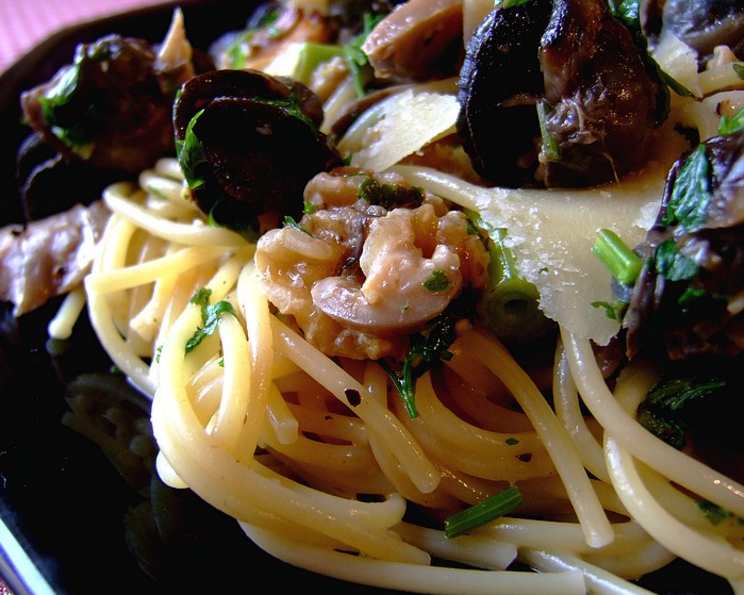
Burgundian Escargots With Spaghetti: A Culinary Adventure
The first time I encountered escargots, I was a wide-eyed culinary student in Paris. The sheer novelty of eating snails, prepared with such reverence, was both intimidating and thrilling. The aroma of garlic butter, parsley, and the subtle earthiness of the snails themselves was intoxicating. It sparked a lifelong love affair with this unique ingredient, one that eventually led me to this reimagined classic – Burgundian Escargots with Spaghetti. It’s a delightful fusion of rustic French flavors with comforting Italian pasta.
Recipe Overview
- Prep Time: 20 minutes
- Cook Time: 35 minutes
- Total Time: 55 minutes
- Servings: 4-6
- Yield: 1 large serving dish
- Dietary Type: Not Gluten-Free
Ingredients
- 12-16 ounces spaghetti (dry weight, 400-500g)
- 5 tablespoons olive oil
- 1 sweet onion, quite large, chopped
- ½ lb mushrooms, cleaned and stalks trimmed (any type available)
- 4 anchovy fillets, straight from the tin, not rinsed, chopped
- 1 tablespoon garlic, finely chopped (or more, to taste)
- 2 teaspoons cornstarch or 2 teaspoons cornflour
- 2 tablespoons lemon juice (freshly squeezed, or use lime juice which is even better)
- 1 cup creme fraiche (or thick sour cream)
- 14 ounces snails (usually 2 x 200g tins, i.e. 400g)
- 3 tablespoons parsley, finely chopped
- ½ cup walnuts, toasted in a pan, chopped
- 4 tablespoons Parmigiano-Reggiano cheese (or Pecorino)
- 1 tablespoon black pepper, coarse (or more)
- ½ teaspoon salt (to taste)
Equipment Needed
- Large pot
- Large skillet or sauté pan
- Small bowl
- Colander
- Warming oven (optional)
- Deep serving dish
- Small pan for toasting walnuts
Instructions
-
Preheat your oven to a low setting (around 200°F or 95°C) and place a fairly deep serving dish inside to warm. This helps keep the pasta hot when served.
-
Fill a large pot with water, add a generous pinch of salt, and bring to a rolling boil for the spaghetti. The salt seasons the pasta from the inside out.
-
While the water is heating, prepare the sauce. Heat the olive oil in a large skillet or sauté pan over medium heat. Add the chopped onion and fry until softened and pale yellow, about 5-7 minutes. Stir occasionally to prevent burning.
-
Slice the mushrooms and add them to the pan with the onions. You can use any type of mushrooms you prefer – cremini, shiitake, or even a mixed variety.
-
Increase the heat to medium-high and cook the mushrooms until they release their moisture and then begin to brown, about 8-10 minutes. Stir frequently. If there is still liquid left in the pan after the mushrooms are cooked, simply allow it to reduce slightly or leave it as it is.
-
Remove the pan from the heat for a moment. Don’t rinse the anchovy fillets; their saltiness and umami flavor are crucial to the dish. Chop the anchovies and add them to the onion and mushrooms, along with the finely chopped garlic. Stir to combine.
-
In a small bowl, whisk together the cornstarch or cornflour with the lemon juice (or lime juice, for a brighter flavor). This mixture will help thicken the sauce.
-
Reduce the heat to low. Add the creme fraiche (or thick sour cream) to the pan, followed by the cornstarch–lemon juice mixture. Stir gently until everything is well combined. The heat should now be low to prevent the creme fraiche from curdling.
-
Drain the snails (escargots) and add them to the sauce. Stir gently until everything is heated through and the sauce comes to a bare simmer and thickens slightly, about 3-5 minutes. Avoid boiling the sauce, as this can also cause the creme fraiche to separate.
-
Remove the pan from the heat. Carefully stir in the chopped parsley, toasted and chopped walnuts, grated Parmigiano-Reggiano cheese (or Pecorino), and coarse black pepper.
-
Season the sauce with salt to taste. You might also want to add more lemon juice for extra brightness. Taste the sauce and adjust the seasonings as needed to achieve your desired flavor profile.
-
While the sauce is simmering, cook the spaghetti according to the package directions until al dente – usually no more than 8-11 minutes. Al dente means “to the tooth” in Italian, indicating that the pasta should be firm to the bite.
-
Drain the spaghetti in a colander, reserving about a cup of the pasta water. Return the drained spaghetti to the large pot.
-
Add the snail sauce to the spaghetti and fold in gently but thoroughly until the pasta is evenly coated. If the sauce is too thick, add a little of the reserved pasta water to loosen it.
-
Take the warmed serving dish out of the oven. Tip the entire spaghetti and sauce mixture into the warmed dish.
-
Garnish with more Parmesan shavings, extra chopped parsley, and a sprinkle of finely chopped spring onions (optional).
Expert Tips & Tricks
- Toast the walnuts: Toasting the walnuts in a dry pan before adding them to the sauce enhances their flavor and adds a pleasant crunch. Watch them carefully as they burn quickly.
- Don’t overcook the snails: The snails are already cooked, so just heat them through gently to prevent them from becoming rubbery.
- Reserve pasta water: The starchy pasta water helps to bind the sauce to the spaghetti and creates a smoother, creamier texture.
- Taste and adjust: Always taste the sauce before serving and adjust the seasonings to your liking. A squeeze of lemon juice, a pinch of salt, or a grind of black pepper can make a big difference.
- Anchovy alternative: If you’re not a fan of anchovies, you can substitute a teaspoon of Worcestershire sauce or a pinch of red pepper flakes for a touch of umami and heat.
Serving & Storage Suggestions
Serve the Burgundian Escargots with Spaghetti immediately in the warmed serving dish. The warmth of the dish helps keep the pasta hot for longer. Garnish with extra Parmesan, parsley, and spring onions for a beautiful presentation. This dish pairs well with a crisp green salad and a dry white wine, such as a Chardonnay or Sauvignon Blanc.
Leftovers can be stored in an airtight container in the refrigerator for up to 2 days. To reheat, gently warm the pasta in a skillet over low heat, adding a little milk or creme fraiche to loosen the sauce if necessary. You can also reheat it in the microwave, but be careful not to overcook it. This dish is not recommended for freezing, as the sauce may separate and the pasta may become mushy.
Nutritional Information
| Nutrient | Amount per Serving | % Daily Value |
|---|---|---|
| Calories | 750 kcal | 38% |
| Total Fat | 45g | 69% |
| Saturated Fat | 25g | 125% |
| Cholesterol | 120mg | 40% |
| Sodium | 550mg | 23% |
| Total Carbohydrate | 75g | 25% |
| Dietary Fiber | 5g | 20% |
| Sugars | 5g | – |
| Protein | 30g | 60% |
Note: Nutritional information is an estimate and may vary based on specific ingredients and portion sizes.
Variations & Substitutions
- Gluten-free: Substitute the spaghetti with gluten-free pasta. Be mindful of cooking times, as gluten-free pasta can sometimes become mushy if overcooked.
- Vegetarian: This recipe is difficult to convert to vegetarian due to the anchovies. However, experimenting with a seaweed extract in the sauce could produce a similar savory flavor.
- Dairy-free: Substitute the creme fraiche with a thick coconut cream for a dairy-free alternative. Note that this will alter the flavor profile slightly.
- Herb variations: Experiment with different herbs, such as thyme, chives, or tarragon, in addition to or instead of the parsley.
- Nut variations: Substitute the walnuts with toasted pine nuts or slivered almonds for a different texture and flavor.
FAQs (Frequently Asked Questions)
Q: Can I use canned snails in this recipe?
A: Yes, canned snails are perfectly fine to use. Just make sure to drain them well before adding them to the sauce.
Q: What if I can’t find creme fraiche?
A: Thick sour cream is a good substitute for creme fraiche. You can also use Greek yogurt, but it will have a slightly tangier flavor.
Q: Can I make the sauce ahead of time?
A: Yes, you can make the sauce ahead of time and store it in the refrigerator for up to 2 days. Reheat it gently before adding it to the cooked spaghetti.
Q: How do I toast the walnuts?
A: To toast the walnuts, spread them in a single layer in a dry skillet over medium heat. Cook, stirring frequently, until they are fragrant and lightly browned, about 3-5 minutes. Watch them carefully as they can burn quickly.
Q: Can I add other vegetables to the sauce?
A: Absolutely! Feel free to add other vegetables, such as spinach, asparagus, or sun-dried tomatoes, to the sauce for added flavor and nutrition.
Final Thoughts
This Burgundian Escargots with Spaghetti is more than just a meal; it’s an experience. It’s a chance to embrace the unexpected, to savor the delightful combination of French elegance and Italian comfort. I encourage you to try this recipe, to make it your own, and to share it with those you love. I’m confident that this dish will spark conversations and create lasting memories around your table. Don’t hesitate to experiment with the variations and substitutions to find the perfect balance of flavors for your palate. And most importantly, enjoy the process! Bon appétit!