
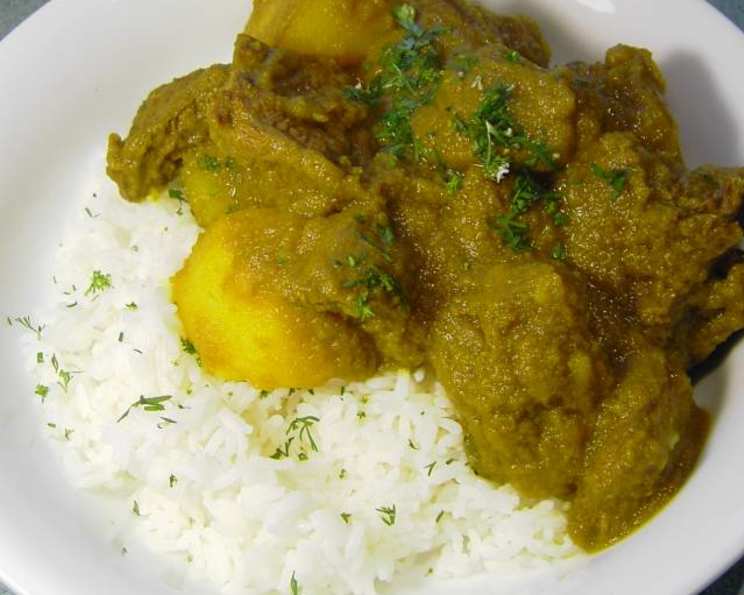
Burmese Beef Curry: Aromatic Spice and Tender Beef
The first time I tasted Burmese curry, I was backpacking through Southeast Asia. Tucked away in a tiny Yangon tea shop, the air thick with the aroma of ginger and chilies, a steaming bowl of beef curry arrived, unassumingly. One bite, and I was transported. The tenderness of the beef, the layered spices, and the subtle sweetness were unlike anything I’d experienced before. It was a flavor journey that forever changed my appreciation for slow-cooked curries, and I’ve been chasing that memory ever since.
Recipe Overview
- Prep Time: 20 minutes
- Cook Time: 1 hour 5 minutes
- Total Time: 1 hour 25 minutes
- Servings: 4
- Dietary Type: Potentially Dairy-Free and Gluten-Free (check soy sauce ingredients if needed)
Ingredients
- 2 large onions, roughly chopped
- 5 garlic cloves
- 2 inches gingerroot, peeled
- 1 teaspoon chili powder
- 1 teaspoon turmeric
- 1 teaspoon paprika
- 3 tablespoons oil (vegetable, canola, or peanut)
- 750 g beef steaks, cut into largish pieces (rump, chuck, or stewing beef)
- 1 1⁄2 teaspoons salt
- 1⁄2 teaspoon cumin
- 1⁄2 teaspoon coriander powder
- 375 g potatoes, peeled and quartered (approximately 3 large potatoes)
- 2 cups water
Equipment Needed
- Food processor or blender
- Large, heavy-bottomed pot or Dutch oven
- Measuring spoons and cups
- Cutting board
- Knife
Instructions
-
Prepare the Aromatic Base: Place the onions, ginger, and garlic in a food processor or blender. Process until the mixture is smooth, forming a thick paste.
-
Spice Infusion: Add the chili powder, turmeric, and paprika to the onion-ginger-garlic paste. Process briefly until all the spices are thoroughly combined and the mixture is a vibrant color.
-
Initial Frying (The Key to Flavor): Heat the oil in a large, heavy-bottomed pot or Dutch oven over high heat until it reaches the smoking point. This is crucial for developing the deep, complex flavors of the curry.
-
Carefully Introduce the Paste: Very carefully add the spice-infused paste to the hot oil. Be extremely cautious, as the mixture will splutter vigorously when it hits the hot oil. It’s advisable to stand back slightly and possibly use a splatter screen.
-
The Long, Slow Fry: Stir the paste into the oil, then immediately reduce the heat to low. Cover the pot with a lid and cook for approximately 30 minutes. This is where patience is key.
-
Monitoring and Stirring: Stir the mixture fairly regularly throughout the 30-minute cooking period. As it cooks, the moisture will begin to evaporate, and the mixture will start to smell sweeter and more aromatic. It will gradually transform into a rich, reddish-brown color, and the oil will begin to separate to the edges of the pot.
-
Patience is Paramount: The frying process may take longer than 30 minutes, depending on the heat and the moisture content of the ingredients. Continue cooking until the mixture reaches that reddish-brown color and the oil has clearly separated. This concentrated base is the foundation of the curry’s unique flavor.
-
Spice the Beef: In a separate bowl, mix the cumin, coriander powder, and salt together. Massage this spice blend thoroughly into the beef pieces, ensuring each piece is evenly coated.
-
Combine Beef and Potatoes: Add the spiced beef and the quartered potatoes to the pot with the fried onion-spice mixture. Fry for a couple of minutes, stirring constantly to coat the beef and potatoes with the flavorful paste.
-
Add Liquid and Simmer: Pour the water into the pot, stirring to combine all the ingredients.
-
Bring to a Boil, Then Simmer: Bring the mixture to a boil, stirring occasionally. Once boiling, reduce the heat to low, cover the pot, and simmer for approximately 30 minutes, or until the potatoes are tender and easily pierced with a fork.
-
Thicken the Sauce: Remove the lid from the pot, increase the heat to medium, and cook for a further 15 minutes, or until the sauce has thickened and reduced to your desired consistency. Stir occasionally to prevent sticking. The sauce should be rich and clinging to the beef and potatoes.
-
Serve: Serve the Burmese Beef Curry hot, over plain rice.
Expert Tips & Tricks
- Don’t rush the initial frying: This is the most crucial step for developing the complex flavors of the curry. Rushing it will result in a bland and under-developed dish.
- Use a heavy-bottomed pot: This will help to prevent the onion mixture from burning during the long frying process.
- Adjust the chili powder: If you prefer a milder curry, reduce the amount of chili powder. For a spicier version, increase it to taste or add a chopped fresh chili to the initial frying.
- Beef selection: While rump steak is a good choice, tougher cuts like chuck or stewing beef will also work well, as the long cooking time will tenderize them. Just be sure to trim any excess fat.
- Make-ahead: The base (onion, garlic, ginger, spices) can be made a day or two in advance and stored in the refrigerator. This will save time on the day you want to make the curry.
Serving & Storage Suggestions
Serve the Burmese Beef Curry hot, garnished with fresh coriander leaves for a burst of freshness and color. Plain white rice is the classic accompaniment, but naan bread or roti would also be delicious.
Leftovers can be stored in an airtight container in the refrigerator for up to 3 days. To reheat, gently warm on the stovetop over low heat, adding a splash of water if necessary to prevent sticking. You can also reheat it in the microwave, but be sure to stir it occasionally to ensure even heating. This curry also freezes well for up to 2 months. Thaw overnight in the refrigerator before reheating.
Nutritional Information
| Nutrient | Amount per Serving | % Daily Value |
|---|---|---|
| Calories | 550 kcal | 28% |
| Total Fat | 30g | 46% |
| Saturated Fat | 10g | 50% |
| Cholesterol | 120mg | 40% |
| Sodium | 800mg | 33% |
| Total Carbohydrate | 40g | 13% |
| Dietary Fiber | 5g | 20% |
| Sugars | 8g | N/A |
| Protein | 40g | 80% |
Note: Nutritional information is an estimate and may vary based on specific ingredients and portion sizes.
Variations & Substitutions
- Vegetarian/Vegan: Substitute the beef with firm tofu or chickpeas. You may need to adjust the cooking time, as tofu and chickpeas don’t require as long to cook. Use vegetable broth instead of water.
- Coconut Milk: For a richer and creamier curry, replace some of the water with coconut milk. Add it towards the end of the cooking process to prevent it from curdling.
- Different Vegetables: Feel free to add other vegetables, such as bell peppers, green beans, or eggplant. Add them along with the potatoes, adjusting the cooking time as needed.
- Spice Level: Adjust the amount of chili powder to your preference. You can also add a fresh chili, finely chopped, to the initial frying for extra heat.
- Fish Sauce: For a more authentic Burmese flavour, add a tablespoon of fish sauce along with the water.
FAQs (Frequently Asked Questions)
Q: Can I use pre-minced ginger and garlic?
A: While convenient, fresh ginger and garlic provide a more vibrant flavor. If using pre-minced, use about 2 tablespoons of each.
Q: How do I know when the onion mixture is ready?
A: The mixture is ready when it has turned a deep reddish-brown color, the oil has separated to the edges, and it smells sweet and fragrant. Patience is key!
Q: Can I make this curry in a slow cooker?
A: Yes, you can adapt this recipe for a slow cooker. Follow the initial frying steps on the stovetop, then transfer everything to the slow cooker and cook on low for 6-8 hours, or on high for 3-4 hours.
Q: What if my sauce is too thin?
A: If the sauce is too thin after the final 15 minutes of cooking, you can continue to cook it uncovered over medium heat until it reaches your desired consistency. Alternatively, you can mix a teaspoon of cornstarch with a tablespoon of water and stir it into the curry to thicken it.
Q: What is the best way to store leftover curry?
A: Allow the curry to cool completely before storing it in an airtight container in the refrigerator for up to 3 days, or in the freezer for up to 2 months.
Final Thoughts
This Burmese Beef Curry is more than just a recipe; it’s an invitation to explore the rich and complex flavors of Burmese cuisine. The initial frying requires patience, but the reward is a deeply satisfying and aromatic curry that will transport you to the bustling streets of Yangon. So, gather your ingredients, embrace the process, and prepare to savor the deliciousness. Don’t hesitate to experiment with variations and substitutions to make it your own. Share your creations and feedback, and perhaps pair this curry with a crisp, cold beer or a refreshing glass of lime juice for a truly authentic experience. Happy cooking!