
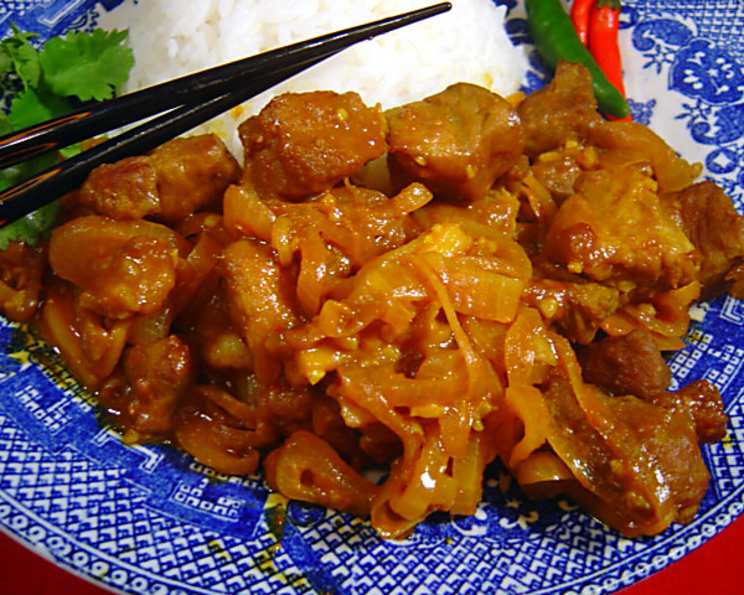
Burmese-Style Pork Curry: A Taste of Southeast Asia
My earliest memory of Burmese food isn’t from a restaurant, but from a small, bustling family kitchen. The aroma of ginger, garlic, and turmeric would fill the air, a warm and comforting invitation to a world of flavors I hadn’t yet explored. This Burmese-style pork curry, a fragrant and slightly sweet stew, brings me right back to that kitchen, to the laughter and the generosity of sharing a delicious meal with loved ones. It’s a dish that speaks of home, of connection, and of the simple pleasure of really good food.
Recipe Overview
- Prep Time: 20 minutes
- Cook Time: 1 hour
- Total Time: 1 hour 20 minutes
- Servings: 6
- Dietary Type: Not Gluten-Free
Ingredients
- 1/4 cup peeled slivered fresh ginger
- 1 1/2 lbs country-style boneless pork ribs, cut into 1-inch cubes
- 2 tablespoons red curry paste
- 1/4 cup light brown sugar
- 2 1/2 cups water
- 2 teaspoons ground turmeric
- 1 tablespoon soy sauce
- 1/4 cup thinly sliced shallot
- 2 tablespoons minced garlic
- 1/4 cup fresh lime juice
Equipment Needed
- Small bowl
- Large, deep skillet
Instructions
-
Begin by preparing the ginger. Place the 1/4 cup of peeled slivered fresh ginger in a small bowl with 1/3 cup of hot water. Set this aside to steep while you prepare the pork. This step allows the ginger to soften slightly and release its aromatic oils, infusing the curry with a deeper flavor.
-
Next, it’s time to cook the pork. In a large deep skillet, combine the 1 1/2 lbs of country-style boneless pork ribs (cut into 1-inch cubes), 2 tablespoons of red curry paste, and 1/4 cup of light brown sugar. Stir continuously to coat the meat evenly with the curry paste and sugar. Cook over medium-high heat for about 15 minutes, ensuring the pork is nicely browned on all sides. Browning the pork creates a rich, caramelized flavor that is essential to the final dish.
-
While the pork is browning, prepare the liquid for the curry. In a separate bowl, mix 2 teaspoons of ground turmeric and 1 tablespoon of soy sauce into the 2 1/2 cups of water. Stir well to ensure the turmeric is fully dissolved.
-
Pour the turmeric-soy sauce mixture into the skillet with the browned pork. Bring the mixture to a boil, then immediately reduce the heat to low. Simmer, uncovered, for approximately 45 minutes, or until the pork is tender and the sauce has thickened to your liking. Periodically check the pork, stirring occasionally to prevent sticking and ensure even cooking. The simmering process is key to developing the rich flavors of the curry and tenderizing the pork.
-
Once the pork is tender and the sauce has thickened, it’s time to add the final flavorings. Add the ginger (along with the water it was soaking in), 1/4 cup of thinly sliced shallot, and 2 tablespoons of minced garlic to the skillet.
-
Continue to simmer the curry for an additional 5-7 minutes, allowing the flavors to meld and the shallots and garlic to soften slightly. This final simmering period is crucial for integrating the fresh aromatics into the dish.
-
Finish the curry with 1/4 cup of fresh lime juice. Stir to combine.
-
Before serving, taste and adjust the seasoning as needed. If you prefer a sweeter curry, add a bit more brown sugar. If you want a brighter, more acidic flavor, add a squeeze more lime juice. A pinch of salt can also be added if needed to balance the flavors.
-
Serve the Burmese-style pork curry immediately, accompanied by steamed jasmine rice. The fragrant rice is the perfect complement to the rich and flavorful curry.
Expert Tips & Tricks
- Pork Selection: While boneless country-style ribs are recommended, you can also use pork shoulder (also known as Boston butt). Cut it into 1-inch cubes, trimming off excess fat, and follow the recipe as instructed.
- Ginger Power: Don’t skimp on the ginger! Fresh ginger is key to the distinctive flavor of this curry. Make sure to peel it well before slicing or slivering.
- Curry Paste: The type of red curry paste you use will influence the spiciness of the curry. Taste your curry paste before adding it to the pork and adjust the amount accordingly if needed. Some brands are spicier than others.
- Make-Ahead Magic: This curry can be made a day or two in advance. The flavors will deepen and meld together even more beautifully over time. Store it in an airtight container in the refrigerator and reheat gently before serving.
- Simmering Secrets: For the most tender pork, maintain a gentle simmer throughout the cooking process. A rapid boil can toughen the meat.
Serving & Storage Suggestions
Serve the Burmese-style pork curry hot, ladled over a generous portion of steaming jasmine rice. Garnish with a sprinkle of fresh cilantro or a few lime wedges for an extra burst of freshness.
Leftovers can be stored in an airtight container in the refrigerator for up to 3-4 days. Reheat gently on the stovetop or in the microwave, adding a splash of water if needed to prevent drying out. The curry can also be frozen for longer storage (up to 2-3 months). Thaw it overnight in the refrigerator before reheating.
Nutritional Information
| Nutrient | Amount per Serving | % Daily Value |
|---|---|---|
| Calories | 212.7 kcal | N/A |
| Calories from Fat | 58g | 28% |
| Total Fat | 6.5 g | 10% |
| Saturated Fat | 2.3 g | 11% |
| Cholesterol | 83.9 mg | 27% |
| Sodium | 251.4 mg | 10% |
| Total Carbohydrate | 13.2 g | 4% |
| Dietary Fiber | 0.4 g | 1% |
| Sugars | 9.2 g | 36% |
| Protein | 24.4 g | 48% |
Please note that these values are estimates and may vary based on specific ingredients and preparation methods.
Variations & Substitutions
- Spice It Up: If you like a spicier curry, add a pinch of cayenne pepper or a finely chopped chili pepper to the skillet along with the curry paste.
- Chicken Curry: Substitute the pork with an equal amount of boneless, skinless chicken thighs, cut into 1-inch pieces. Reduce the simmering time to approximately 30 minutes, or until the chicken is cooked through.
- Vegetarian Option: For a vegetarian version, replace the pork with firm tofu, cut into cubes. Add the tofu after the sauce has thickened and simmer for about 10 minutes, or until the tofu is heated through.
- Coconutty Goodness: While this recipe is traditionally made without coconut milk, you can add a can of coconut milk for a richer, creamier curry. Add it along with the water and turmeric-soy sauce mixture.
- Greens Please: Stir in a handful of spinach or other leafy greens during the last few minutes of cooking for added nutrients and flavor.
FAQs (Frequently Asked Questions)
Q: Can I use dried ginger instead of fresh ginger?
A: While fresh ginger is highly recommended for the best flavor, you can substitute it with 1 teaspoon of ground ginger if necessary. Keep in mind that the flavor will be less vibrant.
Q: How do I prevent the curry from sticking to the skillet during simmering?
A: Stir the curry periodically, especially during the simmering process, to prevent it from sticking to the bottom of the skillet. If needed, add a splash of water to loosen any stuck bits.
Q: What if my curry is too watery?
A: If your curry is too watery after simmering, remove the lid and continue to simmer it for a few more minutes, allowing the excess liquid to evaporate.
Q: Can I use a different type of sugar?
A: While light brown sugar is preferred for its subtle molasses flavor, you can substitute it with granulated sugar or coconut sugar if needed.
Q: Is this curry very spicy?
A: The spiciness of the curry depends on the red curry paste you use. Start with a smaller amount and add more to taste, or use a milder curry paste if you prefer a less spicy dish.
Final Thoughts
I wholeheartedly encourage you to try this Burmese-style pork curry. It’s a delightful journey for your taste buds, a harmonious blend of sweet, savory, and tangy flavors that will leave you wanting more. Don’t hesitate to experiment with variations and substitutions to make it your own. I’d love to hear your feedback and any creative twists you add! Perhaps pair it with a crisp, dry white wine or a refreshing cucumber salad for a complete and unforgettable meal. Happy cooking!