
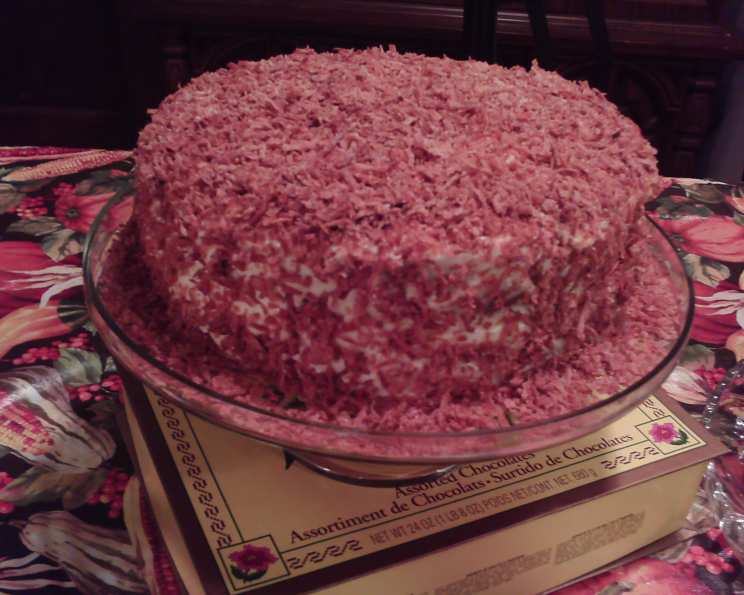
Buttermilk-Coconut Cake: A Taste of Southern Comfort
The aroma of coconut always takes me back to my grandmother’s kitchen. She wasn’t much for fancy desserts, but her coconut cake was legendary. I remember standing on a stool, barely tall enough to see over the counter, watching her meticulously layer the fluffy cake with a creamy frosting and a generous blanket of shredded coconut. Each bite was a little piece of heaven, a reminder of love and simpler times. This Buttermilk-Coconut Cake, with its tender crumb and sweet coconut frosting, captures that same nostalgic magic.
Recipe Overview
- Prep Time: 30 minutes
- Cook Time: 25-30 minutes
- Total Time: 1 hour
- Servings: 12
- Yield: 1 two-layer cake
- Dietary Type: Not specified
Ingredients
Cake:
- 2 cups all-purpose flour
- 1 1/2 teaspoons baking powder
- 1/4 teaspoon baking soda
- 1/2 cup shortening
- 1/4 cup butter
- 1 1/2 cups sugar
- 1 teaspoon vanilla
- 5 egg whites
- 1 cup buttermilk
Butter Frosting:
- 1/2 cup butter, softened
- 7 3/4 cups powdered sugar, sifted
- 1/3 cup milk
- 2 teaspoons vanilla
- 1 cup flaked coconut
Equipment Needed
- Two 8-inch or 9-inch round baking pans
- Mixing bowls
- Electric mixer
- Measuring cups and spoons
- Rubber spatula
- Wire racks
Instructions
-
Begin by preparing your baking pans. Grease and flour two 8-inch or 9-inch round baking pans. This ensures that the cakes release easily after baking.
-
Preheat your oven to 375°F (190°C). Make sure your oven rack is positioned in the center.
-
In a medium bowl, whisk together the flour, baking powder, and baking soda. This dry ingredient mixture forms the base of the cake and helps it rise properly. Set aside.
-
In a separate, larger bowl, beat the shortening and butter with an electric mixer for about 30 seconds, or until softened and combined. Using both shortening and butter creates a desirable balance of tenderness and flavor.
-
Add the sugar and vanilla to the butter mixture. Beat until the mixture is light and fluffy. This creaming process incorporates air, which contributes to the cake’s light texture.
-
Add the egg whites one at a time, beating well after each addition, until the mixture is smooth (about 2 minutes). Beating egg whites separately can help lighten the crumb of the cake.
-
Gradually add the flour mixture and buttermilk to the wet ingredients, alternating between the two. Begin and end with the flour mixture. Beat on low speed after each addition just until the mixture is combined. Avoid overmixing, which can result in a tough cake.
-
Pour the batter evenly into the prepared pans.
-
Bake at 375°F (190°C) for 25 to 30 minutes, or until a wooden toothpick inserted into the center comes out clean. Keep a close eye on the cakes during the last few minutes of baking to prevent them from overbrowning.
-
Cool the cakes in the pans on wire racks for 10 minutes. This allows them to firm up slightly before removing them from the pans.
-
Remove the cakes from the pans and cool completely on wire racks. Make sure the cakes are completely cool before frosting, or the frosting will melt.
-
Prepare the frosting: In a small bowl, beat the 1/2 cup softened butter until light and fluffy.
-
Gradually add the sifted powdered sugar, beating well after each addition. Sifting the powdered sugar prevents lumps and ensures a smooth frosting.
-
Beat in the milk and vanilla.
-
Gradually beat in 3 3/4 to 4 cups more powdered sugar until the frosting reaches the right consistency for spreading (makes about 3 cups of frosting). You may need to adjust the amount of powdered sugar depending on the humidity.
-
Assemble the cake: Place one cake layer on a serving plate or cake stand. Spread a generous layer of frosting over the top.
-
Top with the second cake layer. Frost the top and sides of the cake with the remaining frosting.
-
Sprinkle the top and sides of the cake with the flaked coconut.
-
Enjoy!
Expert Tips & Tricks
- For an even more intense coconut flavor, toast the flaked coconut before sprinkling it on the cake. Simply spread the coconut on a baking sheet and bake at 350°F (175°C) for 5-7 minutes, or until golden brown, watching carefully to prevent burning. Let cool completely before using.
- If you don’t have buttermilk on hand, you can make a quick substitute. Combine 1 tablespoon of lemon juice or white vinegar with enough milk to make 1 cup. Let the mixture stand for 5 minutes before using.
- To prevent the cake layers from sticking, line the bottom of the baking pans with parchment paper rounds in addition to greasing and flouring them.
- For a more stable frosting, consider using a meringue-based buttercream. This type of frosting is less sweet than traditional powdered sugar frosting and holds its shape well.
Serving & Storage Suggestions
This Buttermilk-Coconut Cake is best served at room temperature. It’s perfect for afternoon tea, dessert after a special meal, or as a centerpiece for a celebration. Store any leftover cake in an airtight container at room temperature for up to 3 days, or in the refrigerator for up to 5 days. The cake can also be frozen for up to 2 months. To freeze, wrap the cake tightly in plastic wrap and then in aluminum foil. Thaw overnight in the refrigerator before serving.
Nutritional Information
| Nutrient | Amount per Serving | % Daily Value |
|---|---|---|
| Calories | 703.4 kcal | N/A |
| Calories from Fat | 204 g | 29% |
| Total Fat | 22.8 g | 35% |
| Saturated Fat | 11.5 g | 57% |
| Cholesterol | 32.3 mg | 10% |
| Sodium | 218 mg | 9% |
| Total Carbohydrate | 122.7 g | 40% |
| Dietary Fiber | 0.8 g | 3% |
| Sugars | 104.8 g | 419% |
| Protein | 4.9 g | 9% |
Note: Nutritional information is an estimate and may vary based on specific ingredients and preparation methods.
Variations & Substitutions
- For a richer flavor, try using coconut extract in both the cake and the frosting.
- If you’re not a fan of flaked coconut, you can substitute it with toasted shredded coconut, or even omit it altogether.
- To add a tropical twist, try incorporating pineapple into the cake. Add 1/2 cup of crushed pineapple (drained) to the batter.
- For a gluten-free version, substitute the all-purpose flour with a gluten-free all-purpose flour blend. You may need to add a binder like xanthan gum to help hold the cake together.
FAQs (Frequently Asked Questions)
Q: Can I use salted butter instead of unsalted butter?
A: Yes, you can, but you may want to reduce the amount of salt added to the dry ingredients to compensate.
Q: My frosting is too thick. What should I do?
A: Add milk, a tablespoon at a time, until the frosting reaches the desired consistency.
Q: My cake is dry. What could be the reason?
A: Overbaking is the most common cause of a dry cake. Be sure to check the cake for doneness after 25 minutes, and avoid overmixing the batter.
Q: Can I make this cake ahead of time?
A: Yes, you can bake the cake layers a day or two in advance and store them tightly wrapped at room temperature. You can also make the frosting ahead of time and store it in the refrigerator.
Q: How do I prevent the cake from sticking to the pan?
A: Be sure to grease and flour the pans thoroughly. You can also line the bottoms of the pans with parchment paper rounds.
Final Thoughts
This Buttermilk-Coconut Cake is more than just a dessert; it’s a taste of tradition, a slice of comfort, and a celebration of simple pleasures. Don’t be intimidated by the number of steps – each one is straightforward and rewarding. Gather your ingredients, preheat your oven, and let the sweet aroma of coconut fill your kitchen. I encourage you to give this recipe a try, share it with your loved ones, and create your own memories around this delightful cake. And if you do, please share your experiences with me! What little changes did you make to the recipe that resulted in a better flavour? Perhaps a cup of strong black coffee or a glass of cold milk will make this cake even better!