
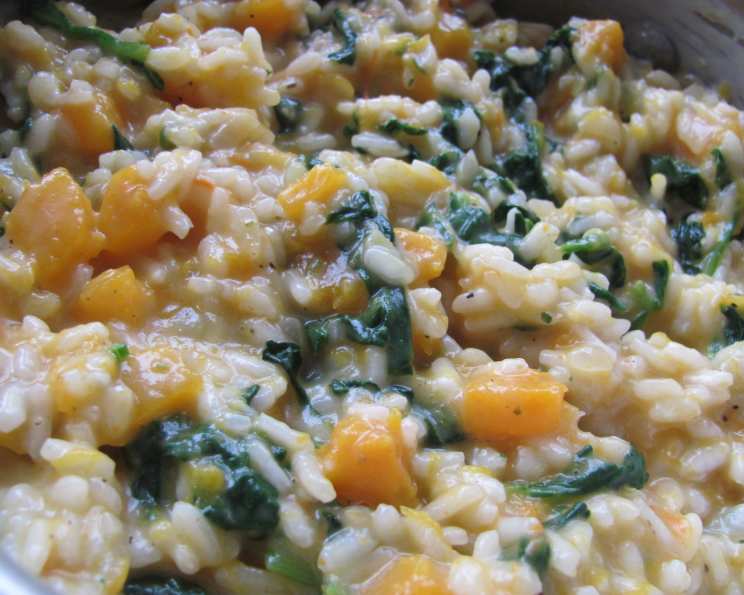
Butternut Squash Risotto With Spinach and Toasted Pine Nuts
There’s a certain magic in the air when autumn arrives, and with it, the comforting aroma of roasting squash. My grandmother, a true artist in the kitchen, always welcomed the season with a vibrant butternut squash risotto. I remember standing by her side, mesmerized as she coaxed the creamy starchiness from the Arborio rice, the kitchen filling with the sweet, nutty scent that instantly felt like home. Now, every time I prepare this dish, I’m transported back to her warm kitchen, sharing laughter and creating memories that are as comforting as the risotto itself.
Recipe Overview
- Prep Time: 25 minutes
- Cook Time: 45 minutes
- Total Time: 1 hour 10 minutes
- Servings: 4
- Dietary Type: Vegetarian
Ingredients
- 2 tablespoons olive oil, plus 1 teaspoon
- 1 medium butternut squash, peeled, seeded (about 2 pounds)
- ¾ teaspoon table salt
- ¾ teaspoon ground black pepper
- 4 cups vegetable broth
- 1 cup water
- 4 ounces baby spinach
- 4 tablespoons unsalted butter
- 2 small onions, chopped very fine (about 1 ½ cups)
- 2 medium garlic cloves, minced or pressed through a garlic press (about 2 teaspoons)
- 2 cups Arborio rice
- 1 ½ cups dry white wine
- 1 ½ ounces Parmesan cheese, grated (about ¾ cup)
- 2 tablespoons fresh sage leaves, minced
- ¼ teaspoon fresh nutmeg, grated
- ¼ cup pine nuts, toasted in small, dry skillet over medium heat until golden and fragrant, about 5 minutes
Equipment Needed
- 12-inch nonstick skillet
- Large saucepan
- Fine-mesh strainer
- Medium bowl
- Small skillet (for toasting pine nuts)
Instructions
-
Begin by heating 2 tablespoons of olive oil in a 12-inch nonstick skillet over medium-high heat. You’ll know it’s ready when the oil shimmers but isn’t smoking.
-
Add about 3 ½ cups of butternut squash in an even layer and cook without stirring until golden brown, about 4 to 5 minutes. This allows the squash to develop a beautiful caramelized crust, adding depth of flavor to the risotto.
-
Stir in ¼ teaspoon of salt and ¼ teaspoon of pepper. Continue to cook, stirring occasionally, until the squash is tender and browned, about 5 minutes longer. Transfer the cooked squash to a bowl and set aside.
-
Return the skillet to medium heat. Add the reserved squash fibers and seeds, along with any leftover diced squash scraps. Cook, stirring frequently to break up the fibers, until lightly browned, about 4 minutes. Don’t skip this step! These often-discarded parts are packed with flavor and will infuse the broth with an intense squash essence.
-
Transfer the browned squash fibers and seeds to a large saucepan. Add the vegetable broth and water. Cover the saucepan and bring the mixture to a simmer over high heat, then reduce the heat to medium-low to maintain a bare simmer. Keeping the broth hot is crucial for even cooking of the rice.
-
While the broth mixture is simmering, add the remaining 1 teaspoon of olive oil to the now-empty skillet and swirl to coat. Add the 4 ounces of baby spinach and cook, covered, over medium heat, until the leaves begin to wilt, about 2 minutes.
-
Uncover and cook, stirring constantly, until fully wilted, about 30 seconds. Set aside the wilted spinach.
-
Melt 3 tablespoons of butter in the now-empty skillet over medium heat. When the foaming subsides, add the finely chopped onions, garlic, remaining ½ teaspoon of salt, and remaining ½ teaspoon of pepper. Cook, stirring occasionally, until the onions are softened but not browned, 4 to 5 minutes.
-
Add the Arborio rice to the skillet and cook, stirring frequently, until the grains are translucent around the edges, about 3 minutes. This toasting process is vital; it helps the rice release its starches gradually, creating the creamy texture characteristic of risotto.
-
Add the dry white wine and cook, stirring frequently, until fully absorbed, 4 to 5 minutes. The wine adds acidity and complexity to the dish.
-
Meanwhile, strain the hot broth through a fine-mesh strainer into a medium bowl, pressing on the solids to extract as much liquid as possible. Return the strained broth to the saucepan and discard the solids in the strainer. Cover the saucepan and set over low heat to keep the broth hot.
-
When the wine is fully absorbed, add 3 cups of the hot broth and half of the reserved cooked squash to the rice. Simmer, stirring every 3 to 4 minutes, until the liquid is absorbed and the bottom of the pan is almost dry, about 12 minutes. Don’t be tempted to stir constantly; occasional stirring is all that’s needed.
-
Stir in about ½ cup of hot broth and cook, stirring constantly, until absorbed, about 3 minutes. Repeat with additional broth 2 or 3 more times, until the rice is al dente. The rice should be tender but still have a slight bite.
-
Turn off the heat. Stir in the remaining 1 tablespoon of butter, Parmesan cheese, minced sage, and grated nutmeg. Drain any excess liquid from the spinach and gently fold in the spinach and remaining cooked squash.
-
If desired, add up to ¼ cup additional hot broth to loosen the texture of the risotto. The consistency should be creamy and slightly loose, not stiff.
-
Top individual servings of the risotto with the toasted pine nuts and serve immediately.
Expert Tips & Tricks
- Toast the pine nuts carefully: Keep a close eye on them as they can burn quickly. A light golden brown is perfect.
- Warm the plates: Serving risotto on warm plates helps maintain its temperature and texture.
- Don’t rinse the rice: Arborio rice’s starch is essential for creating the creamy texture of risotto. Rinsing it away will result in a drier dish.
- Use good quality Parmesan: Freshly grated Parmesan cheese adds a depth of flavor that pre-grated cheese simply can’t match.
Serving & Storage Suggestions
Serve this butternut squash risotto immediately for the best flavor and texture. The warm, creamy risotto paired with the slight bitterness of the spinach and the crunch of the toasted pine nuts creates a delightful symphony of flavors and textures.
Leftovers can be stored in an airtight container in the refrigerator for up to 2 days. To reheat, add a splash of broth or water and gently warm over low heat, stirring frequently, until heated through. Avoid microwaving, as it can dry out the risotto. This dish is best enjoyed fresh and doesn’t freeze well.
Nutritional Information
| Nutrient | Amount per Serving | % Daily Value |
|---|---|---|
| Calories | 650 kcal | 33% |
| Total Fat | 25g | 38% |
| Saturated Fat | 12g | 60% |
| Cholesterol | 40mg | 13% |
| Sodium | 700mg | 30% |
| Total Carbohydrate | 90g | 30% |
| Dietary Fiber | 8g | 32% |
| Sugars | 8g | N/A |
| Protein | 15g | 30% |
Nutritional information is an estimate and can vary based on specific ingredients and portion sizes.
Variations & Substitutions
- Vegan Risotto: Substitute the butter with olive oil or a plant-based butter alternative and omit the Parmesan cheese. Add nutritional yeast for a cheesy flavor.
- Gluten-Free: This recipe is naturally gluten-free, but always double-check the labels of your broth and wine to ensure they are certified gluten-free if necessary.
- Seasonal Variations: Swap the butternut squash with other seasonal squashes like pumpkin or acorn squash. You can also add other vegetables like mushrooms, kale, or roasted Brussels sprouts.
- Herb Variations: Experiment with different herbs like thyme, rosemary, or chives instead of sage.
FAQs (Frequently Asked Questions)
Q: Can I make this risotto ahead of time?
A: Risotto is best served immediately. Making it completely ahead of time will result in a mushy texture. However, you can prepare the squash and broth ahead of time to speed up the process.
Q: What if I don’t have white wine?
A: You can substitute the white wine with additional broth or a tablespoon of white wine vinegar.
Q: How do I know when the risotto is done?
A: The rice should be al dente, meaning it’s tender but still has a slight bite to it. The texture should be creamy and slightly loose, not dry or mushy.
Q: Can I use a different type of rice?
A: Arborio rice is specifically used for risotto because of its high starch content. Using other types of rice will not produce the same creamy texture.
Q: What can I serve with this risotto?
A: This butternut squash risotto is delicious on its own, but it also pairs well with roasted chicken, grilled fish, or a simple green salad.
Final Thoughts
Now it’s your turn to bring this heartwarming dish to life in your own kitchen. Embrace the process, savor the aromas, and don’t be afraid to add your own personal touch. Whether you’re sharing it with loved ones or enjoying a quiet evening in, this Butternut Squash Risotto with Spinach and Toasted Pine Nuts is sure to bring warmth and comfort to your table. Don’t hesitate to share your creations and feedback – I can’t wait to hear about your risotto adventures! Perhaps a crisp glass of Pinot Grigio alongside? Buon appetito!