
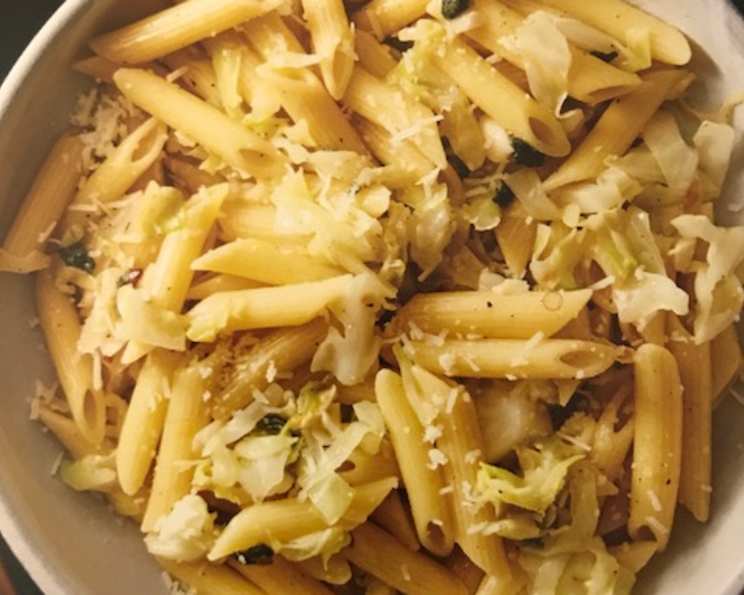
Cabbage and Sage Pasta: A Symphony of Simple Flavors
The scent of sage frying in butter always transports me back to my Nonna’s kitchen. She wasn’t fancy, but she knew how to coax incredible flavor from humble ingredients. I remember watching her, mesmerized, as she transformed a simple head of cabbage and some dried pasta into a dish that tasted like pure love. This Cabbage and Sage Pasta recipe, reminiscent of her style, captures that same magic – simple, satisfying, and full of heartwarming flavors.
Recipe Overview
- Prep Time: 10 minutes
- Cook Time: 30 minutes
- Total Time: 40 minutes
- Servings: 2
- Dietary Type: Vegetarian
Ingredients
- ½ lb penne rigate pasta
- ½ head cabbage, sliced
- 1 bunch fresh sage, chopped (or 2 teaspoons of ground sage)
- 2 fresh garlic cloves, minced
- 2 teaspoons salt
- 2 teaspoons freshly ground pepper
- 2 tablespoons butter
- 1 cup pecorino romano cheese, freshly shredded
- ¼ teaspoon crushed red pepper flakes
- Olive oil (for sautéing)
- Optional: Cooked and drained ground turkey
Equipment Needed
- Large pot
- Large sauté pan
- Colander
- Cheese grater
- Knife
- Cutting board
Instructions
- Begin by bringing a large pot of salted water to a rolling boil. This generous salting is key to seasoning the pasta from the inside out. Once boiling, add the penne rigate pasta and cook until al dente, meaning it’s cooked through but still has a slight firmness to the bite. This usually takes around 10-12 minutes, depending on your pasta. Before draining the pasta, remember to reserve 1 cup of the pasta water. This starchy liquid is liquid gold and will help create a beautifully emulsified sauce later.
- While the pasta is cooking, prepare the cabbage. In a large sauté pan, heat up a drizzle of olive oil over medium-high heat. You’ll want the oil to be hot enough that the cabbage sizzles when it hits the pan. Add the sliced cabbage and minced garlic to the pan. Season generously with salt and pepper to taste. Cook, stirring occasionally, for about 3-4 minutes, or until the cabbage begins to soften slightly and the garlic becomes fragrant. Be careful not to burn the garlic, as it can turn bitter.
- Now for the star of the show: the sage. Add the chopped fresh sage (or ground sage) and as much of the crushed red pepper flakes as you desire, depending on your preference for spice. Remember, you can always add more red pepper flakes later, but you can’t take them away. Add more salt and black pepper to taste. Cook, stirring frequently, for another 1 to 2 minutes, or until the sage becomes wonderfully fragrant and the flavors meld together. The aroma at this stage is truly intoxicating!
- Deglaze the pan with ¼ cup of the reserved pasta water. This helps to loosen any browned bits from the bottom of the pan and creates a light sauce base. Cook, stirring frequently, for another 1 to 2 minutes while stirring frequently, allowing the water to slightly reduce and thicken. The cabbage should become even more tender.
- Once the pasta is cooked al dente, drain it well (but remember that reserved pasta water!). Add the cooked pasta, butter, and half of the shredded pecorino romano cheese, along with ½ of the remaining pasta water, to the cabbage pan. Season with more salt and pepper to taste. Turn the heat to medium-high and cook, stirring vigorously, for 1 to 2 minutes, or until the pasta is thoroughly coated in the sauce. The butter will melt and emulsify with the pasta water and cheese, creating a creamy, luscious sauce that clings to every strand of pasta. If the pasta seems dry, gradually add more pasta water, a tablespoon at a time, until you achieve your desired consistency. Remove from heat when done.
- (Optional): If desired, add browned and drained ground turkey to the cabbage pasta and mix well. This adds protein and heartiness to the dish.
- Serve immediately, topping with more sage and red pepper flakes if desired, and a generous amount of shredded pecorino romano cheese. The heat of the pasta will melt the cheese slightly, creating a gooey, delicious topping. Buon Appetito!
Expert Tips & Tricks
- Don’t overcook the pasta: Al dente pasta holds its shape and texture better when tossed with the sauce. Overcooked pasta can become mushy.
- Taste as you go: Seasoning is crucial. Taste the cabbage mixture at each step and adjust the salt, pepper, and red pepper flakes to your liking.
- Use high-quality cheese: Pecorino Romano cheese has a sharp, salty flavor that complements the sweetness of the cabbage and the earthiness of the sage. Avoid pre-shredded cheese, as it often contains cellulose and doesn’t melt as well.
- Brown the butter: For an even richer flavor, try browning the butter before adding it to the pasta. Cook the butter in a separate pan over medium heat until it turns a nutty brown color and smells fragrant. Be careful not to burn it!
- Add a squeeze of lemon: A squeeze of fresh lemon juice at the end brightens the flavors and adds a touch of acidity.
Serving & Storage Suggestions
Serve this Cabbage and Sage Pasta immediately while it’s hot and the sauce is creamy. Garnish with extra sage leaves, red pepper flakes, and a generous grating of pecorino romano cheese for an appealing presentation.
Leftovers can be stored in an airtight container in the refrigerator for up to 3 days. To reheat, gently warm the pasta in a skillet over medium heat, adding a splash of water or broth if needed to loosen the sauce. You can also microwave it, but be careful not to overcook it, as the pasta can become rubbery. Freezing is not recommended, as the pasta and cabbage may become mushy upon thawing.
Nutritional Information
| Nutrient | Amount per Serving | % Daily Value |
|---|---|---|
| Calories | 592 kcal | N/A |
| Calories from Fat | 122 g | 21% |
| Total Fat | 13.6 g | 20% |
| Saturated Fat | 7.7 g | 38% |
| Cholesterol | 30.5 mg | 10% |
| Sodium | 2475.6 mg | 103% |
| Total Carbohydrate | 100.8 g | 33% |
| Dietary Fiber | 10 g | 40% |
| Sugars | 10.4 g | 41% |
| Protein | 18.3 g | 36% |
Note: Nutritional information is an estimate and may vary based on specific ingredients and portion sizes.
Variations & Substitutions
- Gluten-Free: Use gluten-free penne pasta for a gluten-free version.
- Vegan: Substitute the butter with olive oil or vegan butter and omit the pecorino romano cheese or use a vegan parmesan alternative.
- Different Vegetables: Experiment with adding other vegetables, such as kale, spinach, or Brussels sprouts, along with the cabbage.
- Spicy Kick: Increase the amount of crushed red pepper flakes for a spicier dish. You can also add a pinch of cayenne pepper.
- Herbs: Try other fresh herbs, such as thyme, rosemary, or parsley, in addition to or instead of the sage.
- Cheese: If you don’t have pecorino romano cheese, you can substitute parmesan cheese or asiago cheese.
- Protein: Add grilled chicken, shrimp, or sausage for extra protein.
FAQs (Frequently Asked Questions)
Q: Can I use dried sage instead of fresh sage?
A: Yes, you can use dried sage, but fresh sage has a more vibrant flavor. Use about 2 teaspoons of dried sage for every bunch of fresh sage.
Q: How do I prevent the garlic from burning?
A: Keep a close eye on the garlic while it’s cooking and stir frequently. If it starts to brown too quickly, lower the heat. You can also add the garlic later in the cooking process, after the cabbage has softened slightly.
Q: Can I make this dish ahead of time?
A: While it’s best served immediately, you can prepare the cabbage mixture ahead of time and store it in the refrigerator for up to 24 hours. When you’re ready to serve, cook the pasta and toss it with the cabbage mixture.
Q: What if I don’t have pasta water?
A: If you forget to reserve pasta water, you can use chicken broth or vegetable broth as a substitute.
Q: Can I add other types of cheese?
A: Yes, you can add other types of cheese, such as mozzarella, provolone, or fontina. Just be sure to add them at the end of the cooking process so they don’t melt too much.
Final Thoughts
This Cabbage and Sage Pasta is more than just a meal; it’s a celebration of simple, honest ingredients transformed into something extraordinary. I encourage you to try this recipe and experience the magic for yourself. Don’t be afraid to experiment with different variations and substitutions to make it your own. And most importantly, share it with someone you love. A warm bowl of pasta, a sprinkle of cheese, and a shared moment of connection – that’s what cooking is all about. Let me know what you think! And if you’re feeling adventurous, try pairing it with a crisp glass of white wine for the ultimate culinary experience.