
Callaloo: A Taste of Trinidad
The memory of my grandmother’s kitchen in Port of Spain is forever etched in my mind, a vibrant tapestry of aromas and colors. Sunday lunch was an event, a celebration of family and flavors, and at the heart of it all was her callaloo. The rhythmic chop-chop-chop of her cutlass as she prepared the dasheen leaves, the gentle simmer of coconut milk mingling with the earthy scent of okra and herbs – it was a symphony of the senses that always culminated in a dish that felt like a warm hug. It wasn’t just food; it was love on a plate, a taste of home, a piece of Trinidadian sunshine. I’ve spent years trying to recreate that magic, and this recipe brings me closest to her version.
Recipe Overview
- Prep Time: 30 minutes
- Cook Time: 20 minutes
- Total Time: 50 minutes
- Servings: 4-6
- Yield: Approximately 1 pint
- Dietary Type: Generally Gluten-Free, Dairy-Free (depending on coconut milk source)
Ingredients
- 1 bunch dasheen leaves (also known as taro root leaves)
- 15 okra (soft tips, cut into 1-inch pieces)
- 2 stems chives (chopped coarsely)
- 1 onion (medium, sliced)
- 1 sprig thyme (stem and leaves)
- 1 bunch celery (chopped roughly)
- 1 garlic clove (crushed)
- 1 whole hot pepper (like Scotch bonnet or habanero – use with caution!)
- 1 pimentos (chopped)
- 2 1/2 cups coconut milk (freshly squeezed, coconut milk powder, or frozen can be used)
- 1/4 lb salted pork tail (optional. Boil out salt 30 mins in water until tender and cut into 1-inch pieces)
- 1 teaspoon sugar
- 2 teaspoons salt
Equipment Needed
- Medium pot
- Cutting board
- Knife
- Hand blender (immersion blender)
Instructions
- Prepare the Dasheen Leaves: Separate the leaves from the stems. Thoroughly wash the leaves. Strip the stems by peeling off the outer layer. This helps to make them more tender.
- Chop and Tear: Tear the washed dasheen leaves apart with your hands into smaller pieces. Chop the stems into approximately 2-inch lengths.
- Combine Ingredients: Add all the ingredients – the dasheen leaves, okra, chives, onion, thyme, celery, garlic, hot pepper, pimentos, coconut milk, salted pork tail (if using), sugar, and salt – into a medium pot.
- Simmer: Place the pot over medium heat. Bring the mixture to a boil, then reduce the heat to low and allow it to simmer for 20 minutes, or until the okra seeds turn pink. This indicates that the okra is cooked through.
- Season: Taste the callaloo and season with additional salt and pepper if necessary. Remember that the salted pork tail will also contribute saltiness, so adjust accordingly.
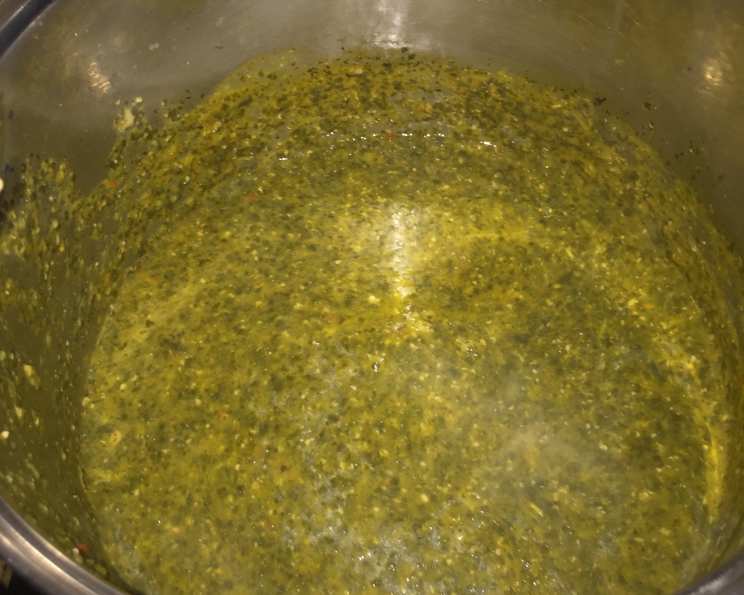
- Check Consistency: When the callaloo is done, the leaves and okra should be tender. There should be enough liquid to blend the ingredients smoothly. If the mixture is too thick, add a little warm water to achieve a soup-like consistency.
- Cool and Remove Pork: Remove the pot from the heat and allow it to cool for about 15 minutes. This will prevent splattering during blending. Remove the pork tails before blending; you’ll add them back in later.
- Blend: Using a hand blender (immersion blender), carefully blend the callaloo until all the ingredients are pureed and the mixture is smooth. Be cautious of hot liquid splattering. If you don’t have a hand blender, you can use a regular blender, but make sure to let the callaloo cool down significantly and blend in batches.
- Reheat and Serve: Return the blended callaloo to a clean pot. Add the pork tails back in. Reheat gently before serving.
- Serve: Serve the callaloo hot with rice, stewed Caribbean chicken, potato salad, boiled provisions (root vegetables), coleslaw, pigeon peas, and macaroni pie.
Expert Tips & Tricks
- Dasheen Leaf Preparation: Properly cleaning and stripping the dasheen leaves is crucial. This removes any potential bitterness or itchiness from the leaves.
- Hot Pepper Control: For a milder flavor, use the whole hot pepper and remove it before blending. For a spicier callaloo, chop the hot pepper finely and include it in the blending process.
- Coconut Milk Matters: Freshly squeezed coconut milk offers the richest flavor, but canned or frozen versions work well too. If using coconut milk powder, follow the package instructions to reconstitute it before adding it to the pot.
- Salted Pork Tail Alternative: If you can’t find salted pork tail or prefer a vegetarian option, you can omit it altogether or use smoked turkey wings for a similar smoky flavor. Boil the smoked turkey wings separately to remove excess salt before adding them to the callaloo.
- Make-Ahead: Callaloo can be made a day or two in advance. The flavors actually meld together and improve over time. Store it in the refrigerator and reheat before serving.
- Blending Texture: If you prefer a chunkier texture, don’t blend the callaloo completely smooth. Leave some small pieces of okra and dasheen leaves for added texture.
Serving & Storage Suggestions
Callaloo is traditionally served hot as a side dish alongside a variety of Caribbean staples. Its creamy texture and savory flavor complement rice, boiled provisions, and various meats and stews perfectly.
To store leftover callaloo, allow it to cool completely before transferring it to an airtight container. It can be stored in the refrigerator for up to 3-4 days. For longer storage, freeze the callaloo in freezer-safe containers for up to 2-3 months.
To reheat refrigerated callaloo, simply place it in a pot over low heat and stir occasionally until heated through. You may need to add a splash of water or coconut milk if it has thickened during storage. Frozen callaloo should be thawed in the refrigerator overnight before reheating.
Nutritional Information
(Note: Nutritional information is an estimate and may vary based on specific ingredients and portion sizes.)
| Nutrient | Amount per Serving | % Daily Value |
|---|---|---|
| Calories | 350 kcal | 18% |
| Total Fat | 25g | 38% |
| Saturated Fat | 20g | 100% |
| Cholesterol | 5 mg | 2% |
| Sodium | 800 mg | 35% |
| Total Carbohydrate | 20g | 7% |
| Dietary Fiber | 5g | 20% |
| Sugars | 10g | |
| Protein | 5g | 10% |
Variations & Substitutions
- Vegetarian Callaloo: Omit the salted pork tail entirely for a vegetarian version. You can add a teaspoon of smoked paprika for a hint of smokiness.
- Spicy Callaloo: Increase the amount of hot pepper, or add a pinch of cayenne pepper to the mixture.
- Seafood Callaloo: Add cooked shrimp or crab meat to the callaloo after blending for a seafood twist.
- Different Greens: While dasheen leaves are traditional, you can also use spinach, kale, or collard greens as a substitute if you can’t find them. The flavor will be slightly different, but still delicious.
- Coconut Cream: For an even richer and creamier callaloo, substitute half of the coconut milk with coconut cream.
FAQs (Frequently Asked Questions)
Q: What are dasheen leaves, and where can I find them?
A: Dasheen leaves are the leaves of the taro root plant, commonly used in Caribbean cooking. They can often be found in Caribbean or Asian markets.
Q: How do I know if the dasheen leaves are safe to eat?
A: Thoroughly washing and stripping the stems of the leaves is essential to remove any compounds that can cause itching or irritation. Cooking them completely also ensures they are safe to eat.
Q: Can I make this recipe without a hand blender?
A: Yes, you can use a regular blender, but be sure to let the callaloo cool down significantly before blending and work in batches to avoid pressure buildup.
Q: How can I adjust the spiciness of the callaloo?
A: For a milder flavor, use the whole hot pepper and remove it before blending. For more spice, chop the pepper finely and include it in the blend, or add a pinch of cayenne pepper.
Q: Can I freeze callaloo?
A: Yes, callaloo freezes well. Allow it to cool completely before transferring it to a freezer-safe container. It can be stored in the freezer for up to 2-3 months.
Final Thoughts
Callaloo is more than just a dish; it’s a connection to my heritage, a taste of my childhood, and a celebration of the vibrant flavors of Trinidad. I hope this recipe inspires you to try your hand at creating this Caribbean classic and to experience the warmth and joy that it brings. Don’t be afraid to experiment with variations and substitutions to make it your own. And most importantly, share it with loved ones – because good food is always best enjoyed in good company. Bon appétit, or as we say in Trinidad, “Eat well!”