
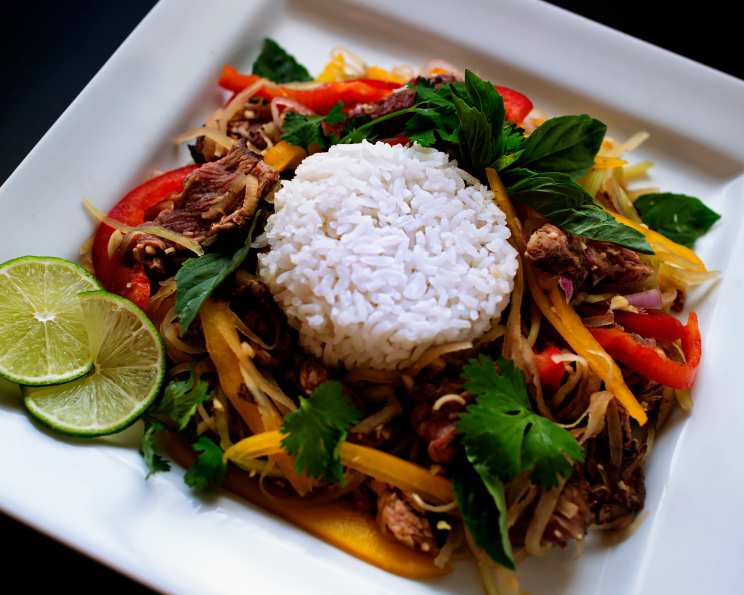
Cambodian Curry: A Culinary Journey to Southeast Asia
My earliest memory of Cambodian curry isn’t from a fancy restaurant, but from a small, family-run stall in a bustling market I visited as a young chef backpacking through Southeast Asia. The air, thick with the aroma of spices and grilling meats, led me to a vibrant display of fresh produce and a bubbling pot of golden curry. I watched, mesmerized, as the vendor expertly combined seemingly simple ingredients into a dish that exploded with flavor, a fragrant reminder that the most authentic culinary experiences often come from the most unassuming places. I was instantly hooked.
Recipe Overview
- Prep Time: 20 minutes
- Cook Time: 20 minutes
- Total Time: 40 minutes
- Servings: 4-6
- Yield: Variable, depending on protein/vegetable additions
- Dietary Type: Adaptable (can be made Gluten-Free, Dairy-Free)
Ingredients
- 2 tablespoons vegetable oil
- 1 pound chicken, beef, pork, tofu, or vegetables (cut into bite-sized pieces)
- 1 large onion, chopped
- 2 cloves garlic, minced
- 1 inch ginger, grated
- 2 tablespoons Cambodian curry paste (store-bought or homemade, recipe follows)
- 1 (13.5 ounce) can coconut milk
- 1 cup chicken broth (or vegetable broth)
- 1 potato, peeled and cubed
- 1 carrot, peeled and sliced
- 1/2 cup green beans, trimmed
- 1/4 cup fish sauce (or soy sauce for vegetarian option)
- 1 tablespoon palm sugar (or brown sugar)
- 1 tablespoon lime juice
- Fresh cilantro, for garnish
- Steamed rice, for serving
For the Cambodian Curry Paste (Optional Homemade Version):
- 2 stalks lemongrass, finely chopped
- 5 cloves garlic, minced
- 1 inch galangal or ginger, peeled and sliced
- 1 teaspoon turmeric powder
- 1/2 teaspoon coriander seeds, ground
- 1/4 teaspoon cumin seeds, ground
- 1/4 teaspoon chili powder (or more to taste)
- 1 tablespoon fish sauce
- 1 tablespoon shrimp paste (optional, omit for vegetarian version)
Equipment Needed
- Large pot or Dutch oven
- Cutting board
- Chef’s knife
- Grater
- Measuring spoons and cups
- Blender or food processor (if making homemade curry paste)
Instructions
- If making your own curry paste, combine all curry paste ingredients in a blender or food processor and blend until a smooth paste forms. You might need to add a tablespoon or two of water to help it blend. Set aside. Store-bought paste works just as well for a quicker option.
- Heat the vegetable oil in a large pot or Dutch oven over medium heat.
- Add the chicken, beef, pork, tofu, or vegetables of your choice to the pot. Brown on all sides and then remove from the pot and set aside. If using tofu, press out as much water as possible before browning to achieve a better texture.
- Add the chopped onion to the pot and cook until softened, about 5 minutes. Then, add the minced garlic and grated ginger and cook for another minute until fragrant. Be careful not to burn the garlic.
- Stir in the Cambodian curry paste and cook for 2-3 minutes, stirring constantly. This will help release the aromatic oils and deepen the flavor.
- Pour in the coconut milk and chicken broth (or vegetable broth), scraping up any browned bits from the bottom of the pot. Bring to a simmer.
- Add the cubed potato and sliced carrot to the pot and cook for about 10 minutes, or until they are almost tender.
- Return the browned protein or vegetables to the pot, along with the green beans.
- Stir in the fish sauce (or soy sauce), palm sugar (or brown sugar), and lime juice. Taste and adjust seasonings as needed. You might need more fish sauce for saltiness or more sugar for sweetness.
- Simmer for another 5-10 minutes, or until the protein is cooked through and the vegetables are tender.
- Garnish with fresh cilantro before serving.
- Serve hot over steamed rice.
Expert Tips & Tricks
- Coconut Milk Consistency: For a richer, creamier curry, use full-fat coconut milk. If you prefer a lighter curry, use light coconut milk.
- Spice Level: Adjust the amount of chili powder in the curry paste to control the spice level. Start with a small amount and add more to taste. For a more authentic flavor, use fresh chilies in your homemade curry paste.
- Vegetable Variations: Feel free to add other vegetables such as eggplant, bell peppers, or sweet potatoes. Adjust cooking times accordingly based on the density of the vegetables.
- Meat Tenderness: For tougher cuts of meat like beef, consider marinating them overnight in a mixture of soy sauce, ginger, and garlic before cooking. This will help tenderize the meat and infuse it with flavor.
- Curry Paste Storage: Homemade curry paste can be stored in an airtight container in the refrigerator for up to a week or in the freezer for up to a month.
Serving & Storage Suggestions
Serve the Cambodian curry hot over steamed jasmine rice. Garnish with fresh cilantro and a wedge of lime for added brightness. It also pairs well with crusty bread for soaking up the flavorful sauce.
Leftovers can be stored in an airtight container in the refrigerator for up to 3 days. To reheat, gently warm the curry in a saucepan over medium heat, stirring occasionally, or microwave until heated through. If the curry has thickened too much, add a splash of coconut milk or broth to thin it out. Freezing is not recommended as the potatoes can become mushy.
Nutritional Information
| Nutrient | Amount per Serving | % Daily Value |
|---|---|---|
| Calories | 450 kcal | 23% |
| Total Fat | 25g | 38% |
| Saturated Fat | 15g | 75% |
| Cholesterol | 75mg | 25% |
| Sodium | 800mg | 35% |
| Total Carbohydrate | 35g | 12% |
| Dietary Fiber | 5g | 20% |
| Sugars | 10g | — |
| Protein | 20g | 40% |
Nutritional information is an estimate and may vary based on specific ingredients and portion sizes.
Variations & Substitutions
- Vegetarian/Vegan: Substitute tofu or extra vegetables for the meat. Use soy sauce instead of fish sauce. Omit shrimp paste from the curry paste.
- Gluten-Free: Ensure that the curry paste and fish sauce are gluten-free. Use tamari instead of soy sauce if necessary.
- Dairy-Free: This recipe is naturally dairy-free as it uses coconut milk instead of dairy milk or cream.
- Spicier: Add more chili powder to the curry paste or include chopped fresh chilies in the curry itself.
- Seasonal Vegetables: Adapt the recipe based on what’s fresh and available. Butternut squash in the fall or asparagus in the spring would be delicious additions.
- Type of Protein: Consider using shrimp, firm white fish (cod, halibut, etc.), or lamb in place of other proteins. Adjust cooking times accordingly.
FAQs (Frequently Asked Questions)
Q: Can I make this curry ahead of time?
A: Yes, the curry can be made a day or two in advance. In fact, the flavors often meld together and improve overnight in the refrigerator.
Q: Is Cambodian curry the same as Thai curry?
A: While both are delicious and share some similarities, Cambodian curry is generally milder and less spicy than Thai curry. It also often features a more subtle blend of spices.
Q: Can I freeze this curry?
A: While you can freeze it, the texture of the potatoes might change slightly. It’s best to eat it within a few weeks of freezing for optimal quality. Thaw overnight in the refrigerator before reheating.
Q: Where can I find Cambodian curry paste?
A: Some Asian grocery stores carry Cambodian curry paste, but Thai curry paste is a readily available substitute. You can also find it online. Making your own is always an option, too!
Q: What kind of rice is best to serve with this curry?
A: Jasmine rice is the traditional choice, as its fragrance complements the curry’s aroma perfectly. However, any long-grain rice will work well.
Final Thoughts
Cambodian curry is more than just a dish; it’s an invitation to explore the vibrant flavors of Southeast Asia. Whether you’re a seasoned cook or just starting out, this recipe is incredibly adaptable and forgiving. Don’t be afraid to experiment with different vegetables, proteins, and spice levels to create your own signature version. I encourage you to gather your ingredients, embrace the aromatic journey, and share this culinary adventure with your loved ones. And, of course, I’d love to hear your feedback and variations – happy cooking!