
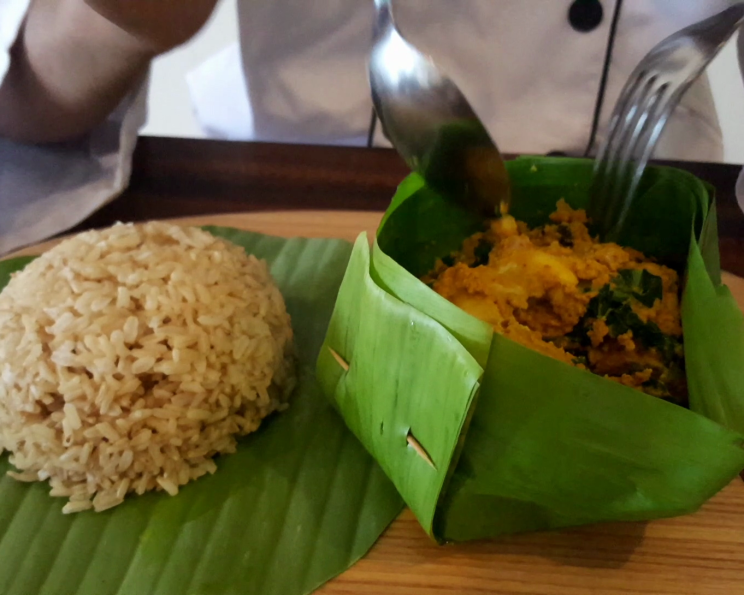
Cambodian Fish Amok: A Taste of Paradise
My first encounter with Cambodian Fish Amok wasn’t in a bustling Phnom Penh market, but in a small, family-run restaurant tucked away on a quiet Siem Reap street. The aroma alone was intoxicating – a heady blend of lemongrass, coconut, and spices I couldn’t quite place. Served in a delicate banana leaf cup, the creamy, subtly sweet curry cradled tender flakes of fish. Each bite was an explosion of flavor, a transportive experience that sparked a lifelong love affair with Cambodian cuisine. It was more than just a meal; it was a memory etched in my senses, a reminder of the warmth and vibrancy of the Khmer culture.
Recipe Overview
- Prep Time: 20 minutes
- Cook Time: 30 minutes
- Total Time: 50 minutes
- Servings: 2
- Dietary Type: Dairy-Free
Ingredients
- 250 g fish (firm white fish such as cod or monkfish)
- 2 banana leaves (for making the basket)
- 3 lemongrass stalks
- 100 g galangal
- 100 g turmeric
- 1 red onion
- 2 kaffir lime leaves
- 3 garlic cloves
- 2 eggs
- 100 g peanuts (roasted, unsalted)
- 250 g coconut cream
- 3 star anise
- 1 teaspoon salt
- Optional: Fresh noni leaves (or spinach as a substitute)
- Cooking oil
Equipment Needed
- Blender or food processor
- Steamer or pot with a steaming basket
- Knife
- Chopping board
- Mixing bowl
- Small saucepan
Instructions
-
Prepare the Banana Leaf Basket: Carefully fold and secure the banana leaves to create two small, bowl-shaped baskets. If you’re not comfortable making your own, you can use small ramekins lined with banana leaf pieces instead. This adds to the authentic presentation.
-
Prepare the Kreung Paste: Roughly chop the lemongrass, turmeric, and galangal. This will help your blender process everything smoothly.
-
Combine Aromatics: Add the chopped lemongrass, turmeric, and galangal to the blender along with chopped red onion, garlic cloves, and kaffir lime leaves.
-
Add Peanuts and Coconut Cream: Toss the peanuts and coconut cream into the blender with the other ingredients.
-
Blend the Kreung: Blend all the ingredients together until you achieve a very smooth paste. The smoother the paste, the better the final texture of your amok will be. You might need to scrape down the sides of the blender a few times to ensure everything is fully incorporated. Add a little water if needed to get it going.
-
Prepare the Fish and Noni Leaf (Optional): Chop the fish into bite-sized pieces. If using, roughly chop the noni leaf (or spinach) for later.
-
Cook the Kreung: Heat a pan or wok over medium heat and add a little cooking oil. Once the oil is hot, add the prepared kreung paste.
-
Infuse with Star Anise: Add the star anise to the pan with the kreung. The star anise will release its fragrant oils, adding another layer of complexity to the curry.
-
Season and Temper: Season the kreung with salt. Add a spoonful of coconut milk to the pan; this helps temper the paste and prevent it from burning.
-
Add the Fish: Gently add the chopped fish to the pan with the kreung.
-
Simmer: Stir the fish into the kreung and let it simmer gently until the fish is almost cooked through. Be careful not to overcook the fish at this stage, as it will continue to cook during steaming.
-
Beat the Eggs: In a separate bowl, lightly beat the eggs.
-
Add Eggs and Noni Leaf: Pour the beaten egg into the pan with the fish and kreung mixture. Stir gently to combine. If using, add the chopped noni leaf (or spinach) to the pan.
-
Assemble and Steam: Carefully spoon the mixture into the prepared banana leaf bowls.
-
Top with Egg: Cover the top of each bowl with a little more beaten egg for a richer finish.
-
Steam: Place the banana leaf bowls in a steamer or pot with a steaming basket. Steam for approximately 10 minutes, or until the egg is set and the fish is fully cooked.
Expert Tips & Tricks
- Kreung Consistency: For a truly authentic and silky smooth amok, ensure your kreung paste is as fine as possible. A high-powered blender is your best friend here.
- Fish Selection: While this recipe calls for a firm white fish, feel free to experiment. Salmon or even prawns can work beautifully.
- Banana Leaf Substitute: If banana leaves are unavailable, parchment paper can be used to line ramekins. While it won’t impart the same subtle flavor, it will still create a lovely presentation.
- Don’t Overcook the Fish: The key to tender fish amok is to avoid overcooking the fish. It should be just cooked through and still moist.
- Spice Level: If you like it spicy, add a fresh red chili to the kreung when blending.
Serving & Storage Suggestions
Serve your Cambodian Fish Amok immediately while it’s hot and fragrant. Garnish with a sprig of cilantro or a slice of lime for a pop of color. It pairs perfectly with steamed jasmine rice.
Leftover fish amok can be stored in the refrigerator for up to 2 days. Ensure it’s cooled completely before transferring it to an airtight container. Reheat gently in a steamer or microwave until heated through. Avoid reheating multiple times. Do not leave it at room temperature for more than 2 hours. Freezing is not recommended as it can affect the texture of the coconut cream and fish.
Nutritional Information
| Nutrient | Amount per Serving | % Daily Value* |
|---|---|---|
| Calories | 502.6 kcal | 25% |
| Total Fat | 27.3 g | 42% |
| Saturated Fat | 12.95 g | 65% |
| Cholesterol | 93 mg | 31% |
| Sodium | 654.85 mg | 27% |
| Total Carbohydrate | 57 g | 19% |
| Dietary Fiber | 8.05 g | 32% |
| Sugars | 35.25 g | N/A |
| Protein | 12.7 g | 25% |
*Percent Daily Values are based on a 2000 calorie diet. Your daily values may be higher or lower depending on your calorie needs.
Variations & Substitutions
- Vegan Amok: Substitute the fish with firm tofu and the eggs with a flax egg (1 tablespoon flaxseed meal mixed with 3 tablespoons water, let sit for 5 minutes).
- Seafood Medley: Use a mix of different seafood like shrimp, scallops, and calamari for a richer flavor.
- Vegetarian Amok: Add vegetables like eggplant, bell peppers, and green beans. Adjust cooking time accordingly.
- Nut-Free: Replace peanuts with sunflower seeds or omit them altogether.
- Noni Leaf Substitute: If you can’t find noni leaves, spinach is a good substitute. It provides a similar earthy flavor and adds a boost of nutrients.
FAQs (Frequently Asked Questions)
Q: Can I make the kreung paste ahead of time?
A: Yes! The kreung paste can be made up to 3 days in advance and stored in an airtight container in the refrigerator. This can save you time on busy weeknights.
Q: What kind of fish works best for Amok?
A: A firm white fish like cod, monkfish, or snapper is ideal because it holds its shape well during cooking. However, you can experiment with other types of fish based on your preference.
Q: How can I prevent the coconut cream from separating?
A: Avoid high heat and rapid boiling, which can cause the coconut cream to separate. Simmer the amok gently over medium-low heat, stirring occasionally.
Q: Is it necessary to steam the Amok in banana leaves?
A: While banana leaves impart a unique flavor and aroma, it’s not strictly necessary. You can use ramekins lined with parchment paper instead, or even just cook the amok directly in a pan.
Q: Can I add other vegetables to my Cambodian Fish Amok?
A: Absolutely! Adding vegetables like eggplant, bell peppers, or green beans can add more nutrients and textures to your dish. Just adjust the cooking time accordingly.
Final Thoughts
Cambodian Fish Amok is more than just a recipe; it’s a journey. From the fragrant aroma of the kreung paste to the creamy, subtly sweet taste of the finished dish, it’s a culinary experience that transports you to the heart of Southeast Asia. Don’t be intimidated by the ingredient list; with a little patience and a willingness to experiment, you can recreate this taste of paradise in your own kitchen. I encourage you to try this recipe, share it with friends and family, and discover the magic of Cambodian cuisine. Serve it with a refreshing cucumber salad and a crisp glass of white wine for a truly unforgettable meal.