
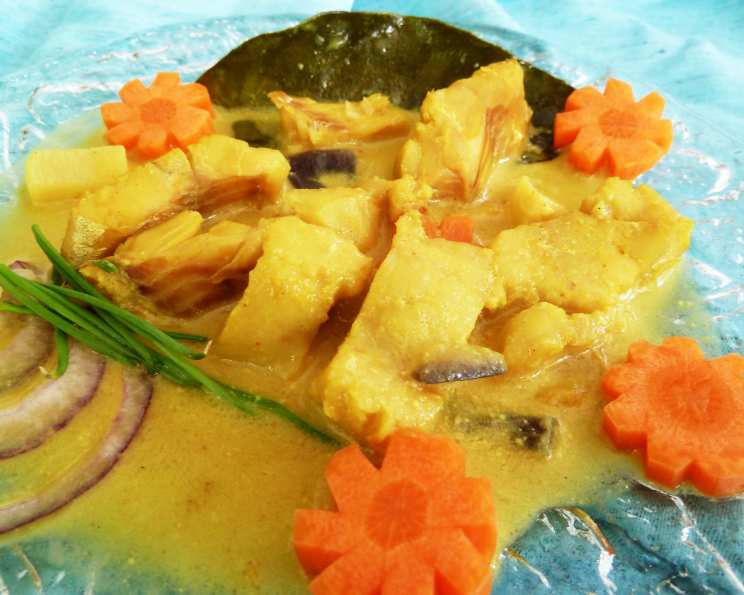
Cambodian-Style Fish Poached in Coconut Milk: A Taste of Southeast Asia
The first time I tasted a dish like this, I was backpacking through Southeast Asia. A tiny, open-air kitchen in Phnom Penh was my classroom, and the fragrant steam rising from the pot was my textbook. The rich aroma of coconut milk mingled with exotic spices – galangal, lemongrass, kaffir lime – creating an intoxicating perfume that promised culinary adventure. That simple fish stew, simmered in creamy coconut milk, opened my eyes to a world of flavors I had never imagined, and I’ve been chasing that perfect balance of sweet, spicy, and savory ever since.
Recipe Overview
- Prep Time: 20 minutes
- Cook Time: 15 minutes
- Total Time: 35 minutes
- Servings: 2-4
- Yield: Approximately 4 cups
- Dietary Type: Dairy-Free
Ingredients
- 450 g firm, white-fleshed fish (such as cod, snapper, or halibut), cut into 2cm chunks
- 3 garlic cloves, peeled
- 1 small red onion, roughly chopped
- 3 cm fresh galangal, peeled and roughly chopped
- 2 lemongrass stalks, trimmed and finely sliced
- 1 teaspoon fresh turmeric, finely sliced (or 1/2 teaspoon turmeric powder)
- 1 teaspoon paprika
- 2 tablespoons fish sauce
- 1 tablespoon brown sugar
- 400 g coconut milk (full-fat recommended for richer flavor)
- 4 kaffir lime leaves
- 1 lemon, juice of
Equipment Needed
- Blender or food processor
- Heavy-based saucepan
- Serving bowls
Instructions
- Begin by preparing the aromatic paste. In a blender or food processor, combine the garlic cloves, red onion, galangal, lemongrass, turmeric (fresh or powder), paprika, fish sauce, and brown sugar. Process until the mixture is finely blended and forms a smooth paste. This is the flavor base of the entire dish, so ensure it’s well-integrated.
- Next, add the coconut milk to the blender and process again until thoroughly blended with the spice paste. This will create a beautiful, creamy sauce ready for cooking.
- Transfer the coconut mixture to a heavy-based saucepan. The heavy base is crucial to prevent scorching and ensure even cooking.
- Take the kaffir lime leaves and gently crush them in your hand to release their fragrant oils. Add the crushed leaves to the saucepan with the coconut mixture. This step is essential to infuse the dish with its distinctive citrusy aroma.
- Bring the coconut mixture to a boil over medium heat, then immediately reduce the heat to a gentle simmer. Cook for approximately 10 minutes, allowing the flavors to meld together and the liquid to reduce slightly. This simmering period is where the magic happens, allowing the spices to fully bloom and the sauce to thicken.
- Gently add the fish chunks to the simmering sauce. Poach the fish gently for just 4-5 minutes, or until the fish is cooked through and flakes easily with a fork. Be careful not to overcook the fish, as it will become dry and rubbery. The poaching time will depend on the thickness of the fish pieces.
- Remove the saucepan from the heat and stir in the lemon juice. The acidity of the lemon juice brightens the flavors and balances the richness of the coconut milk.
- Finally, transfer the Cambodian-style fish to serving bowls and serve immediately.
Expert Tips & Tricks
- Spice Level: Adjust the amount of paprika to control the heat level. For a spicier dish, add a pinch of chili flakes to the spice paste.
- Thickening the Sauce: If you prefer a thicker sauce, you can whisk in a small amount of cornstarch slurry (1 tablespoon cornstarch mixed with 2 tablespoons cold water) during the last few minutes of simmering.
- Freshness Matters: Whenever possible, use fresh galangal and lemongrass for the most vibrant flavor. If you can only find dried spices, use them sparingly and consider adding a squeeze of lime juice for extra freshness.
- Don’t Overcook the Fish: Overcooked fish is dry and unpleasant. Check for doneness by gently flaking the fish with a fork. It should be opaque and easily separate.
- Make Ahead: While best served immediately, the spice paste can be made ahead of time and stored in an airtight container in the refrigerator for up to 3 days.
Serving & Storage Suggestions
Serve this Cambodian-style fish hot, garnished with fresh cilantro or basil leaves. It pairs beautifully with steamed jasmine rice to soak up the flavorful sauce. You can also serve it with a side of stir-fried vegetables for a complete and balanced meal.
Leftovers can be stored in an airtight container in the refrigerator for up to 2 days. To reheat, gently warm the fish and sauce in a saucepan over low heat, or microwave in short intervals, stirring occasionally, until heated through. Be careful not to overcook the fish during reheating. Freezing is not recommended, as the coconut milk may separate and the texture of the fish may deteriorate.
Nutritional Information
| Nutrient | Amount per Serving | % Daily Value |
|---|---|---|
| Calories | 470 kcal | 24% |
| Total Fat | 43 g | 55% |
| Saturated Fat | 38 g | 190% |
| Cholesterol | 0 mg | 0% |
| Sodium | 1446 mg | 60% |
| Total Carbohydrate | 24 g | 9% |
| Dietary Fiber | 3 g | 11% |
| Sugars | 11 g | 22% |
| Protein | 6 g | 12% |
Variations & Substitutions
- Seafood Variations: Feel free to experiment with different types of seafood, such as shrimp, scallops, or mussels. Adjust the poaching time accordingly.
- Chicken or Tofu: For a non-seafood option, substitute the fish with chicken thighs or firm tofu, cut into similar-sized pieces.
- Vegetarian Version: Use vegetable broth instead of fish sauce and add extra vegetables like bell peppers, zucchini, or eggplant.
- Spicy Coconut Milk: Add a finely chopped chili or a dash of chili oil to the spice paste for extra heat.
- Greens: Stir in some spinach or bok choy in the last minute of cooking.
FAQs (Frequently Asked Questions)
Q: Can I use frozen fish for this recipe?
A: Yes, you can use frozen fish. Just make sure to thaw it completely before cooking and pat it dry with paper towels to remove excess moisture.
Q: I can’t find galangal. What can I substitute?
A: Ginger is a decent substitute for galangal, although it has a slightly different flavor profile. Use an equal amount of ginger in place of galangal.
Q: Can I use light coconut milk?
A: While you can use light coconut milk, the dish will not be as rich and creamy. Full-fat coconut milk is recommended for the best flavor and texture.
Q: How do I know when the fish is cooked through?
A: The fish is cooked through when it is opaque and flakes easily with a fork. Avoid overcooking, as this will make the fish dry and rubbery.
Q: Can I make this dish ahead of time?
A: The spice paste can be made ahead of time and stored in the refrigerator for up to 3 days. However, it’s best to cook the fish and coconut milk sauce just before serving to ensure the fish remains tender.
Final Thoughts
This Cambodian-style fish poached in coconut milk is more than just a recipe; it’s a journey to the heart of Southeast Asian cuisine. The fragrant blend of spices, the creamy coconut milk, and the delicate fish create a symphony of flavors that will transport you to a faraway land. Don’t be afraid to experiment with variations and substitutions to create your own unique version of this delicious dish. I encourage you to try this recipe, share it with your loved ones, and let me know what you think. Bon appétit!