
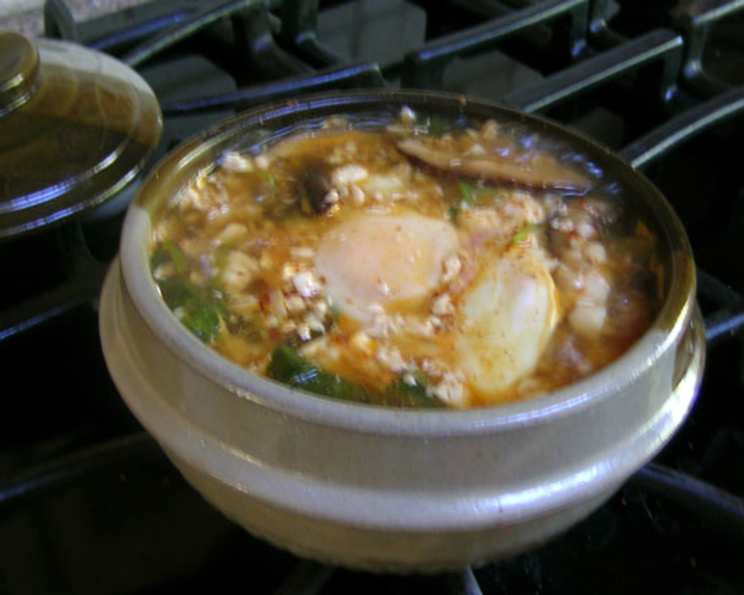
Can’t Be Korean Soon to Be Soup (A Play on Sundubu Soup)
I’ll never forget the first time I tasted sundubu jjigae. It was a frigid winter evening in Seoul, and the steaming pot of crimson broth, bubbling with soft tofu and spicy kimchi, was a welcome sight. The heat from the gochugaru chased away the chill, and the savory broth warmed me from the inside out. Ever since, I’ve been obsessed with recreating that comforting flavor in my own kitchen, tweaking and adapting the recipe to suit whatever ingredients I have on hand.
Recipe Overview
- Prep Time: 5 minutes
- Cook Time: 20 minutes
- Total Time: 25 minutes
- Servings: 1
- Dietary Type: Adaptable
Ingredients
- 1 1/2 tablespoons Korean crushed red chili powder (kochugaru or kochukaru)
- 3 garlic cloves, minced
- 1 1/2 teaspoons sesame oil
- 1/4 – 1/3 cup cabbage kimchi pickle, chopped roughly
- 1/2 – 1 teaspoon sugar
- 1/2 teaspoon salt
- 1/8 teaspoon black pepper
- 1/4 cup shiitake mushrooms (use either fresh or dry reconstituted) or 1/4 cup button mushroom, sliced
- 4 green onions, sliced diagonally
- 12 ounces silken tofu, roughly cut up (soft tofu)
- 2 cups water
- 1 cup Baby Spinach
- 1 egg (optional)
- 2 -3 meatballs (any kind optional)
- 1 teaspoon sesame seeds (optional)
Equipment Needed
- Earthen bowl, nabe, or small pot with a lid
Instructions
- Heat an earthen bowl, nabe, or small pot over medium heat.
- Add the sesame oil, garlic, kimchi, and kochugaru to the bowl and stir for about a minute. The aroma should be fragrant and slightly spicy. Be careful not to burn the garlic; lower the heat if needed.
- Add the sliced shiitake mushrooms (or button mushrooms) and stir for an additional minute. This helps to soften the mushrooms and release their earthy flavor.
- Add the sugar, salt, black pepper, green onion, water, tofu, meatballs, and spinach.
- Cook until boiling. Once boiling, reduce heat to a simmer and continue to cook for 15-18 minutes. This allows the flavors to meld together and the broth to thicken slightly.
- If desired, drop an egg on top and cover the bowl with a lid. Continue to cook until the egg is done to your liking. Some prefer a runny yolk, while others prefer a fully cooked egg.
- Sprinkle sesame seeds on top (optional) and serve immediately.
Expert Tips & Tricks
- Adjust the Spice: Kochugaru (Korean chili powder) varies in heat level. Start with the smaller amount and add more to taste. For a deeper flavor, bloom the kochugaru in the sesame oil for a bit longer before adding the other ingredients.
- Tofu Type: Silken tofu is essential for this dish. Its delicate texture melts into the broth, creating a creamy consistency. Do not use firm tofu.
- Kimchi Choice: Use well-fermented kimchi for the best flavor. Older kimchi has a more intense, sour taste that adds depth to the soup.
- Make it Vegetarian: Omit the meatballs and egg for a completely vegetarian version. You can also add other vegetables like zucchini, enoki mushrooms, or carrots.
- Dashi Boost: For a richer, umami flavor (not strictly vegetarian), add a teaspoon of Japanese dashi powder or Korean beef dashida to the broth.
- Aromatic Infusion: Toast the sesame seeds lightly in a dry pan before sprinkling them on top for an extra layer of flavor.
- Broth Depth: Use chicken or vegetable broth instead of water for a richer flavor profile.
Serving & Storage Suggestions
Serve this “Can’t Be Korean Soon to Be Soup” immediately while it’s hot and bubbling. It’s traditionally eaten directly from the pot. Garnish with extra sliced green onions and a sprinkle of sesame seeds for visual appeal.
Leftovers can be stored in an airtight container in the refrigerator for up to 2 days. The tofu may become slightly more watery upon reheating, but the flavor will still be delicious. Reheat gently on the stovetop or in the microwave until heated through. Be careful not to boil it vigorously, as this can cause the tofu to break down further. Freezing is not recommended, as the texture of the tofu will change significantly.
Nutritional Information
| Nutrient | Amount per Serving | % Daily Value |
|---|---|---|
| Calories | 336.9 kcal | N/A |
| Calories from Fat | 163 kcal | N/A |
| Total Fat | 18.2 g | 27% |
| Saturated Fat | 2.6 g | 12% |
| Cholesterol | 0 mg | 0% |
| Sodium | 1796.1 mg | 74% |
| Total Carbohydrate | 28.2 g | 9% |
| Dietary Fiber | 7.1 g | 28% |
| Sugars | 10.2 g | N/A |
| Protein | 20.5 g | N/A |
Variations & Substitutions
- Vegan Version: Ensure your kimchi is vegan (some contain fish sauce). Omit the egg and meatballs. Consider adding a dollop of gochujang (Korean chili paste) for extra flavor and heat.
- Seafood Delight: Add shrimp, mussels, or clams for a more traditional sundubu jjigae experience. Adjust cooking time accordingly to ensure the seafood is cooked through.
- Different Mushrooms: Experiment with other types of mushrooms, such as enoki, oyster, or cremini.
- Extra Vegetables: Add zucchini, carrots, or napa cabbage for added nutrients and texture.
- Spice Level: Adjust the amount of kochugaru to your liking. For a milder flavor, use less or substitute with gochujang. For a spicier version, add a pinch of cayenne pepper or some sliced jalapenos.
- Protein Boost: Add cubes of tempeh or edamame for a protein boost in the vegetarian version.
FAQs (Frequently Asked Questions)
Q: Can I use firm tofu in this recipe?
A: No, silken tofu is essential for the right texture. Firm tofu will not melt into the broth and will result in a completely different dish.
Q: Where can I find kochugaru (Korean chili powder)?
A: Kochugaru can be found at most Asian grocery stores or online retailers specializing in Korean ingredients.
Q: How can I make this soup spicier?
A: Add more kochugaru, a dollop of gochujang, or a pinch of cayenne pepper. You can also add some sliced jalapenos.
Q: Can I make this soup ahead of time?
A: While the soup is best served fresh, you can prepare the base (without the tofu and egg) a day in advance and store it in the refrigerator. Add the tofu and egg just before serving.
Q: Is there a substitute for kimchi?
A: While kimchi is a key ingredient, you can try using sauerkraut in a pinch, although the flavor will be different. Add a touch of gochujang to mimic the spiciness of the kimchi.
Final Thoughts
This “Can’t Be Korean Soon to Be Soup” is a comforting and customizable dish that’s perfect for a quick weeknight meal. Don’t be afraid to experiment with different vegetables and protein sources to create your own unique version. I encourage you to try this recipe and share your feedback! Serve it with a side of rice and some Korean side dishes (banchan) for a complete and satisfying meal. Enjoy!