
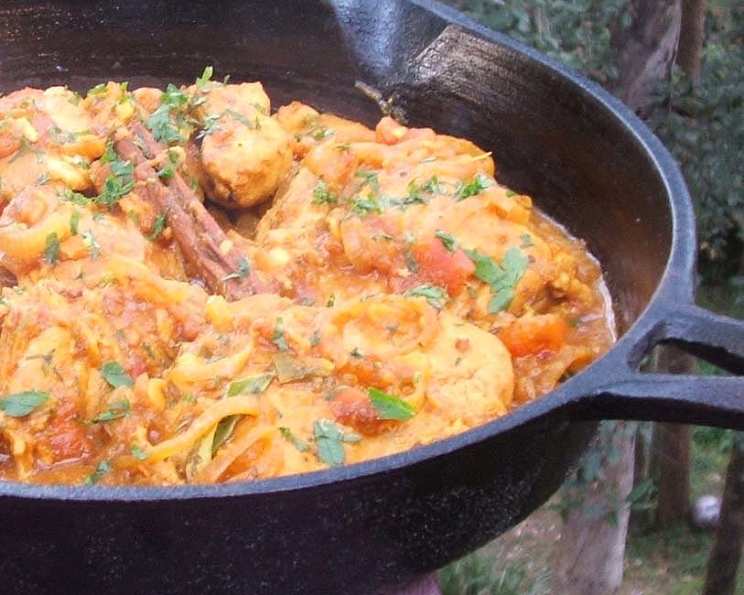
Cape Chicken Curry: A Taste of South Africa
The aroma still lingers in my memory – a fragrant blend of warm spices, sweet tomatoes, and the savory promise of tender chicken. It was at a small family-run restaurant in Bo-Kaap, Cape Town, where I first experienced the magic of Cape Malay cuisine. This Cape Chicken Curry, a vibrant testament to the region’s rich culinary heritage, instantly transported me. It wasn’t just a meal; it was a cultural immersion, a story told through the language of flavor, and a reminder of the warmth and hospitality of the Cape.
Recipe Overview
- Prep Time: 20 minutes
- Cook Time: 45-55 minutes
- Total Time: 1 hour 5-15 minutes
- Servings: 4-6
- Yield: Approximately 6 cups
- Dietary Type: Potentially Dairy-Free (depending on Masala ingredients)
Ingredients
- 1 large onion, sliced
- 2 tablespoons vegetable oil
- 3 cardamom pods
- 2 sticks cassia (or 1/2 teaspoon ground nutmeg)
- 1 large tomato, ripe and chopped
- 1 large roasting chicken, cut into pieces
- 5 garlic cloves (adjust to taste)
- 3/4 inch fresh gingerroot
- 1 green chili pepper
- 1 teaspoon ground cumin
- 1 teaspoon ground coriander
- 1 tablespoon masala (or 2 teaspoons mild curry powder)
- 1/2 teaspoon turmeric
- 1 sprig curry leaf (or bruised lemon/lime leaves)
- 4 tablespoons fresh coriander leaves, chopped, for garnish (or parsley)
- Salt, to taste
- Optional: additional chopped tomato and a pinch of sugar if needed
Equipment Needed
- Large saucepan or pot
- Mortar and pestle (or food processor)
- Knife
- Cutting board
Instructions
- Begin by preparing the aromatic base. In a large saucepan or pot, heat the vegetable oil over medium heat. Add the sliced onion, cardamom pods, and cassia (or nutmeg). Fry until the onion is soft and translucent, about 5-7 minutes. The spices will release their fragrant oils, filling your kitchen with a warm, inviting aroma.
- Add the chopped tomato to the softened onions. Simmer for 5 minutes, allowing the tomato to break down and create a light sauce.
- Introduce the chicken to the pot. Add the cut-up pieces of roasting chicken and simmer for 10 minutes, allowing the chicken to brown slightly on all sides. This step helps to develop a deeper flavor in the curry.
- While the chicken is simmering, prepare the spice paste. Using a mortar and pestle (or a food processor), pound or blend together the garlic cloves, gingerroot, and green chili pepper until you form a smooth paste. This fresh paste is the heart of the curry’s flavor.
- Add the spice paste to the chicken, along with the ground cumin, ground coriander, masala (or curry powder), and turmeric. Stir well to coat the chicken pieces evenly with the spices.
- Reduce the heat to low, cover the saucepan, and simmer for 15 minutes. This allows the flavors to meld and the chicken to become more tender. Ensure you are simmering on very low heat to avoid burning.
- Add the curry leaf (or lemon/lime leaves) to the curry. Simmer for a further 5 to 10 minutes, allowing the flavors to infuse completely. If using lemon/lime leaves, gently bruise them before adding them to release their aromatic oils.
- Taste the curry and adjust the seasoning with salt as needed. If the sauce seems too sparse or acidic, add a little more chopped tomato and a pinch of sugar, as suggested by Chef Zee, to balance the flavors.
- Finally, garnish with the chopped fresh coriander leaves (or parsley) and serve hot over cooked rice.
Expert Tips & Tricks
- Spice Level Adjustment: Adjust the amount of green chili pepper to control the heat level of the curry. Remove the seeds for a milder flavor.
- Browning the Chicken: Ensure the chicken pieces are browned slightly before adding the spices. This enhances the overall flavor of the curry.
- Slow Simmering: Simmering the curry over low heat is crucial for developing the complex flavors. Avoid rushing this step.
- Masala Variation: If you can find a Cape Malay masala blend, use it for an authentic flavor. Otherwise, a mild curry powder will work well.
- Chicken Cut: Using bone-in, skin-on chicken pieces will result in a richer and more flavorful curry, but boneless, skinless chicken thighs are a convenient alternative.
- Spice Freshness: For the best flavor, use freshly ground spices whenever possible. Toasting whole spices lightly before grinding them can also enhance their aroma.
- Vegetable Boost: Feel free to add other vegetables like potatoes, carrots, or peas during the simmering stage for a heartier curry.
Serving & Storage Suggestions
Serve the Cape Chicken Curry hot over a bed of fluffy basmati rice. The rich flavors of the curry pair beautifully with the subtle sweetness of the rice. Garnish generously with fresh coriander for a pop of color and freshness. A dollop of plain yogurt or a sprinkle of chopped peanuts can also add a delightful contrast in texture and flavor.
Leftovers can be stored in an airtight container in the refrigerator for up to 3 days. For longer storage, freeze the curry in individual portions for up to 2 months. Thaw overnight in the refrigerator before reheating.
To reheat, gently warm the curry in a saucepan over low heat, stirring occasionally, until heated through. You may need to add a splash of water or chicken broth if the sauce has thickened too much. Alternatively, you can reheat it in the microwave in short intervals, stirring in between, until heated through.
Nutritional Information
Please note that these values are approximate and may vary based on specific ingredients and portion sizes.
| Nutrient | Amount per Serving | % Daily Value |
|---|---|---|
| Calories | 450 kcal | 23% |
| Total Fat | 28g | 43% |
| Saturated Fat | 8g | 40% |
| Cholesterol | 120mg | 40% |
| Sodium | 200mg | 9% |
| Total Carbohydrate | 10g | 4% |
| Dietary Fiber | 2g | 8% |
| Sugars | 4g | – |
| Protein | 35g | 70% |
Variations & Substitutions
- Vegetarian Option: Substitute the chicken with chickpeas, lentils, or firm tofu for a vegetarian version.
- Coconut Milk: Replace some of the tomato with coconut milk for a creamier and richer curry.
- Spice Blend: Experiment with different masala or curry powder blends to customize the flavor profile.
- Sweet Potato: Add diced sweet potato for a touch of sweetness and added nutrients.
- Lamb or Beef: Substitute chicken with diced lamb or beef for a heartier curry. Adjust cooking time accordingly to ensure the meat is tender.
FAQs (Frequently Asked Questions)
Q: Can I make this curry ahead of time?
A: Yes, Cape Chicken Curry is a great make-ahead dish. The flavors actually deepen and meld together even more when left overnight.
Q: How do I adjust the spice level?
A: The green chili pepper is the main source of heat. Use less or remove the seeds for a milder curry. You can also add a pinch of cayenne pepper for extra heat.
Q: Can I use boneless, skinless chicken breasts instead?
A: While bone-in chicken pieces provide the best flavor, boneless, skinless chicken breasts can be used as a convenient alternative. Reduce the cooking time to prevent them from drying out.
Q: What do I do if the sauce is too thick?
A: Add a splash of water or chicken broth to thin the sauce to your desired consistency.
Q: Can I freeze this curry?
A: Yes, Cape Chicken Curry freezes well. Store in airtight containers for up to 2 months.
Final Thoughts
Cape Chicken Curry is more than just a recipe; it’s a journey to the vibrant culinary landscape of South Africa. With its blend of aromatic spices, tender chicken, and a hint of sweetness, this curry is a true celebration of flavor. I encourage you to try this recipe and experience the magic of Cape Malay cuisine for yourself. Don’t be afraid to experiment with the variations and substitutions to create your own unique version. Share your creations and feedback, and let’s continue to explore the delicious world of global flavors together. Perhaps pair it with a crisp South African Sauvignon Blanc!